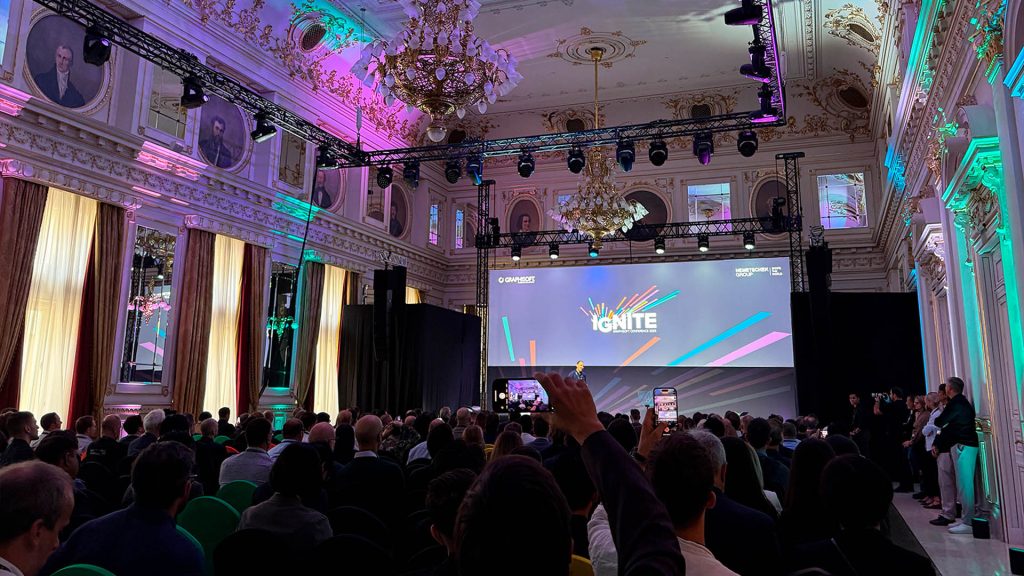

At the two-day Ignite conference, held in Graphisoft’s hometown of Budapest, company executives and customers shared the latest technology developments and showcased some impressive project work, writes Martyn Day
The Graphisoft Ignite 2025 conference laid out a clear and future-facing roadmap, anchored around delivering what company executives claim is the “best design experience”. According to Yves Padrines, group CEO of parent company Nemetschek Group, we are entering “the season of intelligence”. In this season, the company is aiming to deliver a more human-centric interpretation of AI than its competitors.
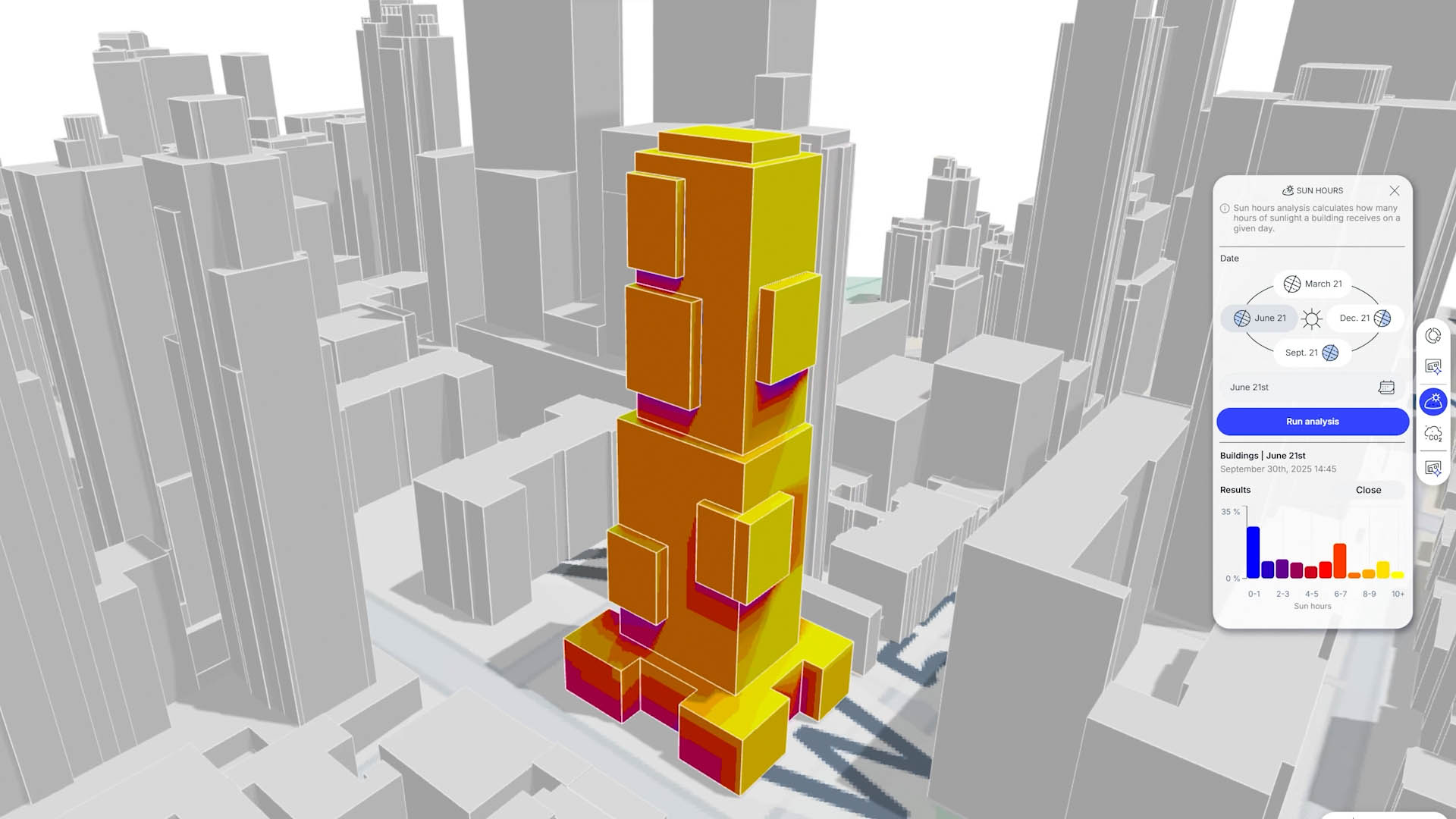
Gone are the days when Graphisoft’s focus was almost solely on its Archicad system. A recent expansion of its product portfolio under a new ‘design intelligence’ strategy has seen the emergence of Project Aurora, the company’s next-generation, cloud-native platform for early-stage design and feasibility work, unveiled at NXT BLD 2025.
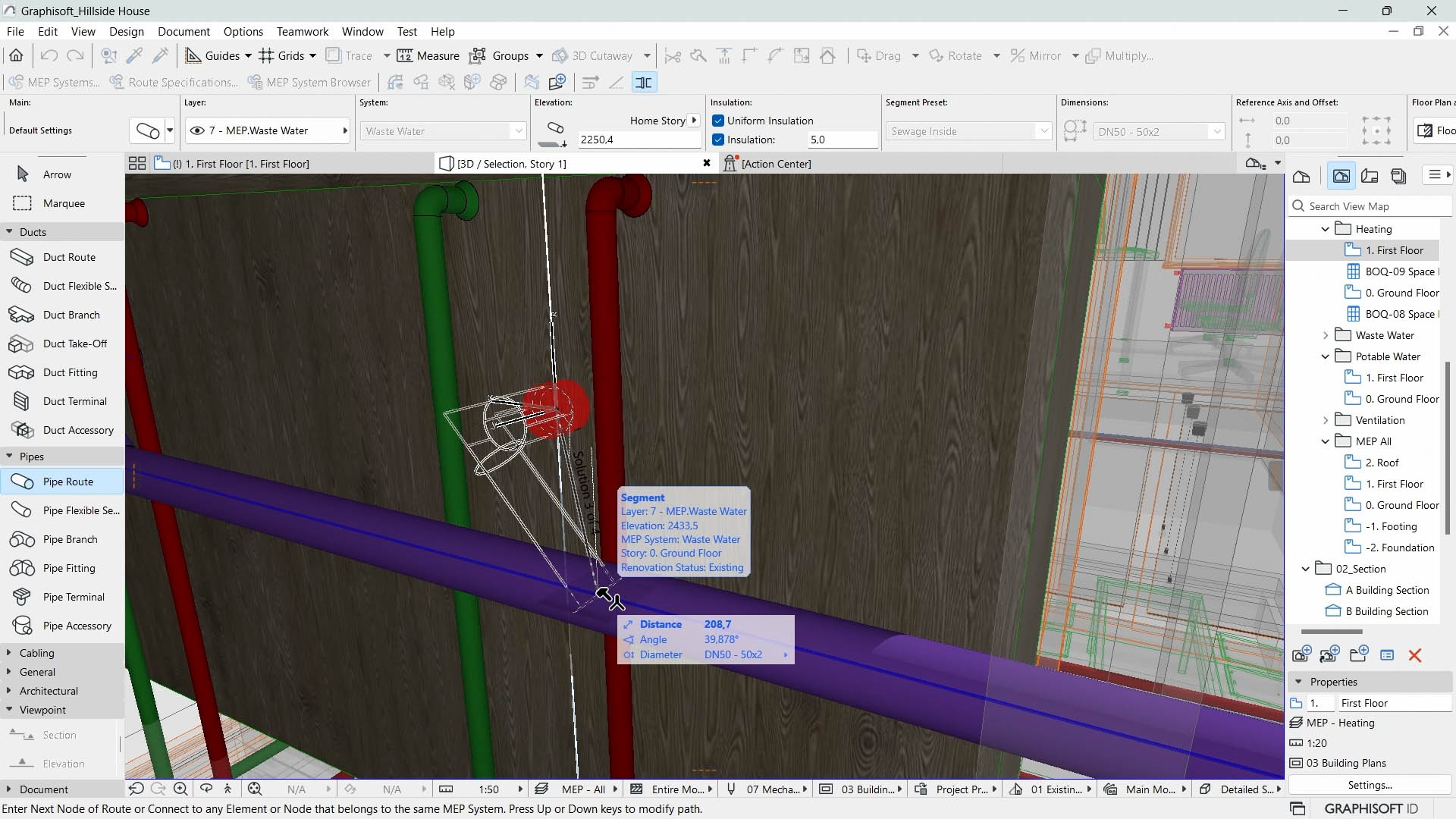
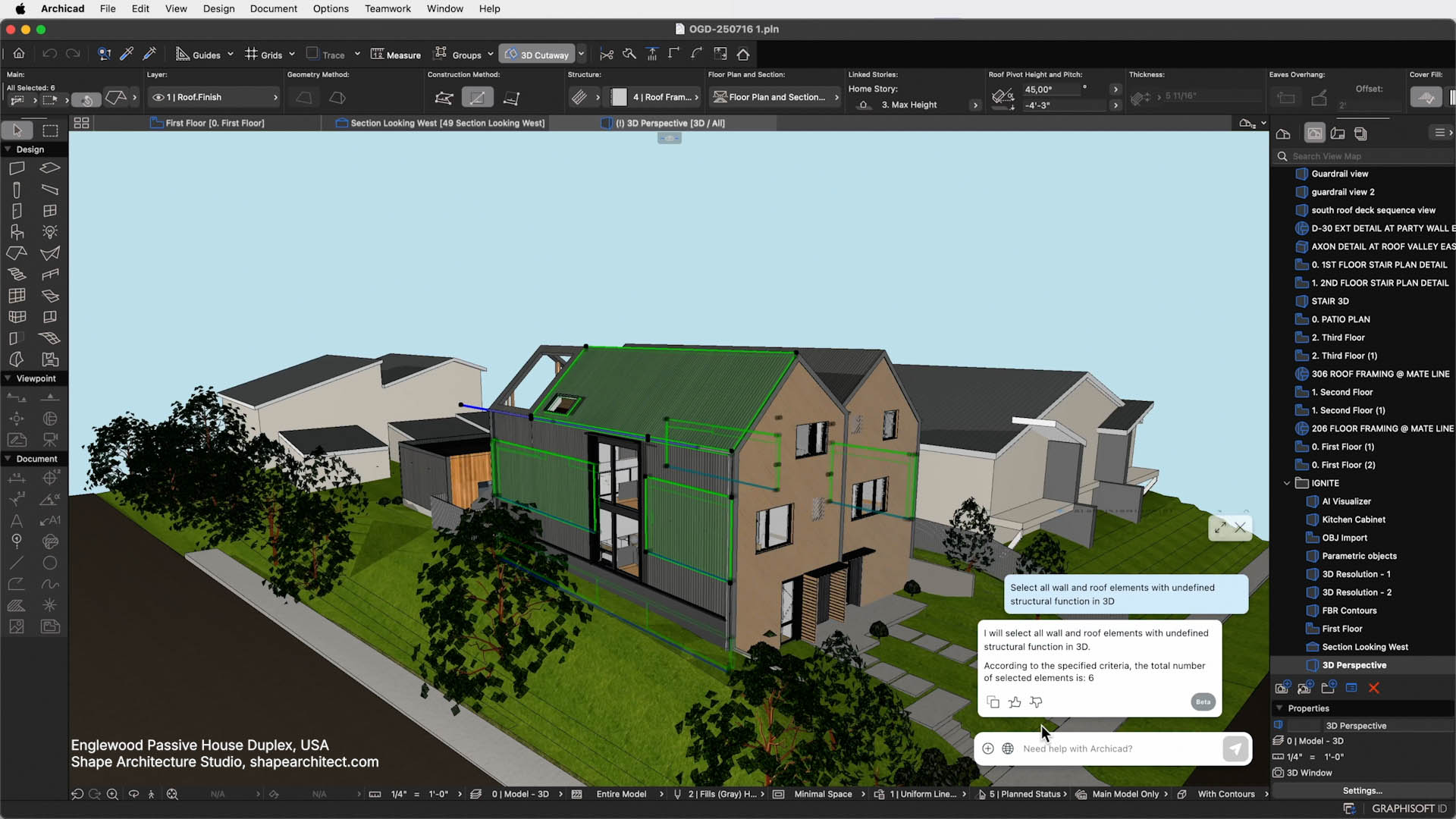
There’s also the standalone MEP Designer tool that aims to give mechanical, electrical and plumbing engineers a more focused workflow, and of course, Archicad 29, boasting AI capabilities that expand its capabilities in the area of detailed design and documentation.
Discover what’s new in technology for architecture, engineering and construction — read the latest edition of AEC Magazine
👉 Subscribe FREE here
At Graphisoft, AI is framed as an assistant, rather than an architectural replacement. The company is leaning hard on this narrative that AI should be a co-pilot that removes some of the drudgery from design work, while leaving design intent firmly in human hands. Company executives repeatedly flagged Graphisoft’s ethical, privacy and IP-protection stance, a direct response to rising anxiety around other vendors that might be harvesting customer data to feed training models.
Perhaps the most consequential technical announcement at Graphisoft Ignite was the release of a new native connector for Autodesk Construction Cloud (ACC), representing a pragmatic nod to the fact that even open BIM standards are not enough for the complexity of today’s AEC tech environment and that native interoperability between proprietary systems is an important driver of project success.
This announcement follows an agreement between Autodesk and Nemetschek to share API access and aim for better connectivity between the two companies’ technologies. This connector alone represents a significant step in the right direction when it comes to easing multi-BIM collaboration bottlenecks.

Significant weight behind AI
The drive to AI is coming from the top down, with parent company Nemetschek applying significant weight (and money) to its AI push, in a bid to try and ease some of the gnarly problems the building industry faces.
At Ignite, Padrines didn’t sugar-coat the scale of the AEC industry’s dysfunction. It remains chronically inefficient: roughly 90% of large projects still blow their budgets or schedules and the built environment continues to account for more than 40% of global CO2 emissions.
On top of that, it is battling a gaping labour shortfall, estimated at seven million workers worldwide. Layered on top of this challenge is a looming demographic cliff. Around 41% of the current workforce is expected to retire by 2031.
In other words, the sector isn’t just struggling with productivity. It’s staring down the barrel end of a structural talent collapse. New tools are required – ones that are productive, efficient and sustainable.
But how do you introduce AI into design workflows without alienating the very professionals you claim to empower? Both Graphisoft and Nemetschek execs pitched a deliberately human-centric approach that promises augmentation over automation. The aim is to create ‘dual athletes’ – experts who combine deep domain knowledge with the ability to wield AI as a multiplier. This pitch is now familiar: let machines handle the tedious, repetitive tasks, so architects can spend more time designing. The clear subtext is that AI must remain a tool, not a competitor to human endeavour.
For Julian Geiger, Nemetschek’s vice president of AI, this technology might best be seen as an “alien intelligence”, a non-human perspective brought into the design team to spark different ways of thinking. The idea here is that diverse inputs can improve outcomes, provided humans remain firmly in charge.
Hence the emphasis on humans being trustworthy and ethical in their use of AI, particularly when it comes to data privacy, user agency and intellectual property. In an industry rattled by aggressive data harvesting and outrageous EULAs (end user licence agreements), Graphisoft is clearly drawing a line for competitive differentiation.
Nemetschek has invested in more than sixteen AI start-ups and acquired firms like Firmus, incorporating the company’s technology into products such as Bluebeam. Research partnerships are extensive, ranging from a new Georg Nemetschek Institute for AI in the Built World at TU Munich to ongoing work with Stanford University in California.
Customer showcase
Aside from the technology blitz, customer case studies filled a lot of the Ignite agenda, highlighting a great spread of projects from around the world. These included presentations on the Lamborghini prototype factory by Luca Bernardoni from Archilinea.
Attendees heard how Archilinea repeatedly accepted challenging deadline demands from star client Lamborghini. To meet those demands, Bernardoni had to go to extraordinary measures to eliminate pessimism among the team and recruit optimistic new members who weren’t fazed by tight delivery schedules and were able to respond positively to high-pressure projects. We sometimes forget the human aspect in the tech world. Bernadoni brought it into clear focus.
Meanwhile, Marko Dabrovic from 3LHD Architects showcased the firm’s work on a new campus for Croatian electric hypercar manufacturer Rimac, and provided some seriously impressive evidence that Archicad users can deliver complex, largescale work to very tight deadlines. The Zagreb-based firm has grown considerably since Dabrovic spoke at Ignite back in 2018 and gained an international reputation, especially in the area of luxury hotels. All presentations can be accessed online.
Introducing Archicad 29
The release of Archicad 29 sees Graphisoft doubling down on detailed design and construction documentation. Schedules are now far more configurable, with granular control over backgrounds, cells, totals and branding elements. Changes are mirrored across indexes and keynote legends. Keynote visibility and formatting have been improved to make annotation sets less of a visual swamp. A long-requested update to renovation filters now allows users to assign renovation status to markers themselves, meaning phased drawings finally behave in a predictable, organised manner. Even line-based tools get attention, with support for different arrowheads at each end – a tiny detail, but one that matters when you’re producing high fidelity construction packages.
Openings can now be placed directly on sections and elevations with accurate geometry, even when elements aren’t parallel to the marker. Common tasks such as 90-degree rotations are reduced to a single shortcut. Multi-page PDFs can be relinked with one click. There have also been some important user interface refinements, with the arrival of a dark mode, resized dialogues, better filtering of unused views and better Navigator/Organizer behaviour.
This new release also hosts the first appearance of Graphisoft’s AI Assistant, integrated initially into both Archicad and MEP Designer. The assistant is pitched firmly as a co-pilot for repetitive work, drawing answers from a vetted Graphisoft knowledge base, rather than some mystery model.
In the background, there is a major project underway – the experimental creation of a single schema and database format for the Nemetschek Group companies, similar to what Autodesk did with Docs
MEP Designer itself is a new standalone tool running on Archicad’s engine, allowing MEP teams to design routes, check clearances and coordinate directly within an architectural model. Meanwhile, Project Aurora emerges as the early-stage counterpart to Archicad’s documentation focus with a phased rollout scheduled to begin in 2026.
Object and library updates, such as more flexible kitchen cabinetry and the ability to import OBJ files as GDL objects, will please interior-focused teams. Visualisation also gets a lift, with editable 3D resolution presets and clearer contours in physically based rendering.
Taken together, Archicad 29 improves a broad selection of existing features and brings in some new capabilities. We note that some customers have not been so welcoming of the initially limited capability AI assistant that Graphisoft has shipped, complaining online that there are still things to fix in the core package.
All new software releases have to look back as well as point forward, and this is a difficult balance for software companies to achieve. It can impact customer satisfaction, especially when the shift to cloud subscriptions has increased cost of ownership.
A more coherent cloud
When it comes to BIMcloud and BIMx, Graphisoft is now positioning BIMcloud as a core piece of the wider Nemetschek ecosystem. This is in line with a clear push at the company towards unifying platforms including DDScad, BIMx and BIMcloud under a more coherent cloud strategy.
Recent updates to BIMcloud focus on the practical: a new public links feature enables users to share files externally without requiring a BIMcloud licence; multi-core support improves BIMcloud Manager performance; and a new migration tool aims to smooth the shift to BIMcloud SaaS.
BIMx continues to impress and is taking an expanded role in design exploration and review, translating 2D drawings into accessible 3D diagrams and providing a low-friction way for clients and teams to test ideas. With support for Apple Vision Pro, BIMx can now deliver fully immersive model walkthroughs, blending 2D and 3D views in a way that noticeably raises the quality of design reviews.
The latest updates focus on unifying the platform across devices. Features once locked to mobile – such as element hiding, layer control and cut-plane tools – are now available on both Windows and Mac, signalling a push toward consistency, regardless of hardware. BIMx also gains parallel projection, bringing its display capabilities closer to Archicad.
Navigation has been tightened as well. Walk Mode can be customised, external input devices such as keyboards, mice and gamepads are now supported on mobile, and interface elements fade away during walkthroughs to keep attention on the model.
Graphisoft’s Gábor Kovács-Palkó & Holger Kreienbrink spoke at NXT BLD 2025 about Project Aurora
Watch the full presentation here
In addition to the aforementioned Autodesk connector, Graphisoft executives also used Ignite 2025 to highlight its goal of deeper alignment within the wider Nemetschek ecosystem. A new connection to Bluebeam Studio, for example, enables real-time review sessions, rather than the usual export-upload relay race. Solibri workflows for model checking and quality assurance have been tightened, while Vectorworks users gain smoother access to site-modelling data. These are incremental improvements rather than headline acts, but they signal that Nemetschek’s individual brands are finally behaving less like barely acquainted cousins and more like close family members.
Support for IFC 4.3 across the new product releases further underlines this interoperability push. With governments and large clients increasingly mandating open formats, IFC compliance is no longer a philosophical stance, but a regulatory necessity. Graphisoft continues to stay ahead of those requirements.
The company also reaffirmed the importance of its Rhino-Grasshopper connection, still one of the most important generative design bridges in the BIM space. For practices that rely on algorithmic workflows, form-finding or custom geometry pipelines, this remains an essential link.
Igniting the future
In a press conference held at Graphisoft Ignite 2025, CEO Daniel Csillag and chief product officer Marton Kiss shared that a core priority for their management team is to significantly expand its market share. The goal, they said, is to grow Graphisoft customer numbers by between 25% and 30% in the next year alone.
In the longer term, the company is also looking to extend its reach by ensuring that universities are equipped with sufficient copies of Archicad to meet the needs of AEC students.
There is a conscious effort underway at Graphisoft to improve the company’s storytelling capabilities and provide a clear direction on its technology development strategy. Nemetschek is clearly driving AI development, but the Graphisoft team seems to be making a significant contribution to this work. Its AI Assistant, for example, was developed in-house and is to be adopted by other Nemetschek brands.
Csillag and Kiss placed emphasis on the need for both external and internal interoperability at Graphisoft, so that its products can be connected with technology from sister brands like Bluebeam and dTwin. That will support a larger workflow, as well as the industry shift to lifecycle management for buildings. Graphisoft aims to empower the design process, with the Nemetschek Group providing the operational side of facility management tools.
In terms of geographic footprint, Csillag stated that Saudi Arabia and the UAE markets, due to their significant heavy construction in residential buildings, are key targets for the company, which is also working to revitalise its presence in the UK.
If the goal of Graphisoft Ignite 2025 was to produce warm and fuzzy feelings towards the company, then it succeeded. Executive team members and management showed themselves to be approachable and knowledgeable about the current market, the company’s capabilities and its development priorities. There was almost palpable excitement among some regarding the current market confusion surrounding Autodesk’s BIM 2.0 strategy in general and the positioning of Revit and Forma in particular. At Nemetschek and Graphisoft, there’s a general feeling of optimism that this uncertainty will play out to their advantage.
In the background, there is a major project underway – the experimental creation of a single schema and database format for the Nemetschek Group companies, similar to what Autodesk did with Docs. This would point towards a more cloudheavy future and more enhanced interconnectivity between Nemetschek tools in future. Saying that, Graphisoft remains committed to delivering both desktop and cloud applications, with data and processing taking place in the locations that customers require.