Intel moves to build pro graphics trust

2 0

Expands CAD, BIM, and engineering software certifications for integrated Arc Pro graphics in Core Ultra laptop CPUs


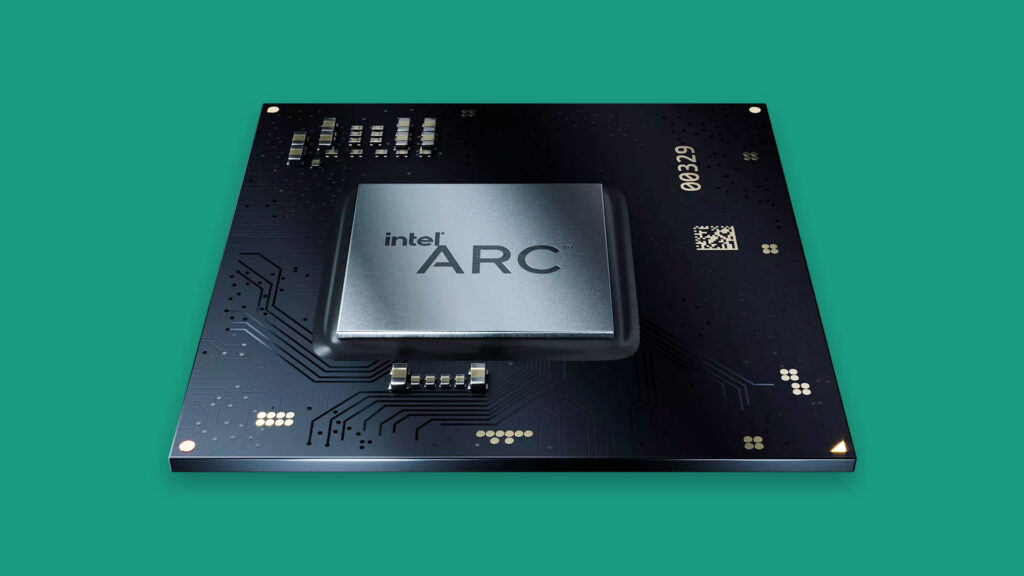
Intel is continuing to position its Intel Core Ultra processors with built-in Arc Pro graphics as a trusted platform for running CAD, BIM and other design software – without the need for a discrete Nvidia GPU.

The company has announced that its new Intel Core Ultra Series 3 processors, featuring integrated Arc Pro B390 graphics and available in mobile workstations from Dell, HP and Lenovo, now benefit from expanded Independent Software Vendor (ISV) certifications across a wide range of professional tools.


Read AEC Magazine’s 2026 Workstation Special report

➡️ Subscribe here


These include applications from Autodesk (AutoCAD, Inventor, Fusion and 3ds Max), Ansys (Discovery, Fluent, Mechanical and many others), Bentley Systems (MicroStation, LumenRT and iTwin Capture Modeler), Dassault Systèmes (Solidworks), Nemetschek (Vectorworks), PTC (Creo), and Siemens (NX and Solid Edge).

In addition, for applications where no official ISV certification exists, Intel has introduced its own validation programme, covering software including Chaos Enscape, Chaos Vantage, D5 Render, Autodesk Revit, blender, Unreal Engine, Twinmotion​ and others.

Last month Dell launched the Dell Pro Precision 5S, the first mobile workstation from a major OEM that relies exclusively Intel integrated graphics with no option for a discrete Nvidia GPU.


What AEC Magazine thinks

ISV certification remains a crucial stamp of approval for professional graphics. For many customers — particularly larger design and engineering firms — it provides reassurance that software will run reliably and be fully supported in production workflows.

Advertisement
Advertisement

Historically, Intel’s ISV programme for graphics was relatively limited. As a result, serious users of CAD, BIM, and simulation software typically specified mobile workstations with discrete Nvidia GPUs, which offer far broader certification coverage.

The arrival of Intel Arc Pro discrete desktop GPUs in 2022 marked a turning point, prompting Intel to invest much more heavily in professional driver validation and ISV relationships.

What’s interesting now is how that investment is filtering down into integrated graphics. With Dell recently becoming the first major OEM to offer an Intel-based mobile workstation configured with integrated graphics only, it signals a notable shift in confidence. This is not just about improved raw performance from Intel-integrated GPUs, but about their ability to meet ISV certification requirements and deliver dependable performance in mainstream CAD and BIM workflows.

It’s also worth noting that AMD has already enjoyed considerable success here. All the major workstation OEMs now offer AMD-based mobile workstations where integrated Radeon graphics is the only option. And as AEC Magazine has found in its testing of AMD-based mobile workstations, such as the HP ZBook Ultra G1a or Lenovo ThinkPad P14s,  AMD integrated graphics offers more than enough raw processing power for everyday CAD and BIM tasks.

However, while AMD’s challenge is largely about educating customers that many mainstream workflows no longer require a discrete GPU, Intel faces a different hurdle: trust. Unlike Nvidia and AMD, Intel lacks a long-established workstation pedigree in professional graphics, so it must do more than inform the market — it must prove its credibility in real-world production workflows.

Advertisement