Lenovo targets local AI with next-gen workstations

9 0

New ThinkPad P Series laptops and ThinkStation P5 Gen 2 desktop bring together GPUs, CPUs, NPUs and Nvidia’s software stack to enable on-device AI


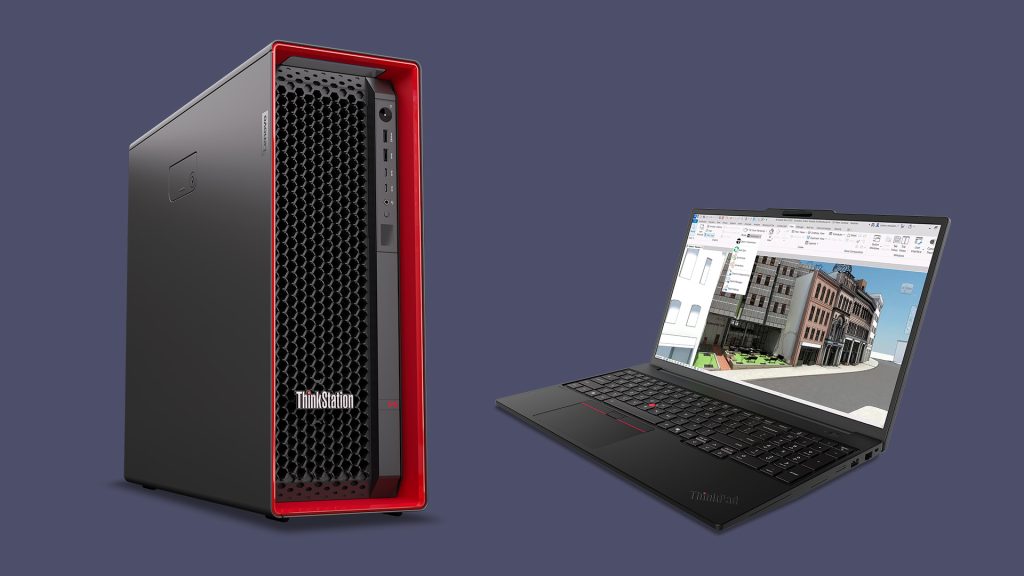
Lenovo has unveiled a new generation of mobile and desktop workstations designed to bring AI workflows directly to ‘the edge’ and reduce reliance on cloud compute. The updated portfolio, which spans ThinkPad P Series laptops and the ThinkStation P5 Gen 2 desktop, are built around next-generation processors from Intel and AMD, combined with Nvidia RTX Pro Blackwell GPUs.

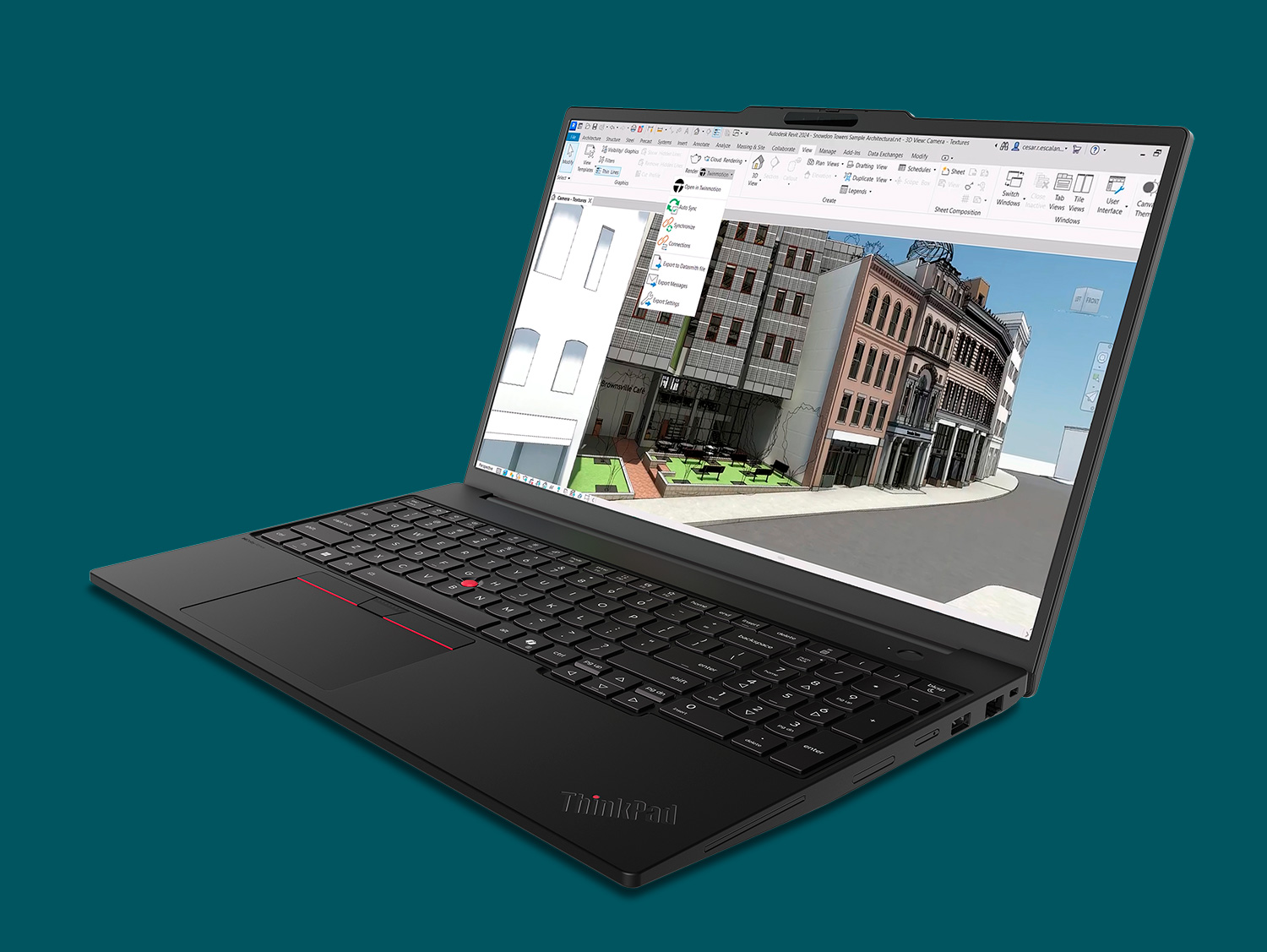
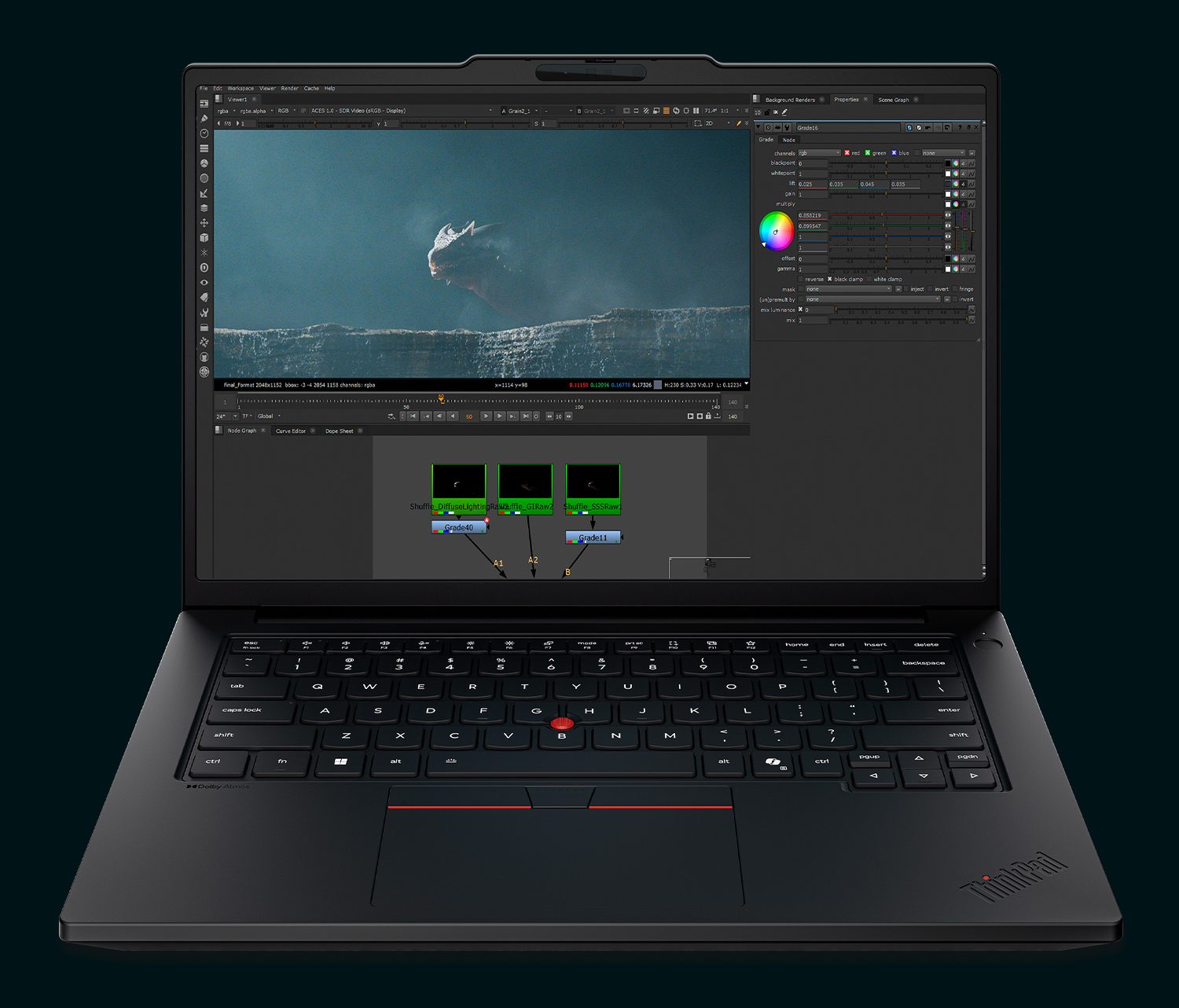
The mobile line-up includes the 14-inch ThinkPad P14s Gen 7, aimed at highly portable workstation users, and the larger 16-inch ThinkPad P16s Gen 5 for more demanding mainstream workflows. The ThinkPad P1 Gen 9 targets the higher-end with a premium thin-and-light design.


Read AEC Magazine’s 2026 Workstation Special report
➡️ Subscribe here


The ThinkPad P14s Gen 7 is available in both Intel and AMD variants. The AMD model features an AMD Ryzen AI 9 HX PRO 470 CPU with integrated Radeon 890M GPU and a 55 TOPS NPU, supported by up to 96 GB of system memory shared across the CPU, GPU, and NPU. The unified memory architecture allows it to run larger AI models locally than laptops equipped with entry-level discrete GPUs.

The Intel variant is powered by Intel Core Ultra Series 3 processors, paired with a 50 TOPS NPU and up to an Nvidia RTX Pro 1000 Blackwell Generation Laptop GPU (8GB), delivering a combined AI performance of up to 540 TOPS.

The two models also differ in chassis design. The AMD-based P14s Gen 7 is thinner and lighter, measuring 314 x 222 x 15.93 / 12.1, 22.6 mm and weighing from 1.29 kg. It features up to a 14-inch 2.8K (2,880 x 1,800) 500-nit OLED display. By comparison, the Intel-based P14s i Gen 7, which accommodates a discrete GPU, has a slightly larger and heavier chassis at 325 x 226 x 11.7 / 16.22, 22.2 mm, starting at 1.63 kg, and comes with a choice of panels up to a 14.5-inch 3K (3,072 x 1,920) 500-nit IPS.


ThinkPad P14s i Gen 7

Stepping up to the larger 16-inch models, the ThinkPad P16s Gen 5 AMD and P16s i Gen 5 retain the same AMD and Intel processors as their 14-inch counterparts but can both be configured with up to an Nvidia RTX Pro 2000 Blackwell Generation Laptop GPU. Both share the same 358 x 248 x 11.45–18.15 mm chassis, start at 1.75 kg, and offer 16-inch display options up to a 2.8K (2,880 x 1,800) OLED 500-nit panel.

Advertisement
Advertisement

ThinkPad P16s i Gen 5
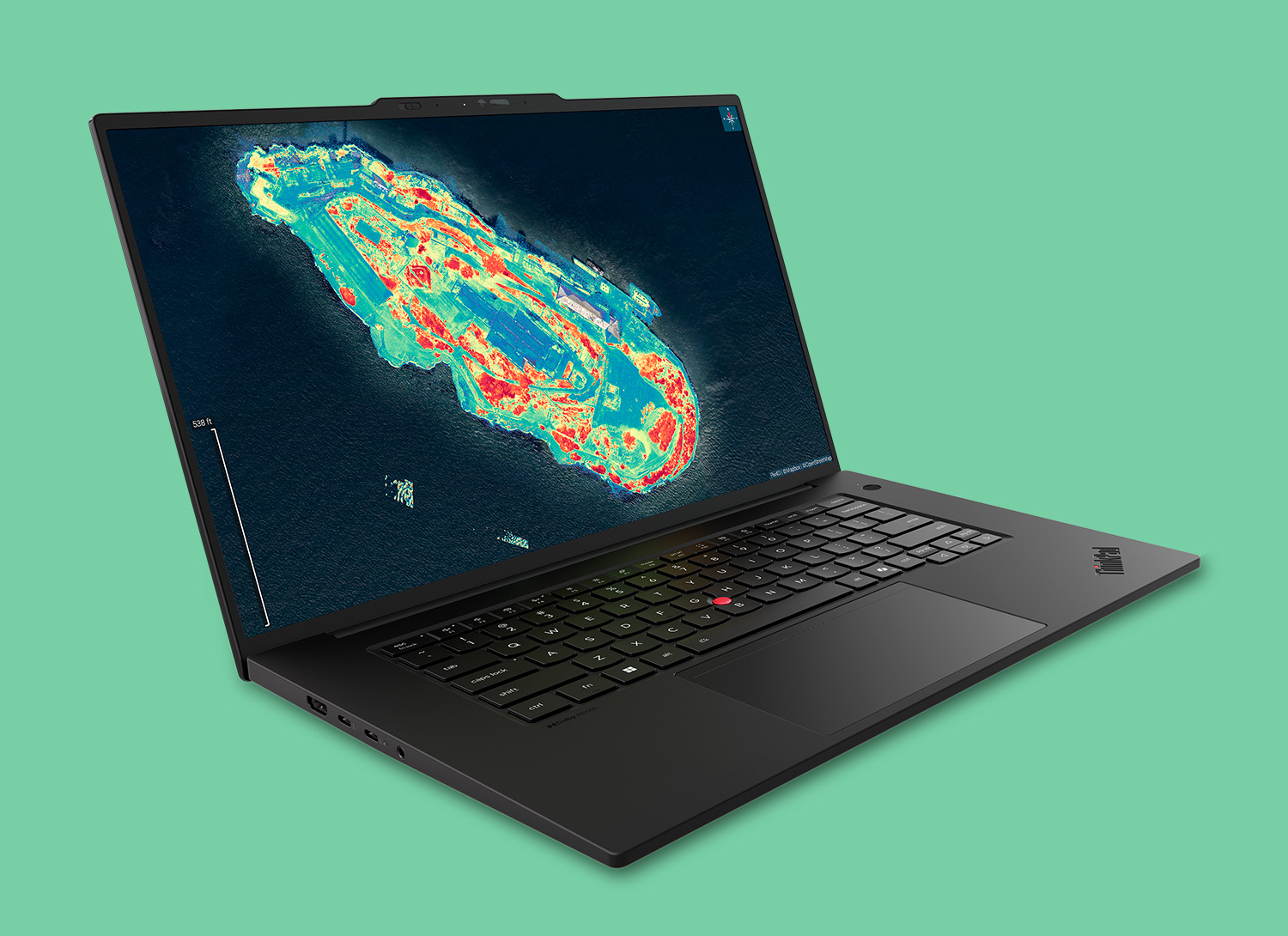
ThinkPad P1 Gen 9

Moving up the range, the ThinkPad P1 Gen 9 delivers similar core specifications to the P16s i Gen 5 but in a premium, ultra-thin design measuring 354 x 241 x 9.87 / 15.8, 20.6 mm. It also offers a wider choice of displays, including a WQUXGA (UHD+) IPS panel with 3,840 × 2,400 resolution and 800-nit brightness.

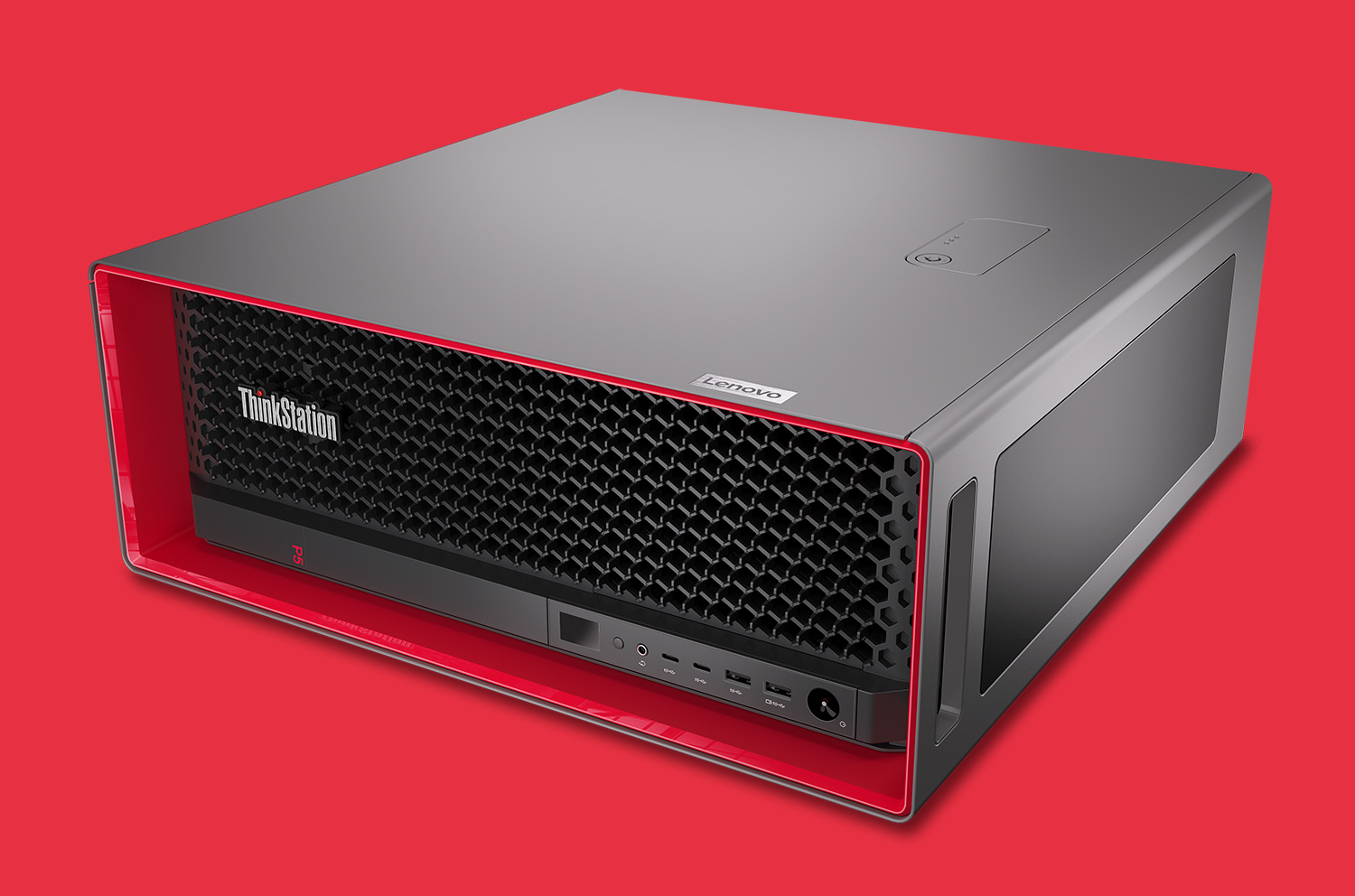
On the desktop side, the ThinkStation P5 Gen 2 delivers significantly higher compute density, with support for Intel Xeon 600 processors for workstations (up to 48 cores, up to 4.9GHz), up to two Nvidia RTX Pro 6000 Blackwell GPUs (96 GB) (read our review) and up 1 TB DDR5 6400MT/s memory. This positions the machine for advanced visualisation, simulation, and AI model training tasks, as well as traditional high-end CAD and rendering workloads.


Thinkstation P5 Gen2

A key theme across the entire workstation range is on-device AI. By combining CPUs, GPUs and (on mobile) NPUs, Lenovo aims to shorten the time between input and output for AI-assisted tasks, enabling real-time workflows without the latency or data transfer constraints of cloud-based processing.

Lenovo will also support Nvidia OpenShell open-source runtime to add security and privacy for autonomous agent development, and accelerated by select workstations, including the ThinkStation P5 Gen 2.

Lenovo is also working on Nvidia NemoClaw, an open-source stack designed to simplify running OpenClaw always-on assistants, more safely, with a single command.

Security and sustainability also feature prominently. All systems are protected by Lenovo ThinkShield, which includes BIOS-level safeguards and privacy controls. Meanwhile, the ThinkPad models incorporate recycled materials and meet certifications such as EPEAT Gold and ENERGY STAR 9.0, alongside MIL-STD durability standards.

Alongside the workstation launch, Lenovo revealed a proof-of-concept battery technology that could have longer-term implications for mobile workstations. Developed with Shanghai Jiao Tong University, the silicon-anode “ED1000” battery achieves an energy density of 1,000Wh/L — more than 10% higher than current designs — enabling up to 99.9Whr capacity without increasing physical size.

While still at prototype stage, the technology points to future mobile workstations with improved battery life and potentially thinner form factors, addressing a long-standing constraint in high-performance laptops.

The new ThinkPad and ThinkStation systems are expected to roll out globally from April through June 2026.

Advertisement

Leave a comment