
With CAD files taking minutes to open and sync delays preventing real-time collaboration, Widseth needed storage infrastructure that could support distributed teams without compromise
With 12 offices across Minnesota and North Dakota and 15 disciplines ranging from architecture and civil engineering to MEP and surveying, Widseth has built its practice on multi-disciplinary collaboration.
Projects including municipal infrastructure, school designs, and residential developments, routinely require expertise from multiple offices working simultaneously on the same CAD files. Meanwhile, sister company 95WAerial adds workflows that include LiDAR and aerial imaging data.
To support its demanding multi-office projects, Widseth initially adopted a hybrid cloud storage solution where data is cached on local appliances. But, as Brent Morris, Widseth’s IT manager, explains, increasing complexity soon exposed bottlenecks, “At first, everything seemed fine, but as we expanded offices and increased the number of employees working on files, it got slower over time.”
Discover what’s new in technology for architecture, engineering and construction — read the latest edition of AEC Magazine
👉 Subscribe FREE here
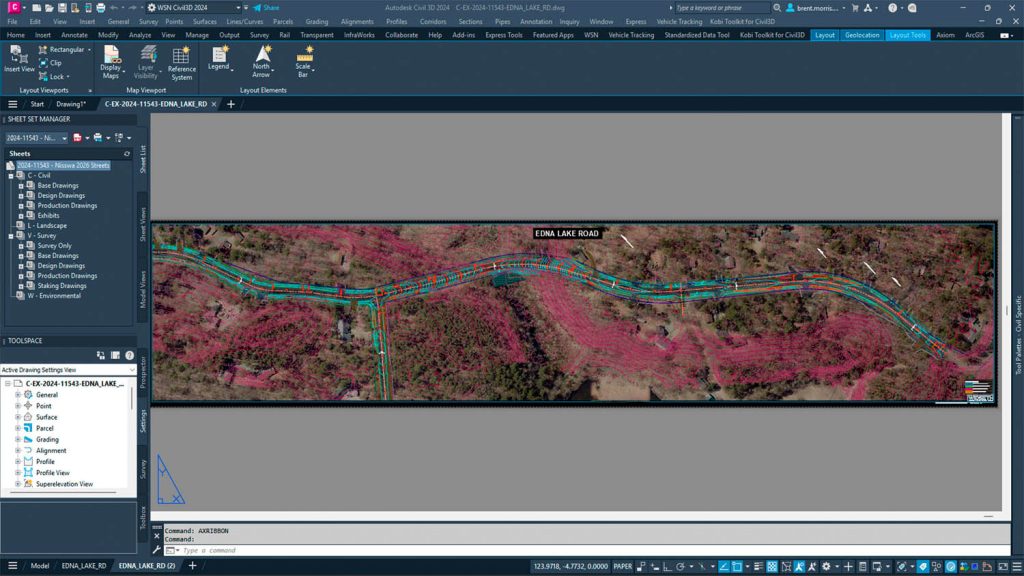
The symptoms were impossible to ignore. An Autodesk Civil 3D file with multiple references that should load and save in seconds took two to three minutes, explains Morris. These delays were frustrating for designers who needed fast access to keep projects moving.
The slow performance compounded throughout the day. Attempts to work remotely via VPN made matters worse, explains Morris, with large files becoming almost unusable — forcing many users to avoid remote work entirely.
The collaboration problem
The technical performance issues masked a more fundamental problem that made real-time collaboration impossible. The system relied on physical caching appliances at each location, with volumes syncing to the cloud on schedules. Morris explains that Widseth set its project volume to sync every 15 minutes, which meant when someone in Office A saved a new file, colleagues in Office B wouldn’t see it for 15 to 30 minutes.
The appliance-based model created other vulnerabilities, explains Morris, causing each office to have a single point of failure; power outages or hardware issues could take an entire location offline. File corruption became a recurring headache, with brief service hiccups damaging files mid-save. Without proper file locking across locations, multiple users could open the same file from different offices, with the last person to save overwriting everyone else’s work.
“Our users are on tight deadlines,” Morris explains. “They want to turn on the computer, open Civil 3D or MicroStation, and get to work. We needed storage that made that possible, without us babysitting it.”
Prototyping a different model
Morris considered going back to onpremise NAS or trying other WAN acceleration approaches, but every other option required more hardware and didn’t solve the fundamental collaboration problem. Then he heard about LucidLink from peers in an AEC IT forum and decided to run a 30-day pilot.
The results were immediate and dramatic. That same Civil 3D file that took two to three minutes to open loaded in around 15 seconds with LucidLink. Users tested the same project from home and got identical performance without a VPN requirement.
“Every test user was impressed with the speed of opening and saving projects,” says Morris. “They felt like they were working on a local server again.”
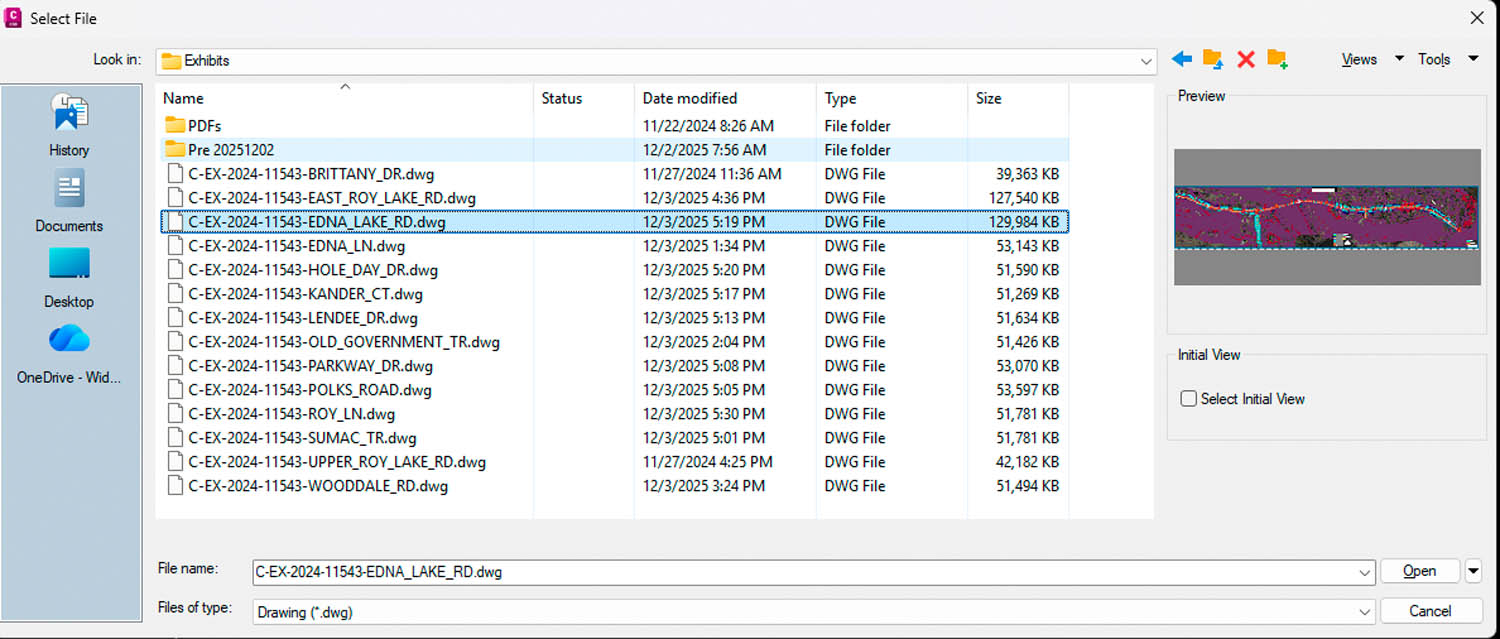
LucidLink uses device-level caching, where each user’s machine caches the files they’re working with, while data is streamed on demand from AWS cloud storage. Files appear immediately across all locations. True file locking prevents simultaneous edits from different offices. The Windows client presents a familiar mapped drive, which meant Widseth’s designers could keep their existing workflows in Civil 3D, MicroStation, Adobe Creative Cloud, and Microsoft 365.
Performance was the obvious win, though Morris also needed seamless home access without VPN, essential as Covid had accelerated remote work. Zeroknowledge encryption with SSO and multi-factor authentication aligned with increasingly stringent cyber insurance requirements. Folder-level access controls would allow IT to restrict sensitive HR and accounting files while keeping project data accessible to the right teams, all mapped to existing Active Directory groups.
“LucidLink was the only solution that checked all the boxes: performance, security, true file locking, and work-from-anywhere, without adding more hardware,” Morris says.
Deployment and adoption Following a successful pilot, LucidLink was deployed across all 12 offices, covering approximately 250 Windows users. No site appliances were required; branch resiliency improved immediately, and the financial case proved straightforward.
“We saved 25% by moving to LucidLink, and we got almost twice the amount of storage,” Morris notes. “That made the CFO conversation easy.”
Operational benefits went beyond cost savings. Help desk volume dropped, file corruption incidents decreased, VPN complaints disappeared, and appliance troubleshooting was eliminated. Permissions became simpler — if a user isn’t granted access to a folder, they don’t even see it.
Making technology invisible
For Widseth’s designers and engineers, the experience is deliberately unremarkable. Users sign into Windows with MFA, the LucidLink client authenticates via SSO, and a mapped drive appears. They open Civil 3D, MicroStation, or Adobe files directly from the LucidLink drive. The platform streams what’s needed and caches locally; everything else happens invisibly in the background. “It just works,” Morris says. “I don’t get a lot of IT help desk tickets or calls.”
The combination of reliable performance and location-independent access has also opened new possibilities for talent acquisition. Widseth can now hire experienced staff outside its existing geographies in Montana, Kansas, or anywhere with good internet connectivity, with remote staff currently making up about 5% of the workforce and growing.
Above all, by eliminating the delays and disconnects that once held projects back, Widseth has given its teams what they needed all along: the freedom to collaborate in real time, from anywhere.