
New York-based developer makes iOS applications for sketching, moodboarding and visual documentation
Vectorworks has acquired Morpholio, the developer of Trace, Board and Journal – a trio of iPad applications used for sketching, moodboarding and visual documentation.
The deal brings what has been a standalone mobile sketching toolset into the orbit of a desktop CAD and BIM platform, formalising a relationship that previously operated through cloud service integrations.
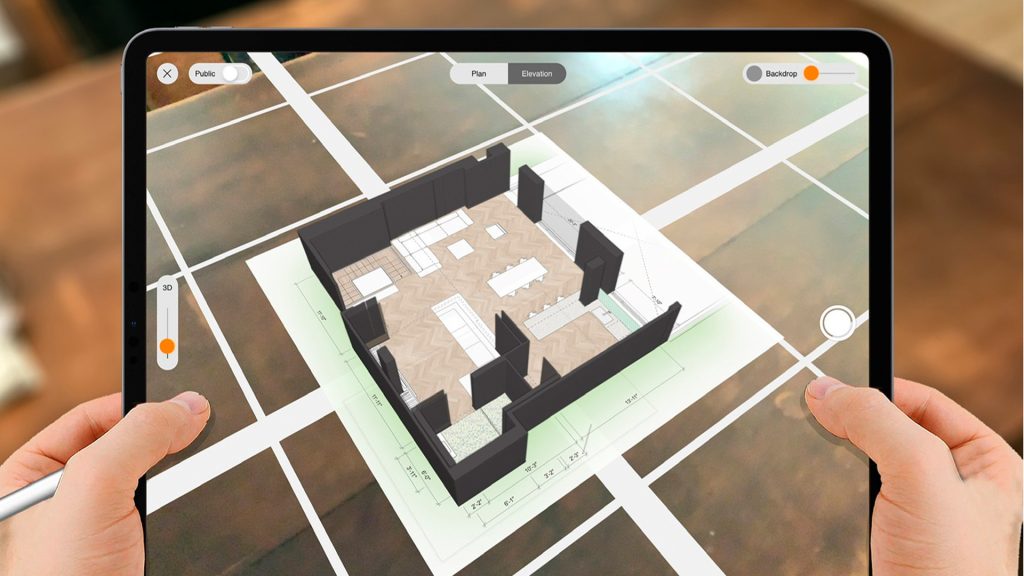
Morpholio Trace is perhaps the best known of the three, functioning as a scale-aware sketching environment where architects overlay markup and annotation onto imported drawings or start from blank canvas.
Board is positioned toward interior designers for assembling material palettes and client presentations.
Journal operates as a digital sketchbook without project-specific constraints. All three run exclusively on Apple hardware and are sold as individual subscriptions through the App Store, a model that will continue unchanged for now.
The acquisition reflects a broader question about where conceptual work happens in architectural practice. Desktop BIM environments remain structured around geometry, parameters and documentation—capabilities that arrive late in the thinking process. Sketching tools, by contrast, prioritise gesture and iteration, but typically exist in isolation from the models they eventually inform. Bridging that gap has been attempted before, most commonly through PDF markup workflows or proprietary sync mechanisms, but the translation usually involves exporting, re-importing and manual reconciliation.
Discover what’s new in technology for architecture, engineering and construction — read the latest edition of AEC Magazine
👉 Subscribe FREE here
Vectorworks has been positioning itself as a design-first alternative to mass-market BIM platforms, particularly in smaller practices where Revit’s infrastructure feels disproportionate. Morpholio’s user base skews similarly, towards architects and interior designers working on iPads during client meetings, site visits or early-stage development. Whether that cultural overlap translates into technical integration remains to be seen. The statement mentions existing connectivity through Vectorworks Cloud Services, though the mechanics of how sketches, annotations or moodboards flow into parametric models without losing fidelity or requiring manual reconstruction are not detailed
The involvement of Nemetschek, Vectorworks’ parent company, adds another dimension. Nemetschek owns multiple AEC applications — Allplan, Graphisoft, Bluebeam — each with different approaches to mobile workflows. A statement from Sunil Pandita, who oversees planning and design across the group, suggests Morpholio’s tools could eventually be made available to users of other Nemetschek products. That would represent a shift from acquisition as product expansion to acquisition as shared infrastructure, though how licensing and integration would work across competing desktop platforms is unclear.
The announcement also references AI capabilities in both platforms. Morpholio has previously integrated generative features into Trace, allowing users to generate reference imagery or iterate on sketches using machine learning models. Vectorworks has been adding similar functionality to its desktop software. How these capabilities interact, or whether they remain parallel implementations, is not specified.
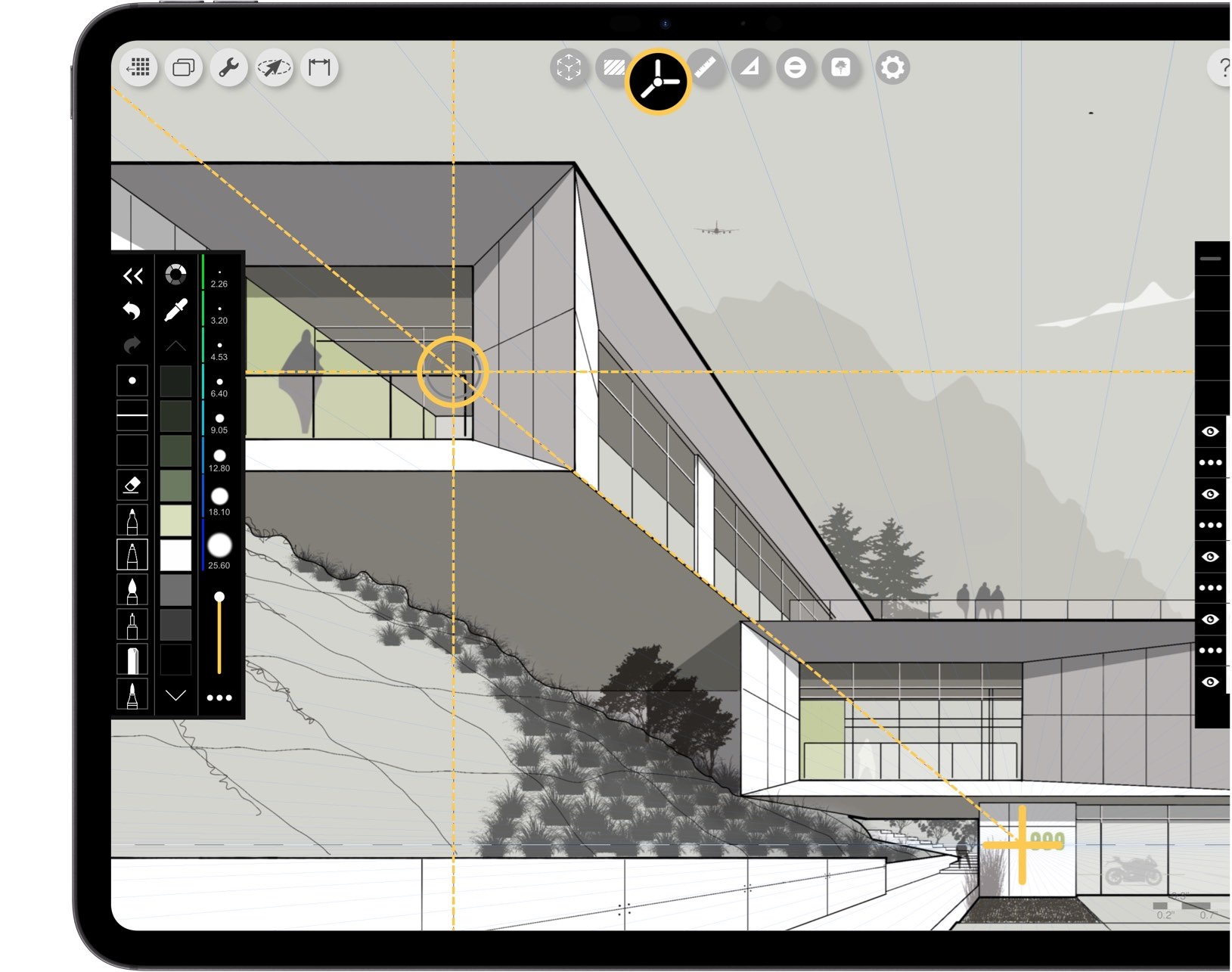
The mobile sketching market for architects is not particularly proven, especially requiring a specific device, an iPad. That lack of competition partially reflects the difficulty of the problem but we don’t fully understand the demand in that mobile market. Morpholio has occupied that niche for over a decade, but it has remained a niche.
For now, the most immediate consequence is continuity of development. Morpholio’s apps will continue to receive updates, now with access to Vectorworks’ resources and development capacity. Existing users retain their workflows, and Vectorworks customers gain a clearer pathway—if not yet a seamless one—between tablet and desktop. Whether that evolves into something more integrated, or remains two separate toolsets under common ownership, will depend on technical decisions that have not yet been disclosed.