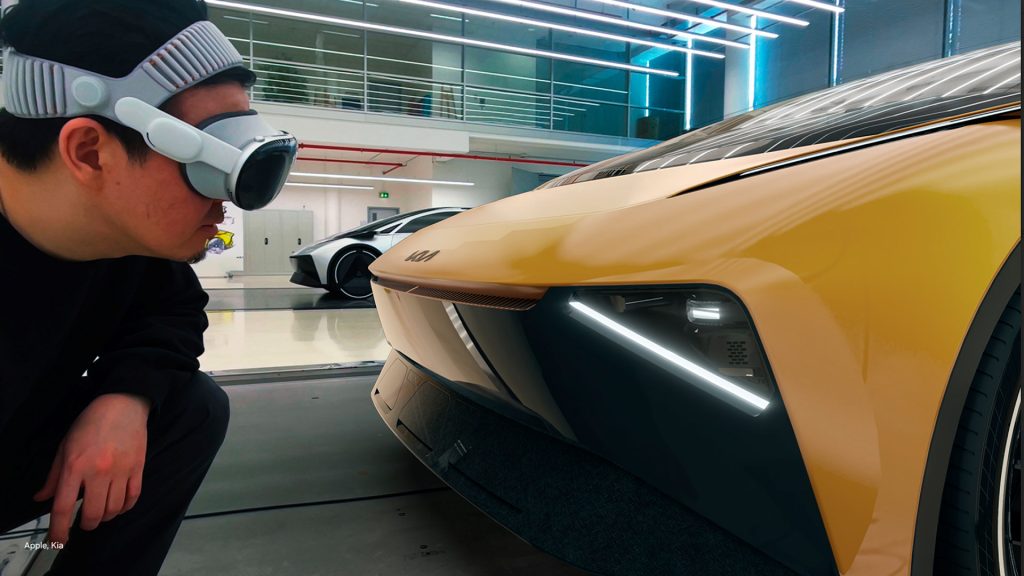

Nvidia CloudXR 6.0 uses dynamic foveated streaming to deliver ‘true‑to‑reality’ 4K experiences to the headset over a wireless connection.
Nvidia has integrated its CloudXR 6.0 suite of streaming technologies natively with Apple Vision Pro, creating an official wireless bridge between Apple’s spatial computing headset and Nvidia RTX GPU‑powered local or cloud servers / workstations.
The company is pitching the move as a breakthrough for high‑end enterprise workflows, from automotive design review to industrial digital twins, allowing firms to visualise massive 3D assets and complex simulations with “uncompromised photorealism”.
Rather than relying on the limited on‑device compute of the standalone headset, CloudXR 6.0 and visionOS 26.4 lets Apple Vision Pro tap into high performance Nvidia RTX GPUs, streaming ‘true‑to‑reality’ 4K experiences directly into the headset over a wireless connection.
The integration uses dynamic foveated streaming, which exploits how human vision works by intelligently optimising rendering resolution in response to the user’s gaze.
Using Vision Pro’s eye‑tracking, CloudXR delivers maximum resolution only where the user is looking and reduces detail in the periphery. According to Nvidia, this cuts the number of pixels that need to be sent, reduces end‑to‑end latency and enables a full VR‑class experience at around 8 Mbps downstream, depending on the workload.
Nvidia is placing equal emphasis on privacy and security. It claims CloudXR is the first SDK to gain access to Vision Pro’s approximate gaze data, but that data is never exposed to the remote server or the application.
“You get the most performant, powerful streaming experience possible, while keeping your information just as privately as it is natively on the Vision Pro,” says Richard Kerris, VP media and entertainment, Nvidia.
Meanwhile, a ‘secure QR code pairing’ is said to establish trust between headset and server, so developers can reap the performance benefits of foveation “without the responsibility of handling raw gaze data.”
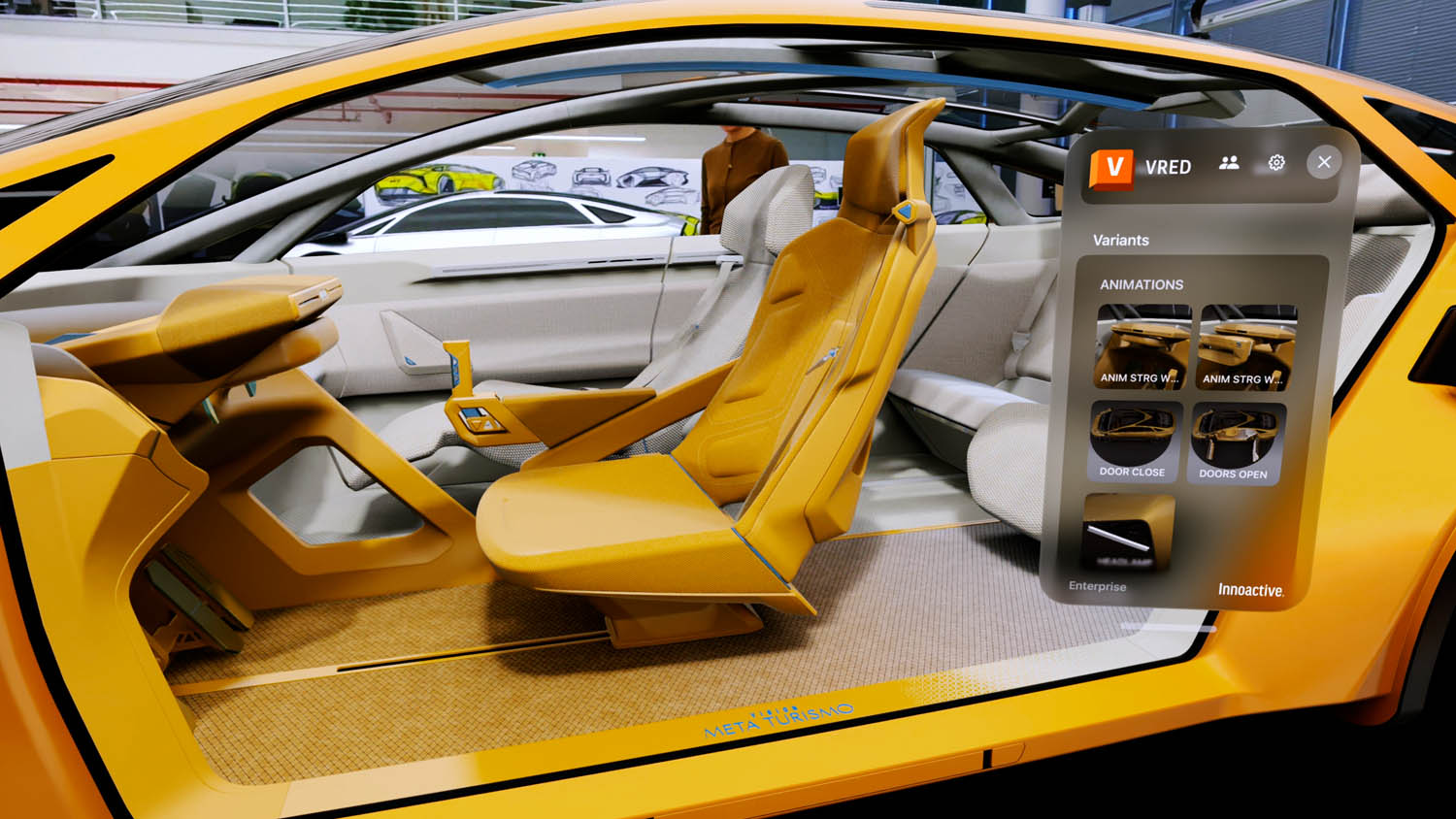
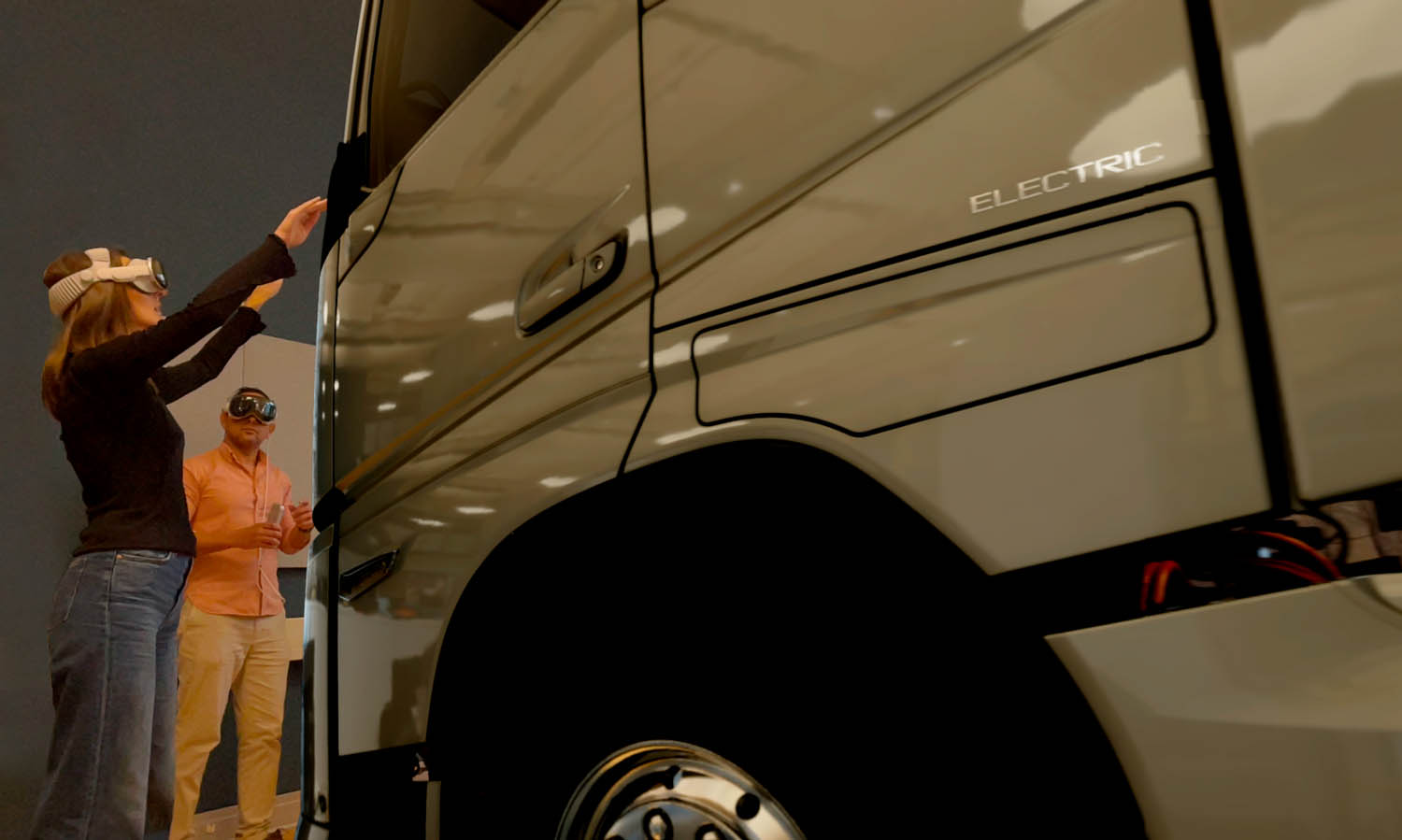
Design teams at Kia, Rivian, BMW, and Volvo are already using CloudXR with Apple Vision Pro and XR streaming solutions. With Immersive for Autodesk VRED, due to launch later this spring, enabled by Autodesk with Innoactive, automotive teams will be able to conduct one‑to‑one scale, photoreal vehicle reviews, down to the stitching in leather seats.
“We can experience proportions, surfaces, colours and materials together in a shared real-world environment and collaborate in real time across our global teams,” said Karim Habib, executive vice president and head of Kia Global Design.
The technology is not limited to automotive. Firms are using CloudXR for visionOS on Apple Vision Pro across multiple industries. Pharmaceutical company Roche is combining Autodesk Revit and Nvidia Omniverse libraries to simulate layouts for its biofluid analysis labs, while manufacturer Foxconn is using the technology to visualise factory-floor walkthroughs. MHP is applying it with Synopsys Ansys Discovery 3D for real-time aerodynamics simulation, and Switch, in collaboration with Trifork, is using it to monitor and manage complex data centre layouts.
For developers, CloudXR 6.0 integrates directly into Xcode with multi‑platform templates, enabling a single Nvidia CloudXR application to be built once and deployed across Apple Vision Pro, iPhone and iPad.