
The disconnect between what architects envision and what actually gets built is narrowing, thanks to a shift in how construction knowledge flows into the design process, writes Haisheng Xu from the Yazdani Studio of Cannon Design
When Auguste Perret first exploited the possibilities of reinforced concrete, or when early skyscrapers began redefining city skylines with steel frames, something fundamental happened: engineering didn’t just enable architecture, it transformed it. The relationship between what we can build and what we choose to design has always been symbiotic, but in recent years, that relationship has become far more dynamic.
Today’s architectural offices are experiencing a quiet revolution. Digital tools, parametric modelling, and artificial intelligence are doing more than speeding up workflows, they’re fundamentally changing when and how construction knowledge enters the design conversation. The traditional model of architects sketching visions and then handing them off to engineers to “make work” is giving way to something far more integrated: a bidirectional technical ecosystem where fabrication constraints, material limits, and system engineering principles inform creative decisions from day one.
This shift, referred to as “front-loading,” represents a profound change in architectural practice. Across multiple levels, from material to component to system, information becomes an operative part of design influencing decisions. It’s producing buildings that push boundaries while improving constructability.
of Yazdani Studio
Discover what’s new in technology for architecture, engineering and construction — read the latest edition of AEC Magazine
👉 Subscribe FREE here
Material feedback in design
Materials have always had something to say about the forms they can take, but for most of architectural history, designers learned those lessons through trial, error, and occasionally spectacular failure. What’s different now is that material behaviour can be encoded, simulated, and integrated directly into design software, turning physical properties into active collaborators in the creative process.
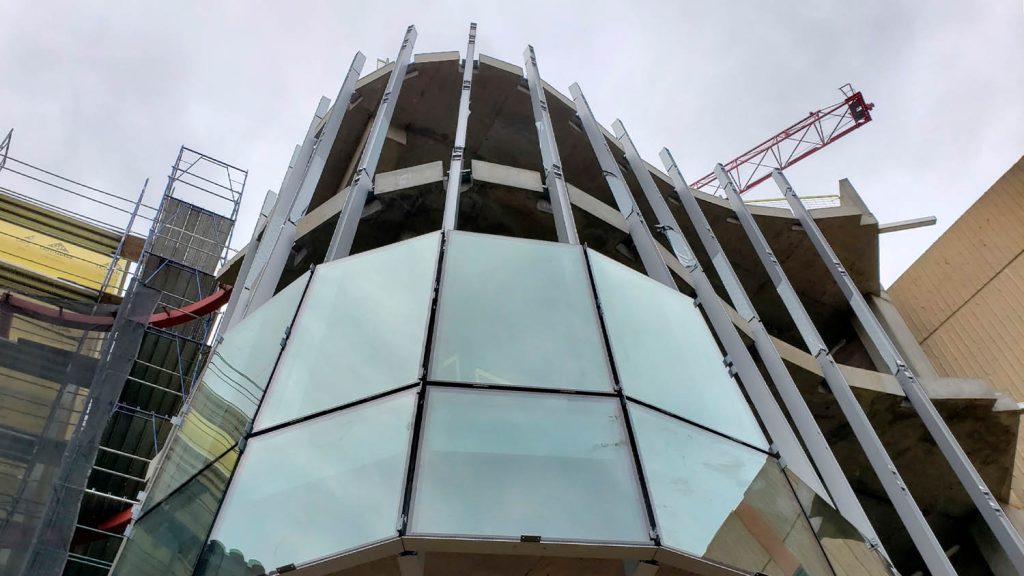
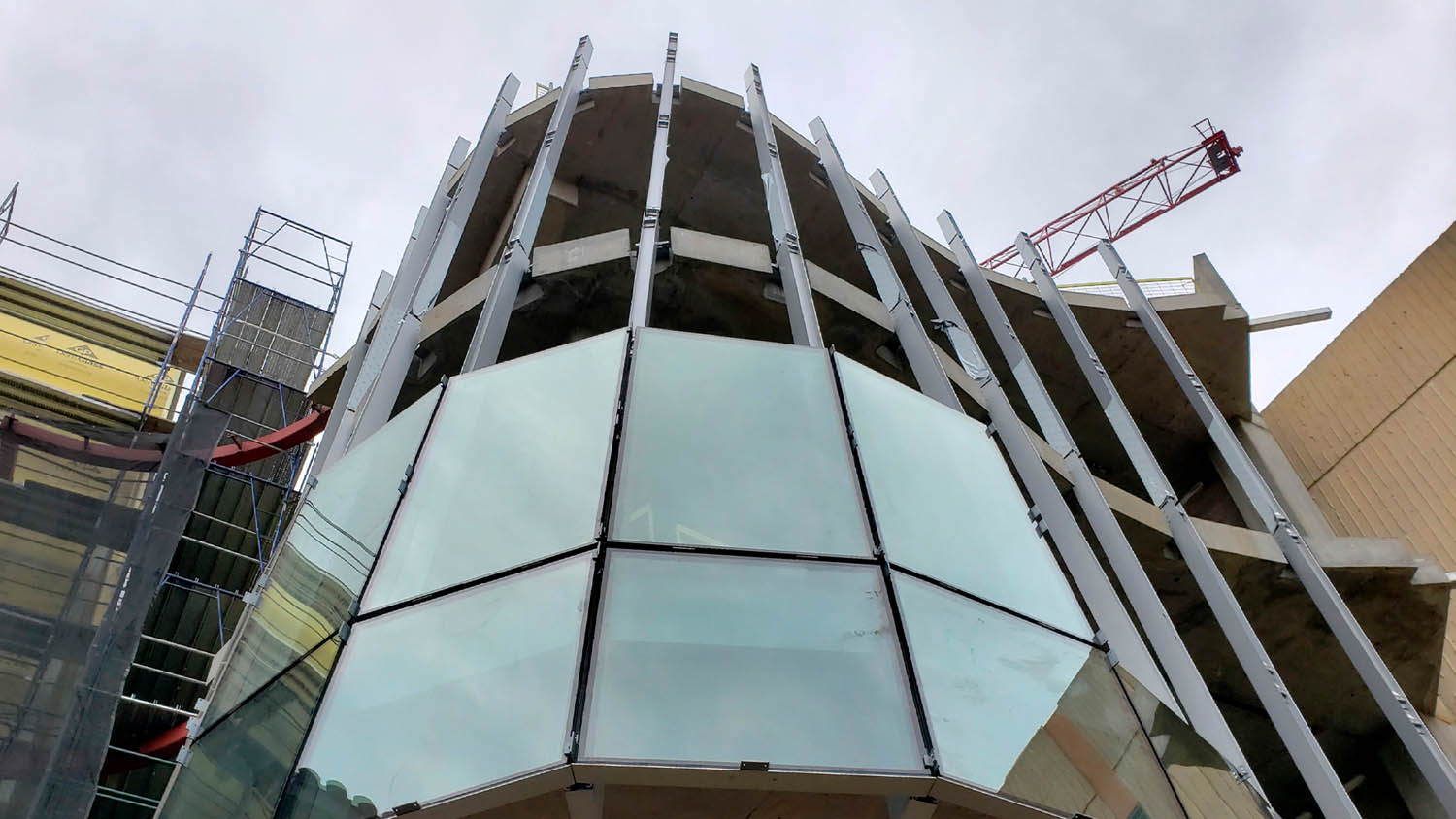
Take the Caltech Resnick Sustainability Center, where the curtain wall features an innovative application of cold-bent glass. Unlike traditional curved glazing, which requires expensive custom fabrication, cold-bent glass can be elastically deformed on-site within a controlled range. Each panel can be fine-tuned to conform to localised curvature variations, allowing complex geometries without compromising the original design intent (see figures 2 and 3).
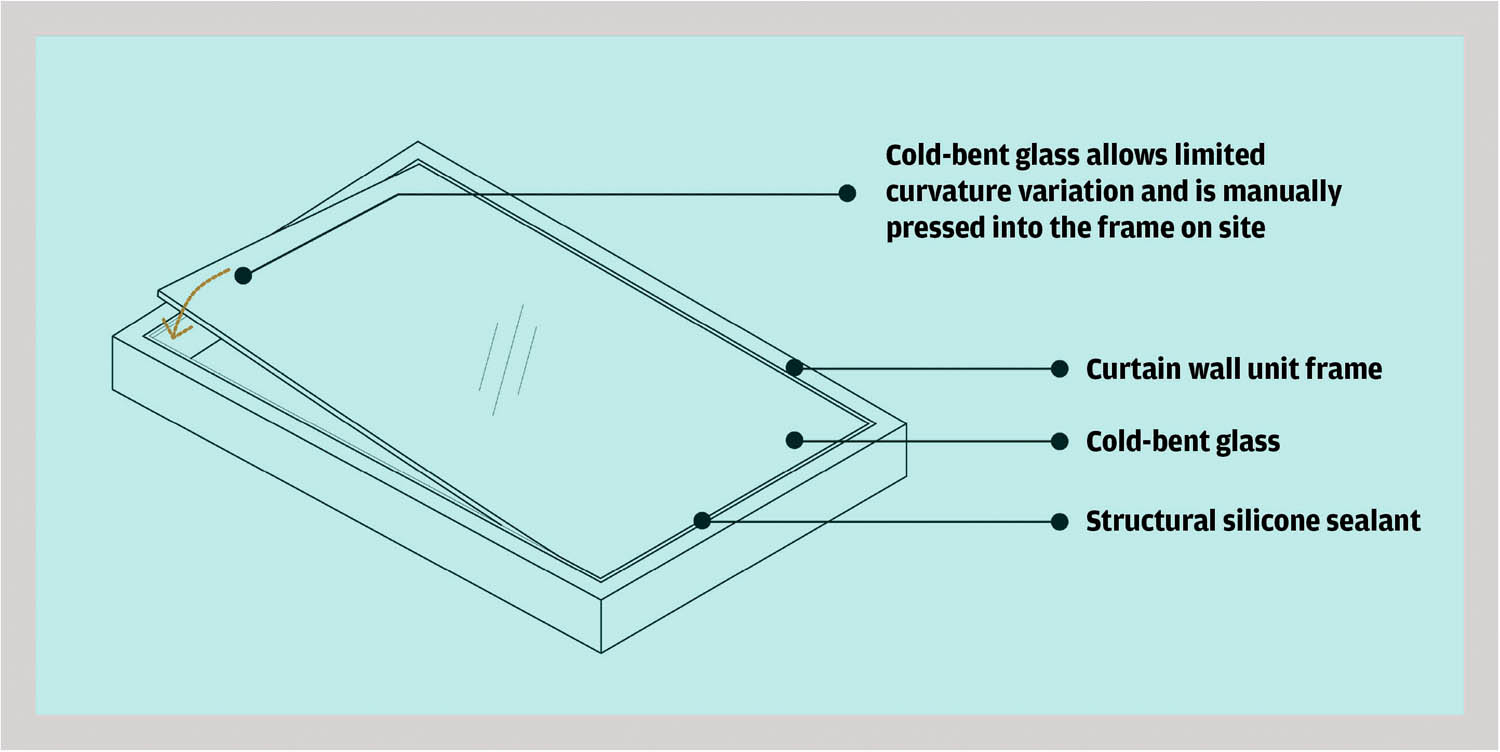
The key to making this work wasn’t just material science, it was the design workflow. The tolerances of the glass were provided by the manufacturer and explicitly encoded into Grasshopper scripts to validate, test, and refine the geometry. The adjusted geometry was then sent to the manufacturer for further definition and development. This approach ensured that the original design intent was realised to the greatest possible extent. It demonstrates a repeatable principle that tolerances can be treated as generative parameters rather than post-design constraints.
Materials are not passive carriers of form; they embody openness. When their properties become parametric data rather than footnotes in specification manuals, they shift from being constraints to being generative forces.
The component revolution
While architects have historically focused creative energy on overall form and concept, component-level design, the detailed resolution of how materials actually connect and perform, has increasingly been delegated to manufacturers and contractors. But this is where some of the most impactful innovation happens, often invisible to the end user but critical to both buildability and design intent.
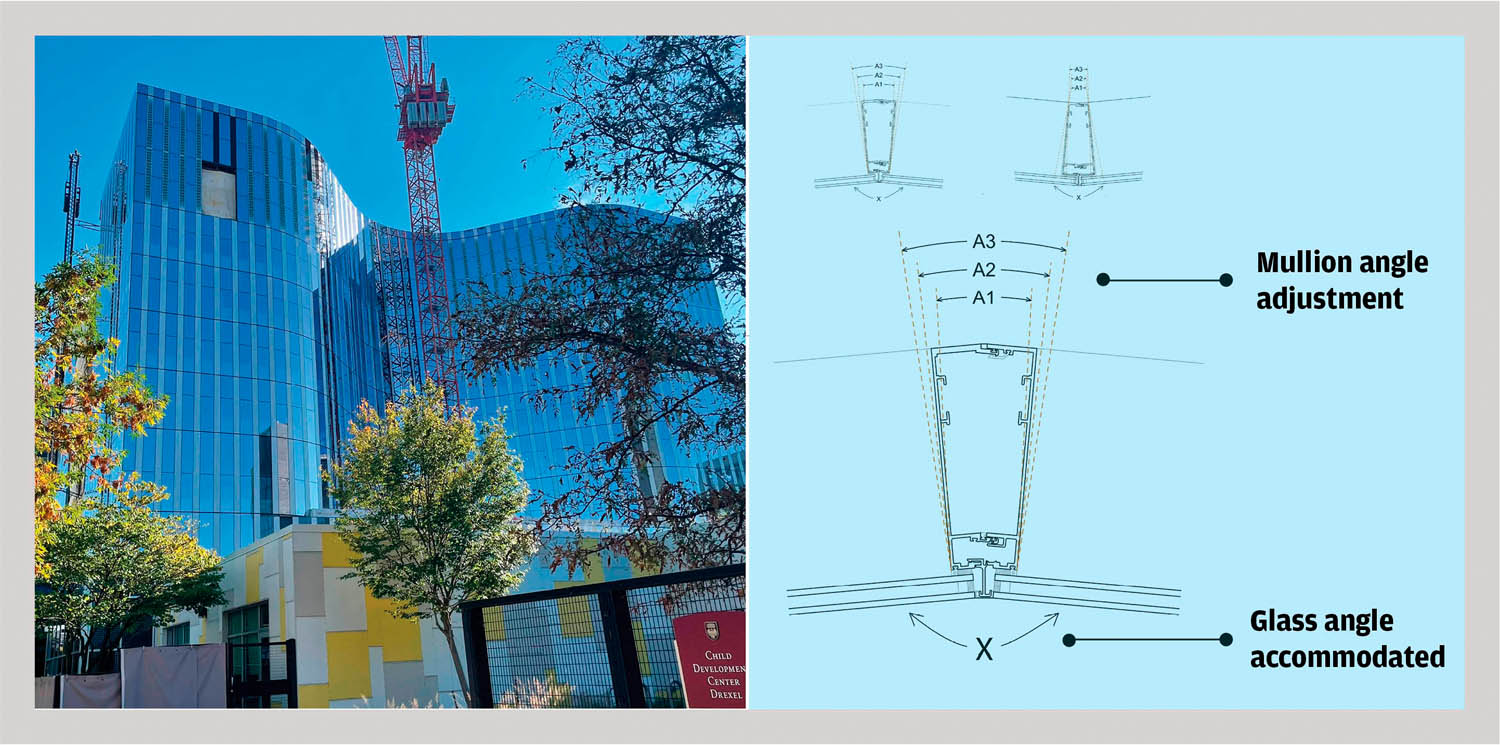
The University of Chicago’s Abbie Foundation Cancer Pavilion demonstrates this principle at scale. The building’s façade features continuously varying curvature with non-uniform curtain wall unit lengths, a geometric complexity that would typically generate hundreds of unique vertical mullion types, each requiring custom fabrication, unique detailing, and complex coordination.
Through detailed analysis of the curtain wall system in collaboration with the construction team, designers introduced an angular tolerance of approximately one degree into the mullion design. This seemingly small innovation allowed the mullions to absorb minor geometric variations caused by curvature changes without compromising performance or installation precision. The result: mullion types were reduced from over a hundred to just eight, significantly lowering system complexity while preserving design integrity and reducing the complexity of manufacturing (see figure 1).
System thinking as creative catalyst
Building systems, HVAC, structure, envelope performance, are often treated as necessary technical considerations to be “dealt with” after the big design ideas are set. But what if we flipped that relationship? What if the principles governing how buildings actually function became sources of inspiration rather than obstacles to overcome?
Consider something as fundamental as airflow across a building surface. Increasing the roughness of a building envelope can alter surface airflow patterns. When combined with specific orientation and microclimatic conditions, this can generate localised cooling effects. It’s a quantifiable physical phenomenon with measurable performance implications, but it’s also a formal and textural opportunity.
The potential goes far deeper. Over recent decades, global construction has generated vast amounts of engineering data. Every building project, every material test, every structural analysis contributes to an expanding knowledge base. Meanwhile, parametric design tools, BIM models, and simulation software provide unprecedented capacity to process and apply this information.
We’re now at an inflection point where artificial intelligence and machine learning can help designers absorb and learn from this accumulated engineering knowledge. Imagine accessing decades of real-world building performance data not as static reference material but as active design guidance, patterns recognised from thousands of projects informing decisions in yours.
If this accumulated engineering data, principles, and knowledge can be analysed and absorbed by designers through advanced technologies it would enhance innovation in both design and engineering.
Simulation: from evaluation to generation
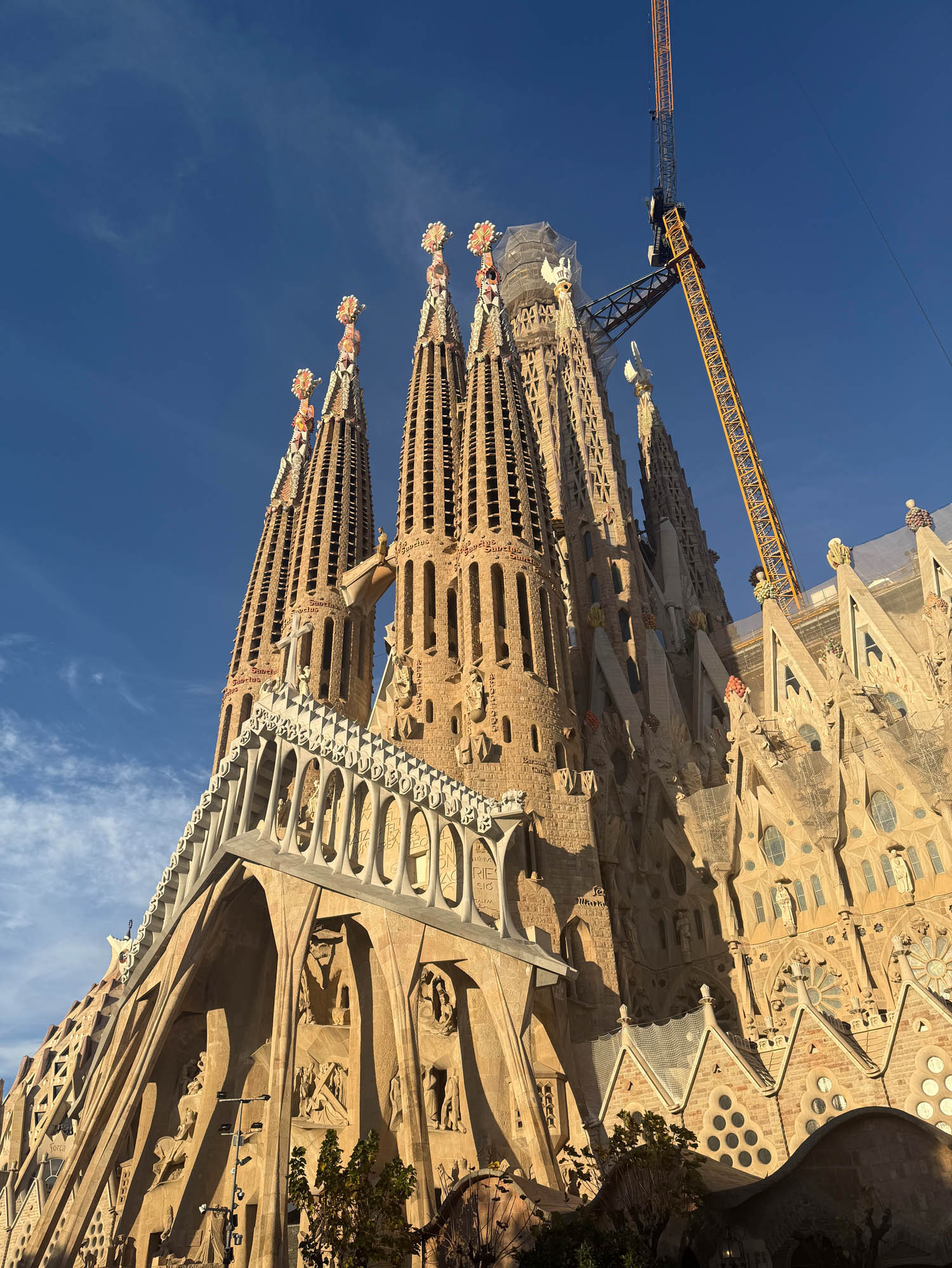
Antoni Gaudí’s inverted catenary models for the Sagrada Família remain iconic examples of physics-driven form generation. By literally inverting hanging chains and weights, Gaudí could visualise pure compression structures, gravity itself became the designer.
That was one force, brilliantly exploited. Today, designers have access to simulation tools that model thermal performance, wind effects, structural behaviour, acoustic propagation, daylighting, and countless other environmental factors. But here’s the catch: these tools are typically used to evaluate predefined design options, and select optimal solutions, not to generate form.
What if we used them more like Gaudí used gravity?
Tools like Kangaroo, a physics engine plugin for Grasshopper, already enable this approach for structural design. By importing material properties as parameters, designers can model tension fields and define maximum feasible design boundaries in real-time. Force-field data becomes design control input, providing reliable structural guidance throughout the design process rather than a late-stage validation check.
This represents a new epistemology of design, based on iterative testing and interaction rather than linear progression. Instead of designing, then checking, then redesigning, the iteration happens continuously, embedded in the creative act itself.
In an era of climate uncertainty, this approach becomes even more critical. Embedding physical environmental parameters into architectural design from the outset makes the design process more data-driven and adaptive, improving resilience to environmental conditions. When simulation shifts from being a verification tool to being a generative partner, designers gain a better understanding of the constraints they can challenge.
Rethinking the design process
What emerges from these case studies and evolving tools is a fundamental reconception of what architectural design actually is. When architecture is understood not as form-making but as the organisation of multi-layered technical information, coordinating design ideas, physical environments, and engineering logic, the entire process transforms.
Front-loading construction information doesn’t mean constraints kill creativity. It means creativity is informed by reality from the start. It means fewer late-stage compromises. It means design intent that can actually be built. And perhaps most importantly, it means design can become a mechanism of continuous validation, correction, and generation under conditions of uncertainty.
When designers work with reliable, real-time feedback about what’s actually achievable, they can push harder in productive directions and avoid wasting energy on dead ends
The old model was linear: architects design, engineers analyse, contractors build, and somewhere in that sequence, the original vision gets diluted. The new model is cyclical: material data, component tolerances, and system principles are embedded computably into the design process, enabling continuous refinement and validation.
This doesn’t eliminate the role of architectural judgment or creative vision, it amplifies it. When designers work with reliable, real-time feedback about what’s actually achievable, they can push harder in productive directions and avoid wasting energy on dead ends. They can test more variations more quickly. They can identify opportunities that wouldn’t be visible without computational analysis.
The path forward
The trajectory is clear. Parametric modelling, engineering simulation, and AI are providing the means to translate construction information into actionable design logic. As these tools mature and become more integrated into standard practice, the feedback loop between design and construction will tighten further.
Design no longer merely adapts to engineering constraints but increasingly becomes a medium for advancing construction technologies and expanding the boundaries of creation.
This is the real promise of front-loading: not just better buildings or more efficient processes, but a fundamental evolution in how we conceive of architectural innovation. When engineers and architects work in true partnership from day one, when construction knowledge flows freely into conceptual design, when simulation and analysis tools become generative rather than merely evaluative, that’s when architecture can fully engage with the complex realities of climate change, rapid urbanisation, and technological transformation.
The buildings that result may not look radically different from the outside. The innovation is often invisible, in the elegance of a connection detail, the efficiency of a fabrication sequence, the intelligence of a systems integration strategy. But cumulatively, these shifts, from a geometry-realisation oriented approach to information-stimulated innovation, represent nothing less than a new paradigm for architectural practice.
In the end, front-loading isn’t really about loading anything at all. It’s about removing the barriers between what we imagine and what we can build, and discovering that when those barriers fall, the possibilities expand in unexpected directions.
Haisheng Xu is an architectural designer at Yazdani Studio of Cannon Design specialising in parametric design, BIM integration, and the incorporation of construction and fabrication logic within various-scale architectural projects.