
Symetri, an Autodesk Platinum Partner, recently hosted a gathering of its customers in Stockholm to showcase how customers such as Henning Larsen are building their own AI stacks using its Naviate technology, as Martyn Day reports
What is AI doing to the way that the AEC industry designs, builds and runs its assets? This is the question that set the agenda for Symetri’s BIM Summit, held recently in Stockholm.
Symetri is part of the Addnode Group and one of Autodesk’s largest partners, and its event was staged at an interesting time for the company and its customers.
Discover what’s new in technology for architecture, engineering and construction — read the latest edition of AEC Magazine
👉 Subscribe FREE here
Autodesk had just shipped the latest versions of its AEC software, and the headline enhancement across its product range – Revit included – was support for Model Context Protocol, or MCP. This is an emerging standard that enables an external large language model (LLM) to read a BIM model and act on it.
It’s important, because almost every AEC practice featured on the agenda at Symetri BIM Summit is already building AI into its work, and the tool mentioned by countless presenters and attendees was Anthropic’s Claude.
This is relevant because the LLMs for which AEC firms are reaching now sit a layer above CAD and BIM, while Autodesk’s newest releases are designed to plug straight into them.
Setting the stage
The day began early, with a breakout from Symetri’s Naviate team on its roadmap to 2030.


Naviate is Symetri’s technology ecosystem and home to well over a decade of intellectual property that was initially launched in the form of productivity add-ons for Revit and Civil 3D. More specifically, these add-ons automate drawing production, parameter management, sheet creation and model-checking across disciplines.
But the Naviate product range has grown to also include templates, object libraries, standards and configurations capable of tailoring a generic Autodesk installation in order that it should work in the way that Nordic and other European AEC practices actually work.
Symetri’s Jan Tore Bugge and Hans Zandhoff described a development culture rebuilt for the current pace of change, in which quarterly planning has been ditched for two week cycles shaped directly in collaboration with customers and public roadmaps are now published on the Naviate site.
Perhaps the most interesting move is architectural. Naviate’s roughly 1,200 features have historically been reached through the Revit ribbon; they are now being exposed as APIs with MCP servers on top, so that the path becomes Claude to MCP to Naviate to Revit, with no button required.
A standalone Naviate Assistant for Revit is now close to beta testing, and Symetri offers an early-access programme to surface its MCP servers inside Autodesk’s own Revit Assistant.
If AI becomes the interface, the value no longer sits in ribbon buttons, but in the expertise encoded behind them. Firms will not care whether a task was performed by a button, an API call or an agent – only that it was performed correctly.
In other words, Naviate is repositioning from a Revit productivity plug-in to the execution layer beneath whichever agent the customer chooses, which is a far more defensible place to stand than competing to own the conversation itself.
Rapid technology environment
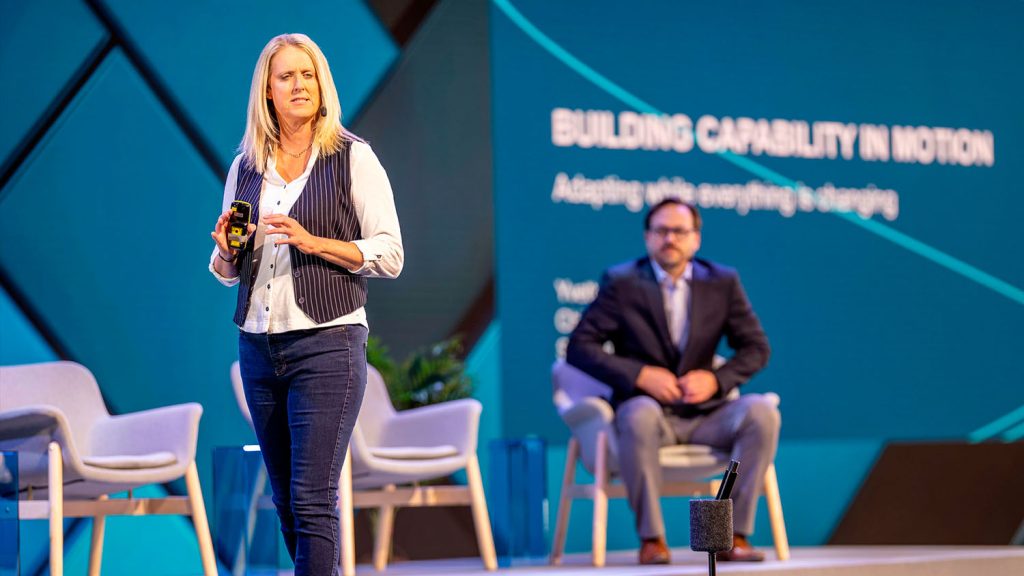
On the main stage, Symetri’s position was set out by chief strategy officer Yvette Dainton and AI product strategy director Kevin Phillips. Dainton’s argument was that capability can no longer be deployed and declared ‘done’, because the development cycles once measured in years according to Moore’s Law now run in months instead, and by the time you have hired for a skill, the skill has evolved.
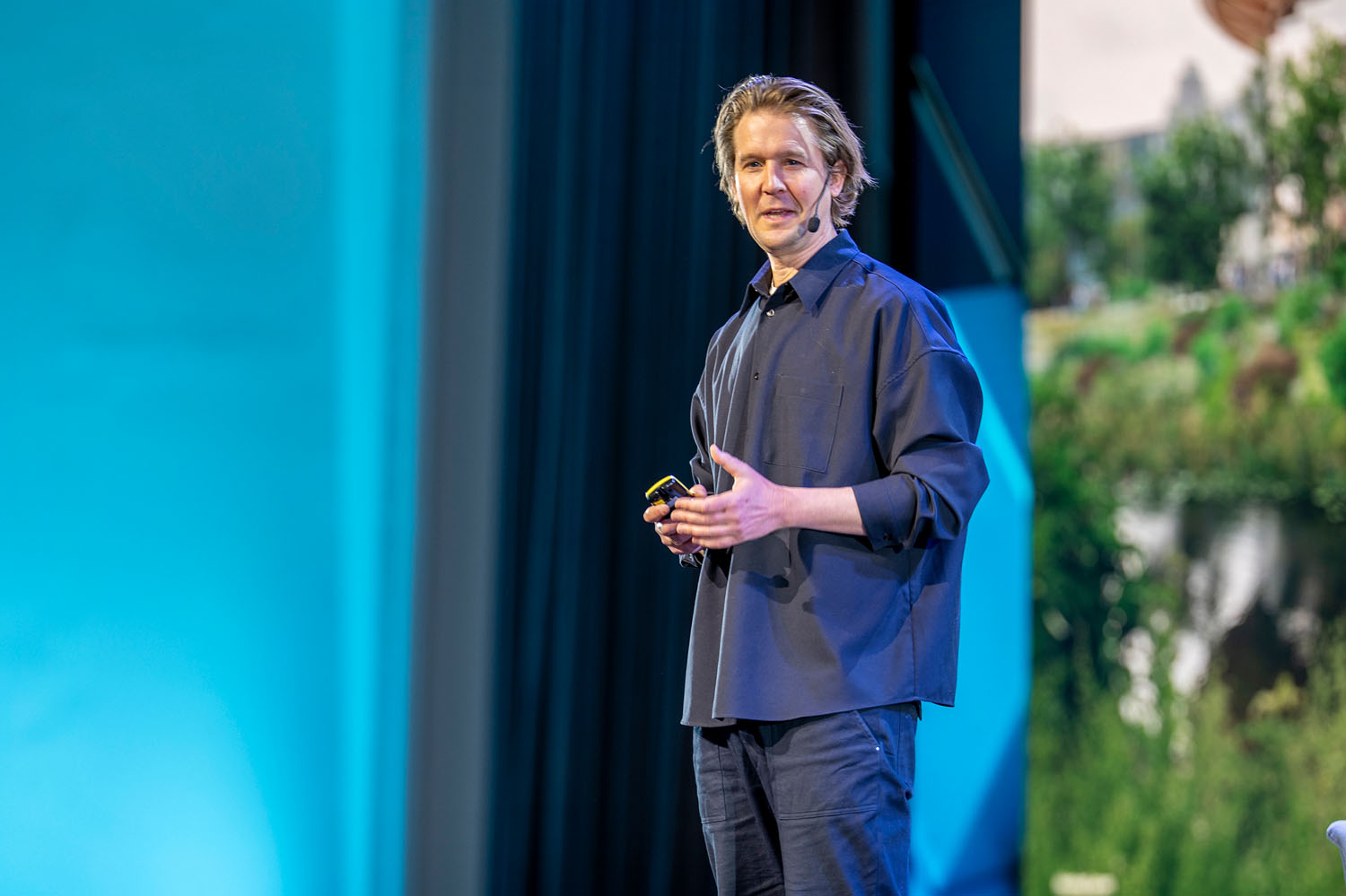
The first keynote presentation went to an architect, Jakob Strømann-Andersen, director of innovation and sustainability at Henning Larsen. His firm, which employs around 600 architects inside the Ramboll Group, runs a unified production environment on Rhino and Revit and writes a good deal of its own tooling. Its AI stack is assembled from whatever works: Claude, Midjourney, Google’s NotebookLM, and, signed one day before the summit, an enterprise agreement with Krea for image-to-image generation on Google’s nano banana model, which runs to 40 million credits.
Strømann-Andersen’s core argument was the iceberg. The glossy render is the tip, while the value sits underwater, in terms of the material choices, orientation and carbon logic that AI can help surface in the earliest phases.
He cited as an example the ‘World of Volvo’ experience centre located in Gothenburg, a mass-timber building modelled parametrically in Rhino and Grasshopper. With the glulam manufacturer pulled into the digital room, he explained, drawings could be sent straight to a robot cutting beams in Austria.
If AI becomes the interface, the value no longer sits in ribbon buttons, but in the expertise encoded behind them
He also showed off an open competition stage that was won by the firm on a 10,000 Danish kroner (DKK) budget. This harvested some 40,000 Instagram and Facebook images geotagged to the Refshaleøen site in Copenhagen and then classified them to help the team understand what people actually valued there. Nature scored far higher than anyone had spotted while walking the site, and the firm is now invited to compete in the final round of the competition.
Strømann-Andersen was also honest about the bias baked into image generation, which defaults to Western European ideas about what constitutes a beautiful building, and about governance. Henning Larsen prefers to set dogmas rather than rules, insists AI use is declared openly to colleagues and clients, and lets the people doing the work choose their own tools, rather than imposing them from the top. Responsibility for output, he said, stays with the architect, not the model.
Many of his examples showed AI changing small, daily routines. For example, there was the example of an architect prompting Claude live during a Teams call, in order that a French client might see in seconds what a more artistic treatment of the parking space under his commercial building could look like.
Another involved a landscape architect designing a plaza in the Middle East for a client who had recently visited a shaded plaza in Madrid and wanted them to draw inspiration from that experience. In this example, the architect was able to iterate the idea into something plausible through prompting alone, without ever once opening a modeller.
The aspect of his presentation that really captured the imagination, however, was a tool aimed squarely at his own profession. Anti-Render is a free website that takes glossy architectural renders and shows you what they are likely to look like in reality. StrømannAndersen offered this as a stress test for architects, a corrective to render culture, and as a reminder that imagination, intuition and good taste are all parts of the job that AI cannot perform.
MCP in Revit
Monica Pereira da Silva, an Autodesk solutions engineer for Northern Europe, gave attendees the product tour. Her frame was the move from CAD to BIM to connected BIM and on to what Autodesk calls ‘outcome-based BIM’, built on granular data and AI.
The case for granularity is a good one. Files are heavy, most exchanges need only a slice of a model rather than the whole thing, and the aim is to let data move between applications without linking enormous files into Revit just to see somebody else’s geometry. It all routes through Forma, Autodesk’s industry cloud into which the former ACC and Docs ofhave been folded, with Revit repositioned as the first connected client.
MCP is a bridge between Autodesk’s APIs and any LLM, and Autodesk has now published MCP servers for Revit, Fusion and its model data explorer, alongside an AI Assistant that reaches into the same APIs, so answers stay grounded in live projects.
This AI Assistant appears in AutoCAD, Civil 3D, Forma, Build, and in beta form, in Revit, and handles the kind of work that can quietly devour hours. Such tasks, for example, might include sorting the open issues on a project, colour-coding elevations for accessibility compliance, applying a drawing template and dropping a plan onto a sheet from a plain-language request.
The demonstration shown was Revit driven from Claude. Someone who cannot open Revit, let alone model in it, can now ask in natural language for the window-to-wall ratio of a façade, and Claude, through the MCP server, can reach into the live model, select the relevant walls and windows, and return the figure, with the elements highlighting in Revit as it works. This is a huge step forward in being able to interrogate Revit designs.
Naviate’s roughly 1,200 features have historically been reached through the Revit ribbon; they are now being exposed as APIs with MCP servers on top, so that the path becomes Claude to MCP to Naviate to Revit, with no button required
Running opposite this session, Mike Ford of Ridge & Partners offered his audience the day’s best shock title: ‘Vendor Lock-In Is a Choice: How We Chose to Leave’. This promised a dramatic exit and delivered a more interesting reality. The vendor Ridge left was a data-hosting provider, not its design tools, and the destination was Autodesk Construction Cloud, with Symetri migrating roughly two terabytes of project data between services.
Tyréns builds, Heathrow grounds
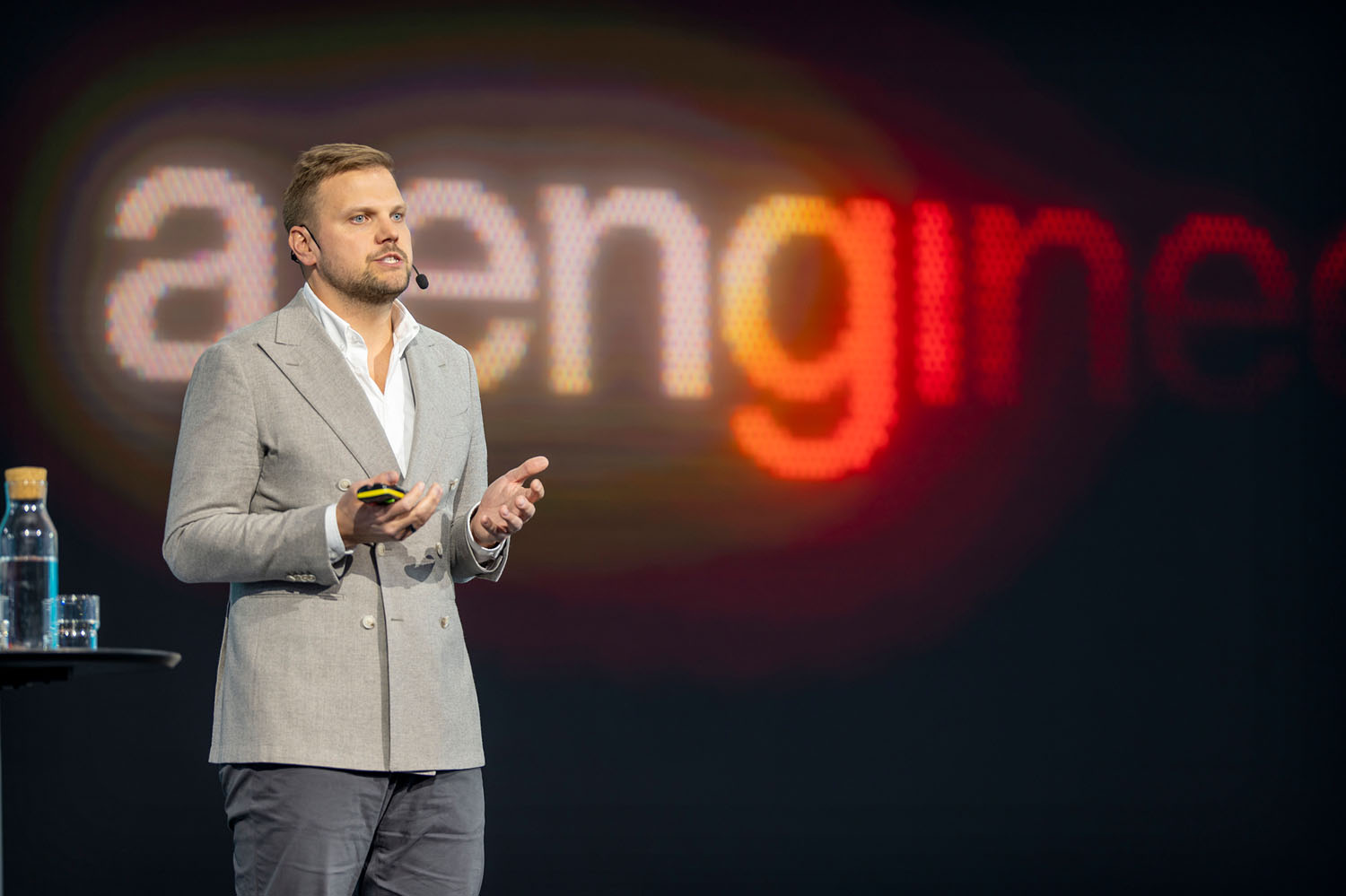
The next pair of parallel sessions placed a Swedish engineer and a British airport side by side. Tyréns sent Patrik Mälarholm and Kalle Valkama to explain why it released an unfinished AI, SvenAI, to 3,000 staff, and then productised a second venture, A.Engineer, from idea to public launch in six months. A. Engineer was a really impressive AI engineering tool, so much so that we asked the company to come and speak at NXT BLD two weeks later (catch A. Engineer’s NXT BLD 2026 presentations here).
A really great detailed talk on the ‘golden thread’ came from Nigel Stroud, who has worked at Heathrow Airport for 26 years. The airport processed 84.5 million passengers in 2025, with two runways running at capacity, and has spent more than £4 billion over five years on assets. Stroud’s no-nonsense message was ‘foundations before fireworks’.
Heathrow’s ‘common language’ codifies every asset by concatenating location, level, space, system and asset into a unique identifier. That unglamorous data structure is what makes everything else possible. As Stroud put it, “the data needs to do its job, and people shouldn’t be worrying about the data.”
Asked if, in effect, Heathrow has a digital twin, he cheerfully admitted he did not know whether the term applied – but I’d say it very much does.
Autodesk and an Archbishop
Emmanuel Di Giacomo, Autodesk’s BIM and AI evangelist for Europe, supplied the vision in the late-afternoon keynote. The numbers made the familiar case for change: more than a third of industry time is lost to non-optimal activity; some $280 billion is spent on preventable rework; and 96% of the data created during design and construction is lost by handover, a proportion to grab the attention of anyone thinking about AI and/or digital twins.
For AEC, the connective piece is Forma. Revit becomes its first connected client, which means the analysis that used to mean a round trip, CFD, solar radiation and embodied carbon, can be run against a Forma model from inside Revit, and Di Giacomo was at pains to stress that the platform is open.
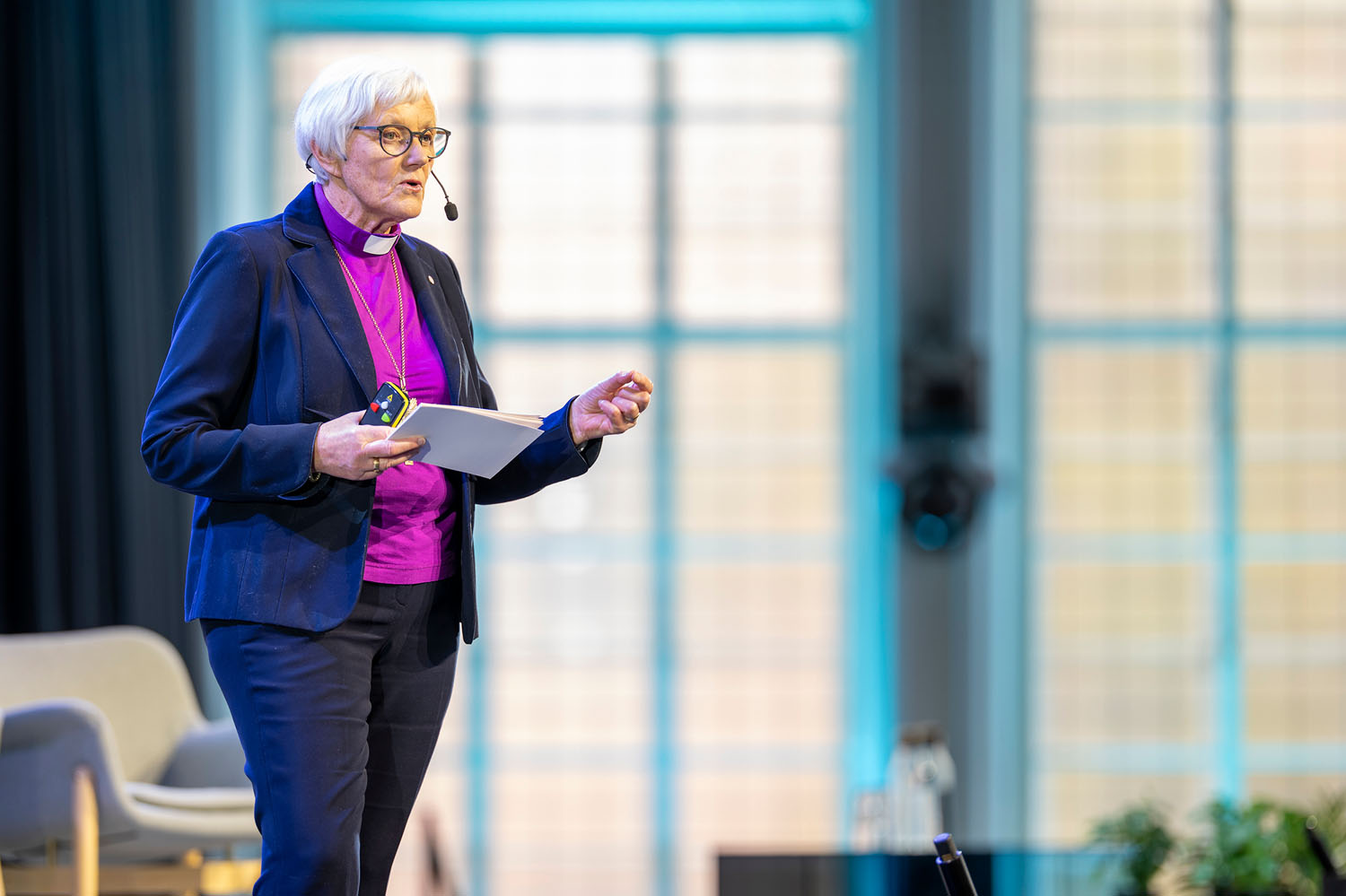
I had to do a double-take when I saw that the final speaker at the Symetri BIM Summit was an archbishop emerita of the Church of Sweden, Antje Jackelén – but honestly, her presentation was a thought-provoking joy. After seven hours of platforms, protocols and productivity ratios, she got us all focused on human beings and human experiences.
Her frame was Freud’s three narcissistic insults to human self-regard: the cosmological, when Copernicus removed us from the centre of the universe; the biological, when Darwin removed us from the crown of creation; and the psychological, when Freud himself argued we are not even masters of our own minds.
To these, she proposed a fourth, an intellectual insult delivered by AI, in which technology is able to recreate a faculty that humans had previously kept for ourselves. She then walked through every comforting way of coping with that insult and showed each to be a plaster over a wound that keeps bleeding. What she offered was not reassurance, but a call for responsibility, and its companion, fallibility.
A closing panel discussion gave space for these arguments to breathe. Knut Ramstad of the Nordic Office of Architecture drew a parallel to the Arts & Crafts backlash against industrialisation, complete with an analogue revival and data poisoning as a form of quiet rebellion. He also named Anthropic’s unreleased Mythos model as his example of a technology where the direction rests on the judgment of a handful of companies, rather than anyone accountable to the rest of us.
As the Archbishop deftly pointed out, AI promises an enormous boost for human skills, but also threatens the loss of skills. And while there’s huge potential for work and sustainability, it also represents huge consumption of energy and water resources.
The most telling response to this came from Symetri’s own CEO Jens Kollserud, who admitted openly that some of the Archbishop’s perspectives he had not yet processed, and did not pretend otherwise. What had lodged, he added, was her framing of AI as something that could save humanity or erase it. His instinct, he said, is that the answer is neither. “It’s about finding a balance and finding something: what can we do and contribute to?”
Symetri, he stressed, plans to help colleagues, clients and others use this technology for good.
All of the Symetri BIM Summit 2026 presentations are available to view here.
Main image: Symetri’s chief strategy officer Yvette Dainton and AI product strategy director Kevin Phillips