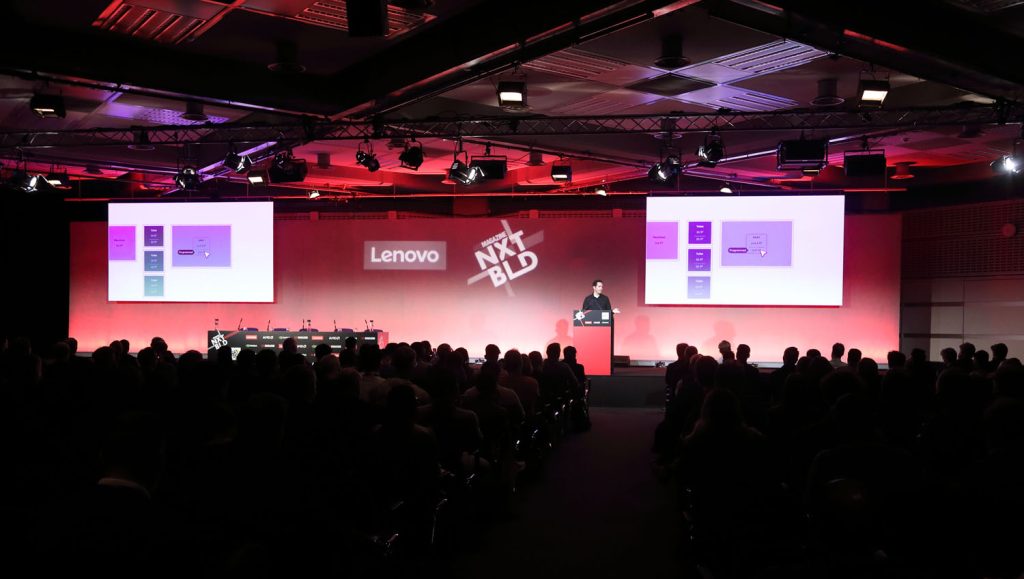

As we catch our breath after our ten year anniversary event at London’s Queen Elizabeth II Centre, we reflect on some of the key themes to come out of NXT BLD this year
1) Kit of parts becomes reality
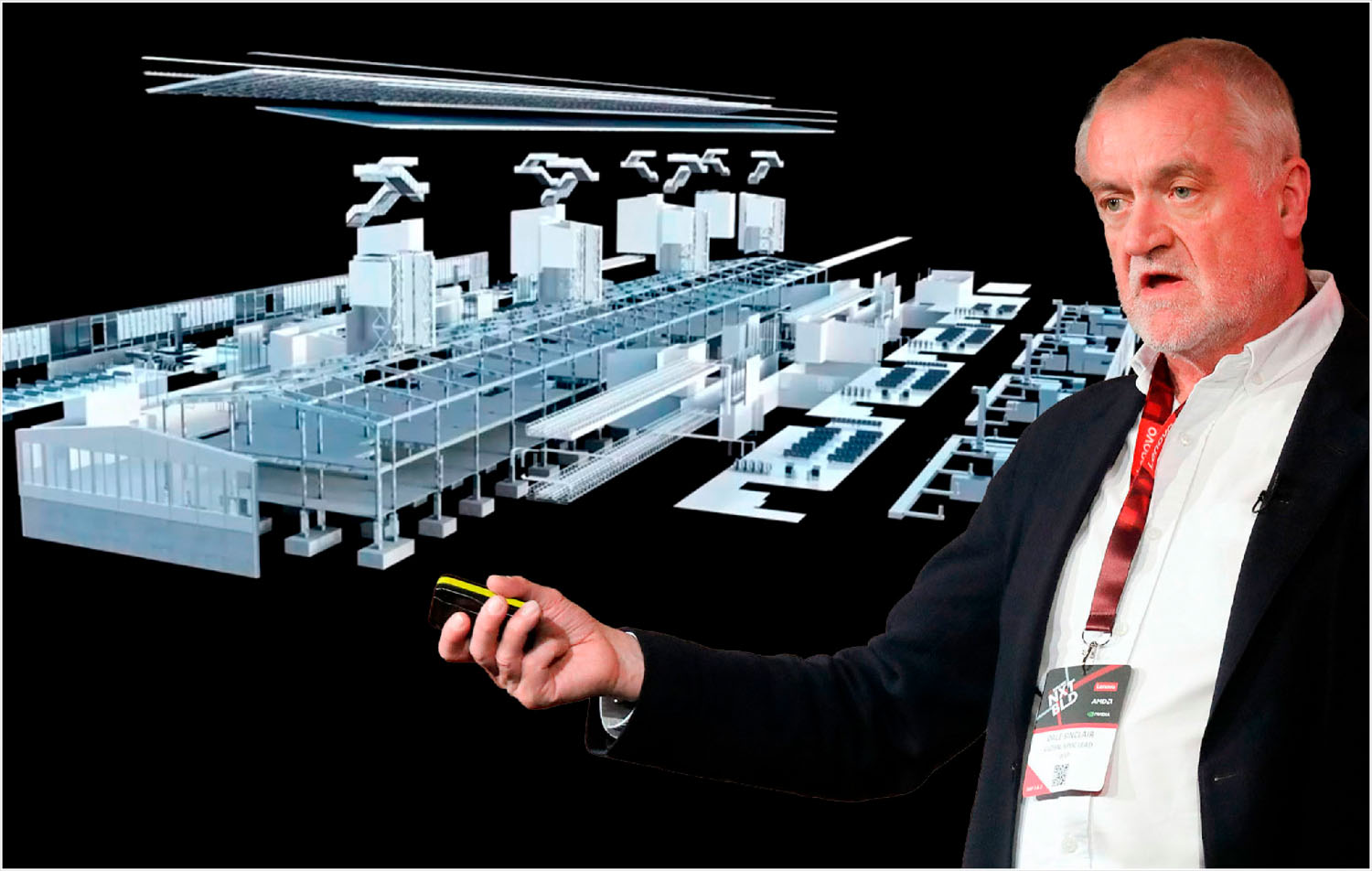
Off-site manufacturing is moving from promise to practice, with the numbers to prove it. On one WSP project, deliveries fell from 3,500 components to 64 assemblies, cutting site time, complexity and risk — a shift outlined by WSP’s Dale Sinclair (watch his talk). Design for manufacture and assembly, he said, requires a new generation of factories, which will bring lower costs, shorter programmes and far greater predictability.
His reference point was Boeing, which ships whole aircraft sections across the US because its manufacturing and logistics work as one system, not separate parts.
WSP is now eyeing Product Lifecycle Management technology, long used in automotive and aerospace — and PLM leaders Siemens (watch talk here) and Dassault Systèmes (watch talk here) were both presenting at NXT BLD, eyeing construction as their next frontier.
2) Leading firms are rethinking their tech stacks
Instead of bolting AI onto existing workflows, Foster + Partners is rebuilding its tech stack completely. Martha Tsigkari argued AI is both disruptor and threat, coming for expert knowledge work (watch here talk here). The firm’s response draws on sixty years of captured design knowledge linked to documents. The pipeline runs from image to video to 3D models, with agents collaborating along the way, a shift from modelling tools to modelling partners.
At HOK, the rebuild is about data. As Greg Schleusner frames it, once data is freed from applications, what does the industry actually need from it? (watch his talk here) The harder problem is extracting anything rich, since API lock-in now stacks on top of file-format lock-in. Experiments include taking a Revit model to Bentley Systems iModel then generating autodrawings with Graebert, evidence that firm-owned data pipelines are no longer theoretical.
3) Open tools have arrived
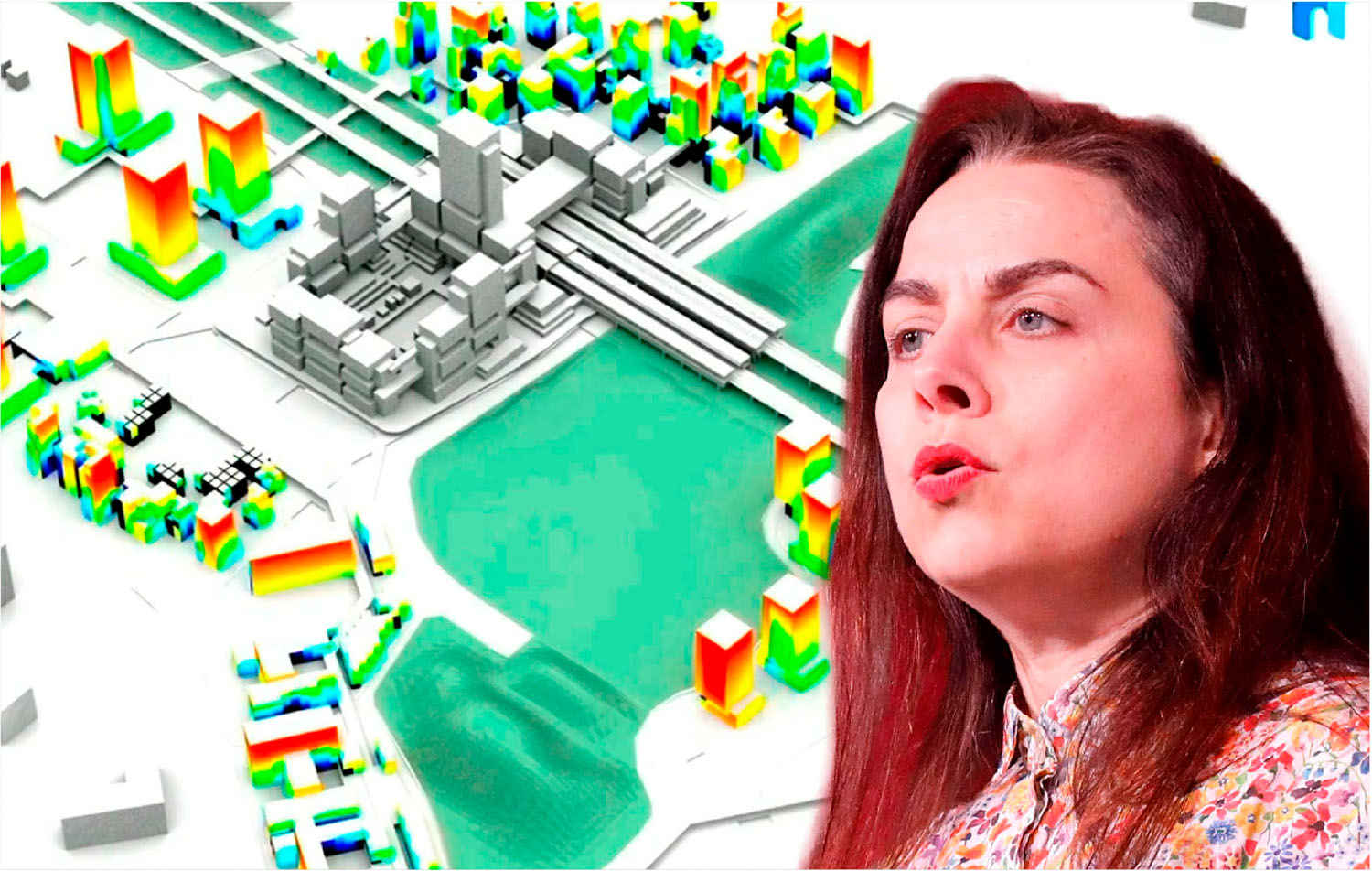
If one thread ran through the day, it was that open tools are no longer a fringe pursuit. Open-source components born from the IFC.js project, shown by That Open Company’s Antonio González Viegas, are quietly commoditising capabilities BIM vendors have long charged for, particularly in documentation and viewing. Alongside him, Ara 3D’s Chris Diggins showed open approaches to BIM data and geometry, while HOK’s Greg Schleusner demonstrated how the firm is using Bentley’s iModel as an open route out of proprietary authoring tools.
Individually, each is chipping away at a different layer of the stack. Together, they represent something more significant: a developer, a toolmaker and a major practice agreeing that the industry’s data should live in open, accessible formats, with vendors competing on capability rather than captivity.
4) Architects are becoming software developers
In the run-up to NXT BLD, conversations with design IT teams made one thing clear: AI software development had become a mainstream activity within practice, no longer confined to a handful of specialist groups.
Three weeks before the event, we added a dedicated AI software development track — a full day of talks exploring SDKs, development platforms and real-world applications built by AEC firms.
Tool developers including AMC Bridge, CREOOX, Ara 3D, Remap, Viktor, That Open Company, and A.Engineer were joined by practices building on those platforms: Buro Happold, Perkins&Will, HOK, Zaha Hadid Architects, Heatherwick Studio, Foster + Partners and Campbell Yule. Together, they provided a snapshot of where the industry is heading. With standing room only, we’re going to need a bigger stage next year!

5) Business models are cracking
We used to buy CAD outright and upgrade when it suited us. Then came suites to push up the price, then subscriptions, then named user licences and the death of network licensing, with SaaS pushing costs higher again. Boiled frog syndrome, applied to an entire industry.
Now, in the AI era, the conversation shifts to tokens and machine licence tolls, and an uncomfortable question surfaces: does anyone need as many named seats at all?
Richard Harpham, Amar Hanspal of Motif and Hugh McEvoy of Trimble discussed an industry approaching peak Named User, one where automation will erode software seats just as it erodes billable hours.
Martha Tsigkari of Foster + Partners captured the wider implication perfectly: “When AI compresses time, it compresses the fee — and that relationship is about to be completely renegotiated.

6) AI is a legal minefield
Excitement about AI adoption is running well ahead of the legal and organisational thinking needed to manage it safely.
On stage May Winfield, Buro Happold’s global director of commercial, legal and digital risk, warned that AI does not shift liability away from project teams (watch her talk). Citing Google DeepMind’s idea of “authority transfer”, she said construction cannot delegate blame to software: if an AI hallucinates, a model is misread, or data changes between tools, responsibility remains with whoever promised to deliver the model, design or dataset.
Her practical advice was straightforward. Keep humans in the loop, validate outputs at every stage, and align scopes with contracts. Train staff, check incoming AI laws, and scrutinise software terms for data training rights, access, exit costs and ownership.

7) AI agents aren’t quite ready for reality
Agentic workflows are coming, but deploying them safely, without giving away a firm’s edge, remains the hard part.
That sobering note came from Buro Happold CTO Alain Waha, who pointed out that VCs backing engineering AI are effectively betting on replacing knowledge workers, precisely because moving from experiment to production is so hard. His sharpest point concerned the models themselves: agents work with a firm’s knowledge, but what they have ingested is built from words, not worlds. They do not yet understand space, semantics or physical systems, and plenty remains to be invented before physical AI is real.
Meanwhile, Bentley CTO Julien Moutte said that agents will soon take structural requirements, optimise material use and identify the best design in minutes, not days. Nvidia’s Alfonso Oliva explored how to build multi-agentic workflows in AEC