
In the desktop vs. browser debate for AEC software, it’s no longer about choosing one over the other. It’s about designing systems where each plays to its strengths, writes Zsolt Kerecsen, CTO of Graphisoft
For years, the debate between desktop (workstation-based) and browser-based applications in the AEC industry was framed largely around performance. Desktop software was faster and more powerful; browser tools were lighter and more accessible. That distinction still matters — but today it is no longer the whole story. The industry has moved toward a hybrid architectural reality in which both approaches play complementary roles.
BIM drives change
At the heart of this shift is the nature of BIM itself. BIM models are large and complex, and local machines remain essential for authoring — creating geometry, running complex calculations, and leveraging GPUs and large amounts of RAM. Desktop applications continue to be the “heavy lifters” in this respect. However, the industry is aggressively moving away from monolithic files toward granular, data-centric models. As a result, while desktops dominate creation, browsers have become the primary interface for collaboration, data management, and lifecycle workflows.
From a software architecture perspective, both desktop and browser applications are simply clients in a client–server system. In the modern SaaS world, this distinction is crucial. SaaS does not mean “browser only.” It means cloud-based services accessible to multiple client types, including powerful desktop applications deeply integrated with cloud platforms.
Discover what’s new in technology for architecture, engineering and construction — read the latest edition of AEC Magazine
👉 Subscribe FREE here
Each approach brings distinct strengths. Desktop applications such as Archicad, Vectorworks, or Revit offer superior performance by leveraging local hardware directly. They can function offline, which remains critical for remote job sites or unreliable connectivity. They also provide deep access to operating system and hardware resources, making them ideal for precision modelling and computationally intensive tasks. The trade-offs are well known: higher hardware costs, more complex IT deployment, and operatingsystem dependencies that make multiplatform support harder.

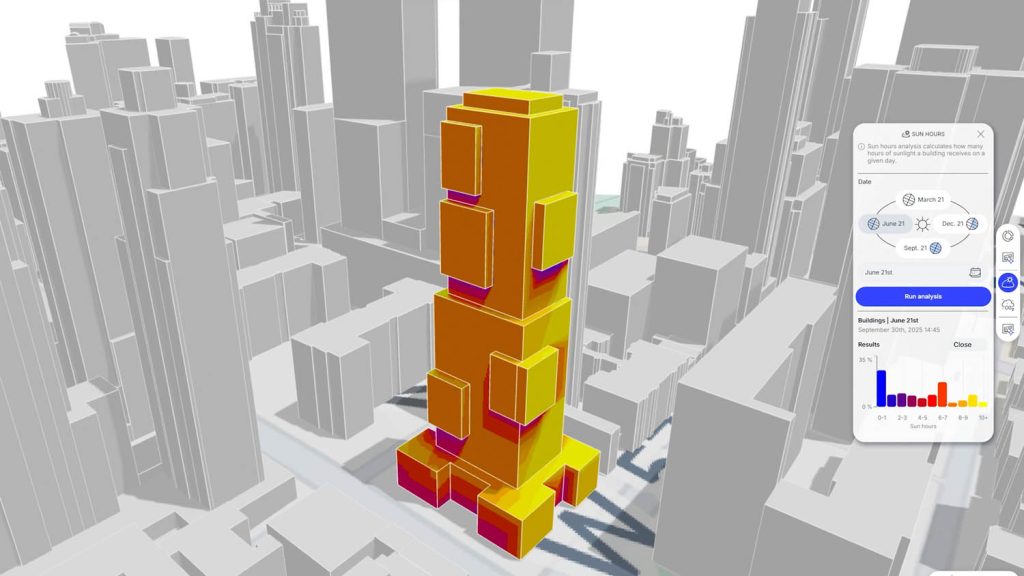
Browser-based applications — such as Graphisoft’s Project Aurora (currently in beta testing), Speckle, or BIM 360/ACC — excel in very different areas. They are inherently data-centric rather than file-centric, enabling real-time multi-user collaboration and a true “single source of truth.” Updates are seamless, delivered server-side without version mismatches. Hardware requirements are minimal, and the same application can run on Windows, macOS, tablets, or even phones with no additional development effort. Their limitations lie in performance constraints imposed by browsers and reliance on stable internet connectivity.
Many desktop applications in the AEC market have long histories — some spanning 40 to 60 years — and inevitably carry technical debt from earlier programming paradigms. In response, vendors have rewritten or modernised their products, adopting new architectures and user experiences.
Modern desktop applications increasingly embed browser technologies to display web content, build dashboards, and enable collaboration. With well-prepared architectures, updates no longer require full reinstallation; downloading new components and restarting the application can be enough. “Skins” and modern UI frameworks allow desktop software to adopt a browser-like look and feel, while still retaining full access to local hardware. Crucially, these applications are tightly integrated with cloud services, combining local processing with centralised data.
Hybrid architecture emerges
This convergence points toward what might be called a “golden architecture”: a hybrid, SaaS-based model in which desktop and browser clients work together atop a common, collaboration-ready cloud backend. In this model, data-centricity replaces file-centricity. The cloud is no longer a secondary repository, but the primary product data management layer. Local files may still exist for offline work, but the authoritative source of truth lives in the cloud.
High-end specialists rely on desktop clients for precision, performance, and reliability, while browser tools handle viewing, markup, issue tracking, data management, and lightweight parametric edits
Most architecture and design practices are already operating in this hybrid mode. High-end specialists rely on desktop clients for precision, performance, and reliability, while browser tools handle viewing, markup, issue tracking, data management, and lightweight parametric edits. Broader project stakeholders — owners, consultants, contractors — interact mainly through browser-based viewers and dashboards. Designers model on the desktop, but publish, synchronise, and manage data in cloud platforms that support most of the project lifecycle.
The desktop vs. browser debate, then, is no longer about choosing one over the other. It is about designing systems where each plays to its strengths. The future belongs to hybrid architectures that give users flexibility, enable seamless collaboration, and support the full lifecycle of building data — from concept to operation.
While the evolution of AEC business applications remains a dynamic process of convergence between desktop and browser technologies and the current landscape is defined by the ongoing transition toward cloud-native ecosystems, the inevitable integration of artificial intelligence stands as the definitive disruptive force that will perpetually reshape the industry’s digital architecture.