
Construction-focused VC firm aims to normalise BIM data for AI and analytics pipelines
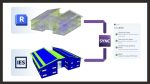
Suffolk Technologies, the venture capital platform affiliated with Suffolk Construction, has made an investment in Speckle, a data interoperability platform that extracts and normalises BIM data from authoring tools such as Revit, Civil 3D, Rhino, ArchiCAD and Tekla into a unified, queryable format accessible to downstream systems and project stakeholders
The platform addresses a structural limitation in how design data flows across construction projects. Although BIM adoption has increased the volume of design information generated, that data typically remains locked within the authoring tools that produced it, making it difficult to connect geometry, specifications and system relationships to cost, schedule or carbon datasets without manual intervention. Speckle normalises output from multiple sources into a format that can be routed into enterprise data infrastructure and queried by analytics or AI systems.
Discover what’s new in technology for architecture, engineering and construction — read the latest edition of AEC Magazine
👉 Subscribe FREE here
Suffolk Construction has deployed Speckle as an automated pipeline feeding its enterprise data lake. Once BIM data is extracted and normalised, Suffolk’s systems can tag and categorise elements and apply AI models to assign cost codes automatically. As Murat Melek, Suffolk’s Director of Design AI, explains: “Design data is messy, complicated, and dirty. Speckle is key for getting that building information data into our data lake in a way we can actually use. This work used to require manual review of every element across thousands of projects and can now be done in seconds.”
Speckle uses a versioned data model, which means that when design changes occur, the platform can identify precisely what has changed between versions and trace the downstream implications across interconnected building systems before those changes progress to change orders or RFI cycles. Suffolk has used this capability to quantify cost implications of design decisions earlier in the project lifecycle.
At portfolio scale, the normalised historical data allows Suffolk to identify design patterns associated with construction problems, compare versioned models to understand the cost of changes, and surface prefabrication opportunities across projects. The value of such analysis is contingent on data accumulating over time and on the consistency of normalisation across source tools and project types.
Jit Kee Chin, EVP and Chief Technology Officer at Suffolk and Co-Founder and Managing Partner at Suffolk Technologies, noted that Speckle has enabled access to model information in a way that supports AI automation across workflows ranging from structural calculations to layout coordination. The investment is indicative of a broader interest among contractors in establishing robust data infrastructure as a precondition for applying machine learning to construction operations, rather than treating AI as a standalone tool.
Speckle was co-founded by Dimitrie Stefanescu (pictured above speaking at NXT BLD 2025) and is used by firms including Pomerleau and gbi alongside Suffolk Construction.