
AEC firms looking to put AI to work need first to focus on organising the data that will fuel automation and better decision-making, according to Neil Holmes, AEC lead at HSO
When Neil Holmes, AEC market lead at HSO, demonstrates the company’s aec360 software to prospective customers, he finds that giving them a glimpse of the system’s AI capabilities is what really grabs their attention and sparks their excitement.
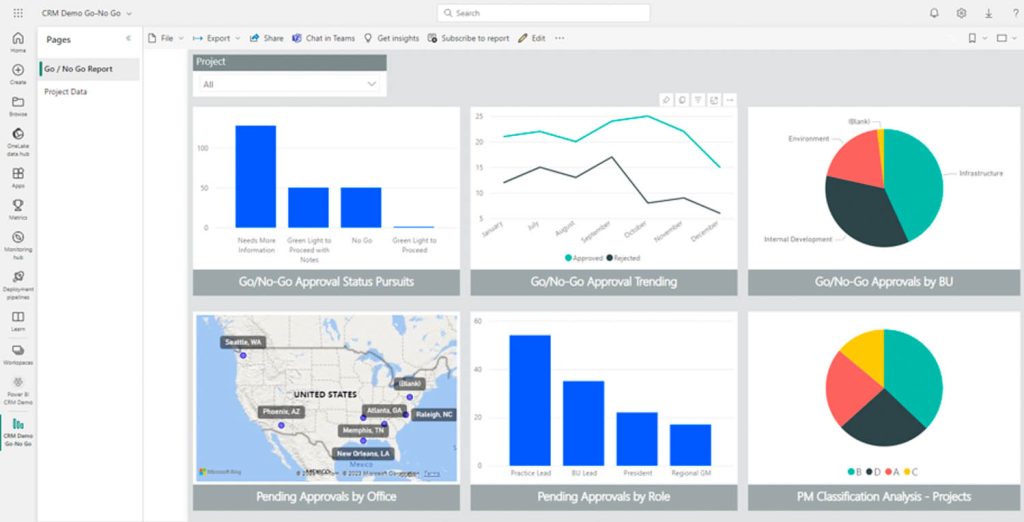
One capability that he likes to showcase is an AI-enabled RFP agent in aec360. This agent, he explains, can analyse a request for proposal, compare its attributes with those of previous projects, score it on its probability of success, and then arrive at a Go/No-Go decision.
If the verdict on the project is positive — it’s a Go — the agent will then proceed to develop a project plan that outlines phases and fees and highlights potential areas of risk.
Discover what’s new in technology for architecture, engineering and construction — read the latest edition of AEC Magazine
👉 Subscribe FREE here
This kind of demo is compelling, says Holmes, because it is immediately obvious to those watching how much time and money it might save their own firms. It gets them thinking, too, about other bottlenecks in their business that might benefit from a hit of AI. But along the way, it highlights to them that a major change of approach may be required when it comes to data management at their firm.
Current approaches are unsustainable and fail to provide an adequate platform for the powers of AI, he says. Many AEC firms find themselves “drowning in data, but starving for insight”, because they can’t bring together valuable data that currently resides in multiple, disparate back-end systems. The answer lies in centralising that data – in both structured and unstructured formats – in order to feed AI with the information it needs to learn, to identify patterns and trends, and to make data-driven decisions.
Introducing aec360
aec360 is a cloud-based business management software suite specifically designed for AEC firms by HSO and built on top of the Microsoft Dynamics 365 platform.


By combining Microsoft’s broad ERP/ CRM (enterprise resource planning/customer relationship management) functionality and HSO’s AEC-specific tools and workflows, AEC firms can get multiple business functions “working as one as a connected firm,” Holmes says.
This is achieved through software capabilities that support multi-department collaboration and, crucially, play directly to the concerns of AEC leaders: maximising client relationships, optimising project delivery, strengthening financial control – and, increasingly, embracing AI for competitive advantage. “We’re seeing a definite exponential increase in the interest that our clients have in AI,” says Holmes. “I’d go as far as to say that exploring AI is starting to take the lead in customer decision-making.”
HSO’s partnership with Microsoft, and its use of Dynamics 365 as the foundational suite for aec360, gives it an interesting proposition to present to prospects. The aec360 platform is able to tap directly into the AI capabilities of Microsoft Dynamics 365 to make intelligent automation part of daily workflows for AEC firms. In particular, Microsoft Copilot AI-enabled assistants can help them reduce manual work, in areas such as drafting proposals, delivering project status updates and submitting accurate and timely timesheet and expense details.
Everyone’s excited by AI, but it all begins with data, with data management, and with making sure all that information is not only well-governed and well-maintained, but also that AI is able to tap into it
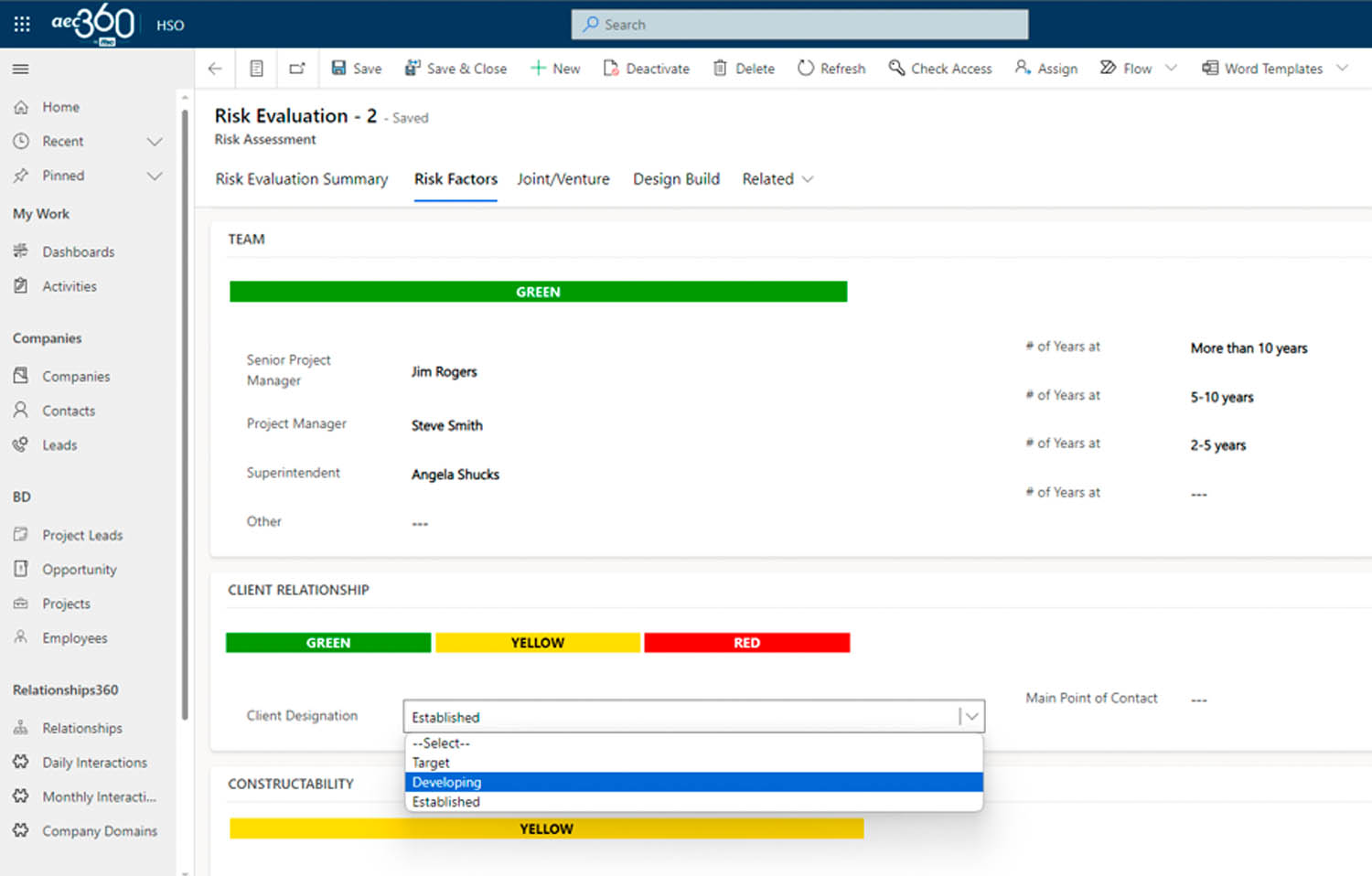
AI capabilities in aec360 also support predictive project management functions that identify risks such as budget overruns or schedule delays and can be used by firms to proactively monitor project health.
“This partnership is vital for us. We get a deep insight into what Microsoft is working on in AI and what it’s developing that might be of particular value to our AEC clients. And when new AI capabilities emerge, we just bring them into aec360 and surface them in ways that will be useful in the AEC industry,” says Holmes. “And when specific needs emerge at an AEC client, we can train them to develop their own AI, using Microsoft Copilot Studio.”
Laying the groundwork
Before any of this can happen, clients need first to tackle their existing, often fragmented data landscapes, with the goal of centralising all data of potential value in a single data lake. HSO provides a range of consultancy services to help guide clients through that process.
These services include implementation of aec360, which involves figuring out, alongside a client, how a firm’s workflows might be optimised for faster, more streamlined transaction processing and decision-making and then how these new workflows should be supported by aec360 – in other words, business process reengineering. This provides a solid plan for HSO’s roll-out of its software.
HSO’s implementation process is, says Holmes, a “tried-and-tested methodology, which has been refined over many projects and many years.”
Through its consultancy services, HSO can also help clients to establish a solid data management plan that will enable it to take advantage of AI. This might, for example, involve identifying data sources from outside aec360/Dynamics 365 that might be used to supplement the information these applications feed into the data lake. It may also include ETL (extract, transform and loading) tasks that are conducted to ensure that data, both structured and unstructured, has first been cleaned, validated, filtered and standardised before it reaches the data lake.
“When you embrace AI, but you only embrace it within one application, it can only do so much for you,” Holmes explains. “But when you embrace AI across a business-wide platform, which Microsoft’s capabilities enable us to offer with aec360, then you embrace generative AI capabilities that can tap into every piece of data you hold, from structured, transactional data to unstructured data such as contracts held in PDF files.”
Putting AI to work
With AI at work handling routine tasks, AEC clients typically find that their employees have a lot more time to spend on strategic work, Holmes adds. “This is where the ‘wow factor’ really comes into play, because they get to figure out how to do that strategic work more effectively. They get to use their brains and creativity to explore how they might approach the market better, win more projects and clients, improve profit margins and so on.”
And by consolidating data across CRM, ERP, project delivery, finance and HR, he adds, the AI capabilities in aec360 are able to offer fuller, more meaningful insights to help AEC firms identify trends, risks and strategic opportunities.
“Everyone’s excited by AI, but it all begins with data, with data management, and with making sure all that information is not only well-governed and well-maintained, but also that AI is able to tap into it. That’s what HSO offers to AEC firms.”
It’s a compelling message at a time when AEC firms face what is arguably their biggest building challenge ever: developing the data foundations that will enable them to benefit from AI, automation and long-term competitiveness.
Main image: Go/No Go overview dashboard for multiple projects