
For AEC professionals, memory ceilings, thermal limits, and the desktop-versus-mobile trade-off are familiar constraints with mainstream workstations. These two machines change that.
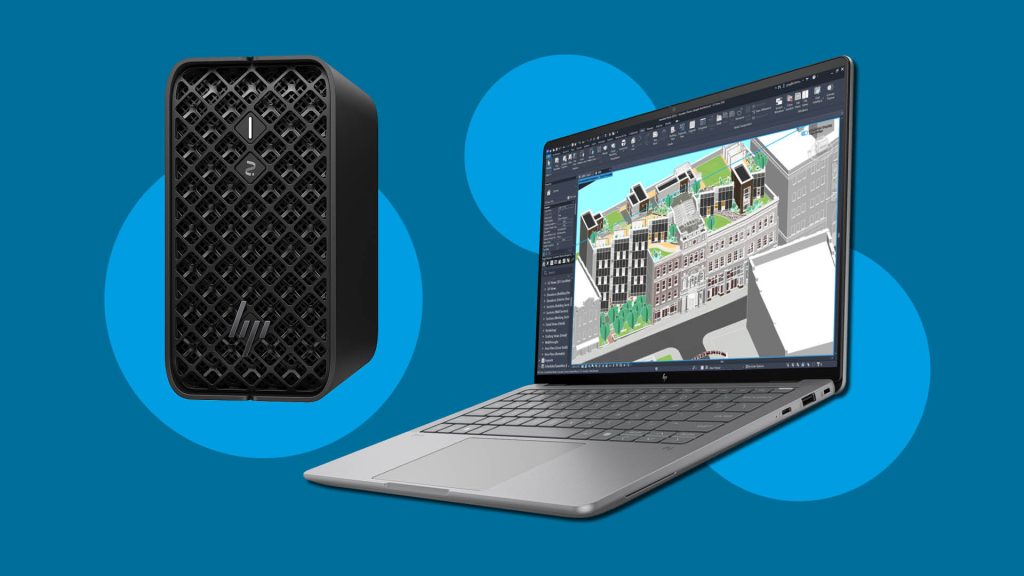
Every few years, a piece of hardware comes along that doesn’t just improve on what came before — it changes the terms of the conversation entirely. The HP Z2 Mini G1a desktop and HP ZBook Ultra G1a laptop are that kind of hardware. Powered by the AMD Ryzen™ AI Max PRO processor, they share a common architecture that challenges long-held assumptions about what a professional AEC workstation should look like. This isn’t a story about spec sheets. It’s about a fundamental shift in what a modern shared memory architecture makes possible — and what that means for architects, engineers, and contractors working at the sharp end of the profession.
Here are five reasons why these machines matter.
# 1. Integrated graphics comes of age
The conventional wisdom in professional AEC has long held that integrated graphics, where the GPU is built into the CPU, means budget graphics — adequate for lightweight tasks, inadequate for anything serious. The AMD Ryzen AI Max PRO processor changes that, and AEC Magazine’s independent testing substantiates it.
Across CAD, BIM, and entry-level visualization workflows, the integrated AMD Radeon™ 8060S GPU delivers performance that competes meaningfully with discrete mid-range GPUs — and surpasses them decisively in scenarios where memory capacity is the limiting factor. The HP Z2 Mini G1a, running the same chip at a higher 150W thermal envelope, pushes performance further still.
For the core BIM and entry-level visualization work that defines most AEC practices, the integrated GPU is no longer a concession. It is a credible professional tool.
# 2. Large datasets: memory changes everything
While GPU memory is rarely a bottleneck for pure BIM workflows, it can be a major constraint for real-time visualization and AI rendering.
Entry-level and mainstream discrete laptop GPUs top out at 8 GB or 12 GB and when they run out of headroom, the consequences are severe — frame rates collapse, renders slow to a crawl, and in some cases software crashes entirely.
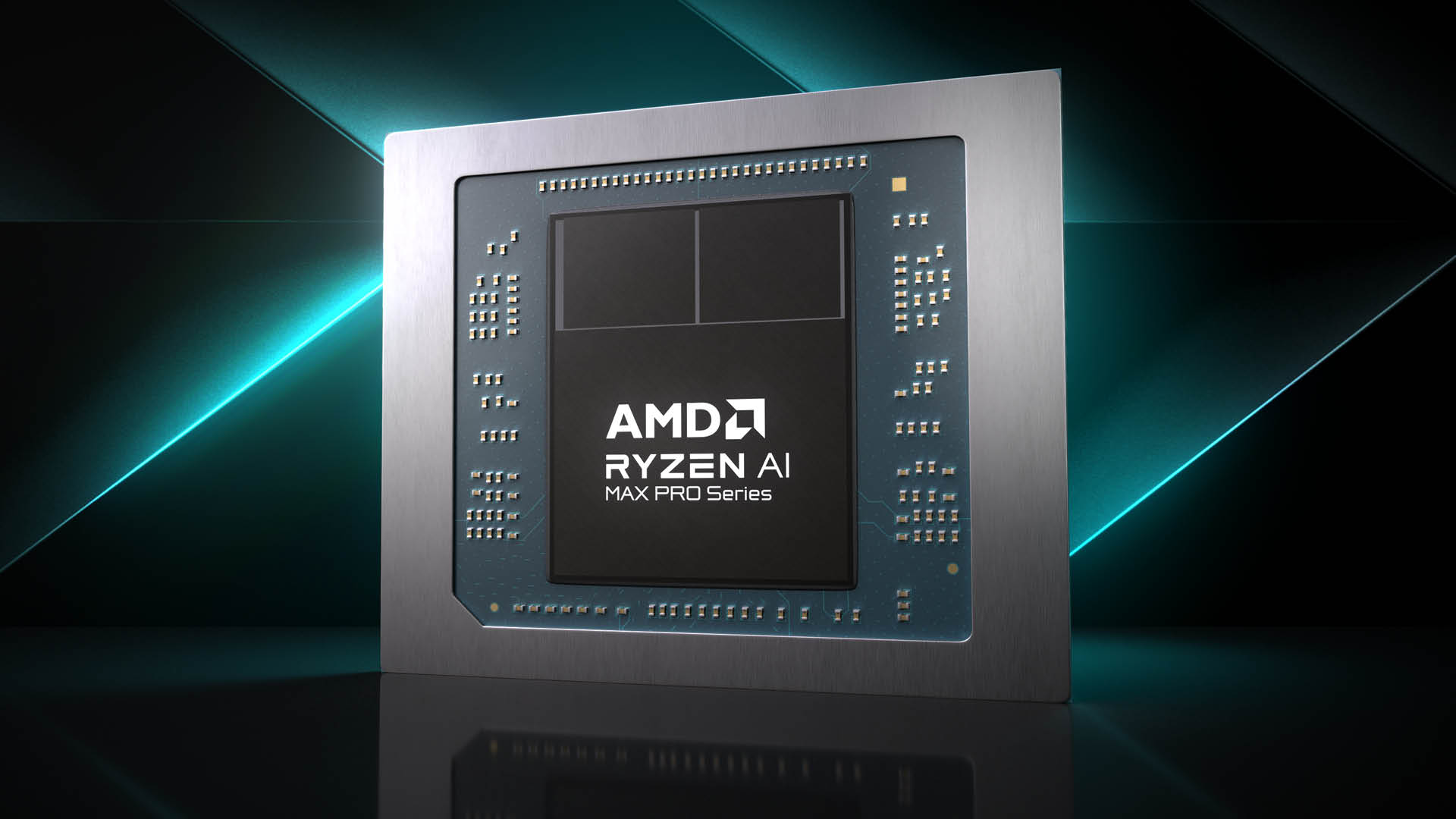
The AMD Ryzen AI Max PRO processor powering the HP Z2 Mini G1a and HP ZBook Ultra G1a takes a different approach. Its integrated AMD Radeon GPU draws directly from the system’s unified RAM pool, accessing up to 96 GB when the workstations are configured with their maximum 128 GB. AEC Magazine’s independent testing confirms that at this level of memory access, visualization scenes that cause some discrete fixed memory GPUs to falter are handled without issue. However, for large, complex models, a high-end discrete GPU workstation will still deliver a more complete experience.
# 3. Local AI: keeping sensitive data where it belongs
AI is reshaping AEC workflows faster than most firms anticipated, but adoption has been uneven — and data security is a central reason why. Sending project files, client data, and proprietary design information to cloud-based AI services creates real governance challenges, particularly for firms working in regulated sectors or on sensitive infrastructure.
The HP Z2 Mini G1a and HP ZBook Ultra G1a offer a compelling alternative. With up to 96 GB of GPU-accessible memory, these machines can run large language models (LLMs) and autonomous AI agents entirely on-premise, with no data ever leaving the firm’s network. The AMD Ryzen AI Max PRO processor can handle the kind of AI models that previously required cloud infrastructure or dedicated datacentre hardware.
For a practice wanting to deploy an AI agent capable of retrieving project documents, querying live data, and executing tasks autonomously, local deployment on hardware like this is now a realistic option. The same memory architecture also supports high-quality text-to-image generation — useful for the iterative visual ideation that increasingly forms part of early-stage design — running locally, securely, and under full organizational control.
# 4. The 14-inch mobile workstation reconsidered
Compact mobile workstations have always involved compromise. In particular, the 14-inch form factor has historically meant accepting meaningful performance constraints — entry-level GPU options, low core count CPUs and the kind of thermal throttling that can have a significant impact on intensive multi-threaded workflows.
The HP ZBook Ultra G1a breaks that pattern. AEC Magazine’s review describes it as delivering performance previously associated with 15-inch and 17-inch machines. With up to 16 high-performance CPU cores and GPU-accelerated 3D visualization now genuinely viable in a 14-inch form factor, it represents a meaningful step forward.
The machine weighs 1.5 kg at just 18.5mm thin, yet it sustained CPU and GPU clock speeds during extended rendering sessions, with fan noise remaining acceptable throughout.
Thermal management is where previous compact machines have often failed. HP’s Vaporforce thermals, with dual turbo fans and expanded rear ventilation, keep the machine running consistently cool. This 14-inch laptop can genuinely serve as a primary professional machine — not a compromise device for travel, but a full-capability workstation that fits comfortably in a backpack.
# 5. Desktop and laptop, same DNA
The G1a family offers something genuinely rare: a desktop and a laptop built on identical silicon, where the choice between them comes down almost entirely to how and where you work — not what you’re willing to give up.
For most professionals choosing between a desktop and mobile workstation, form factor has always meant compromise. Take the laptop for site visits and client meetings, accept the performance hit. Stay on the desktop for serious work, sacrifice the flexibility. The HP Z2 Mini G1a and HP ZBook Ultra G1a break that trade-off. Because they share the same AMD Ryzen AI Max PRO processor and unified memory architecture, the models, files, and workflows that run on one machine run on the other with comparable results.
The HP Z2 Mini G1a does hold a modest performance advantage — running the same chip at a higher thermal envelope delivers a meaningful edge in sustained GPU and multi-threaded workloads. But that’s a refinement, not a fundamental difference. The decision comes down largely to where the work happens — studio desk or construction site, fixed workstation or client meeting room. There’s a third option too: the Z2 Mini G1a’s compact form factor makes it equally at home in a server room or datacentre, accessed remotely by teams across multiple locations.
For firms managing mixed fleets, the consistency also simplifies procurement, IT support, and training. One platform, two form factors, the same capabilities.
The bigger picture
The HP Z2 Mini G1a and HP ZBook Ultra G1a are not iterative improvements on what came before. They represent a genuine shift — in GPU memory capacity, in integrated graphics performance, and in what compact form factors can now deliver for professional AEC work.
The implications run from the practical — fewer crashes, larger models, more stable visualization pipelines — to the strategic, particularly around local AI deployment and data privacy.
For the very largest models or the most demanding real-time rendering, higher-end workstations with discrete GPUs, such as the HP Z6 G5A desktop tower, still have an important role. But for a wide band of professional AEC work, the old rules no longer apply.
Explore the HP Z2 Mini G1a and ZBook Ultra G1a