Ryzen Pro, 3D V-Cache, 256 GB memory and liquid cooling combine to redefine the mainstream workstation
At NXT BLD today Lenovo introduced the ThinkStation P4, a compact desktop workstation that brings AMD’s Ryzen Pro platform into a fully certified, long-life mainstream system.
Powered by Ryzen Pro 9000 Series “Zen 5” processors — including 3D V-Cache models up to the 16-core Ryzen 9 Pro 9965X3D — the P4 sits alongside Lenovo’s Intel Core-based ThinkStation P3, giving professional users a genuine choice of CPU architecture in a familiar single-GPU form factor.
But Ryzen is only part of the story. The P4 also introduces two features that could prove even more significant for design and engineering firms: support for up to 256 GB of memory in a compact deskside system, and Lenovo’s first serious move to bring factory liquid cooling into the mainstream ThinkStation line.
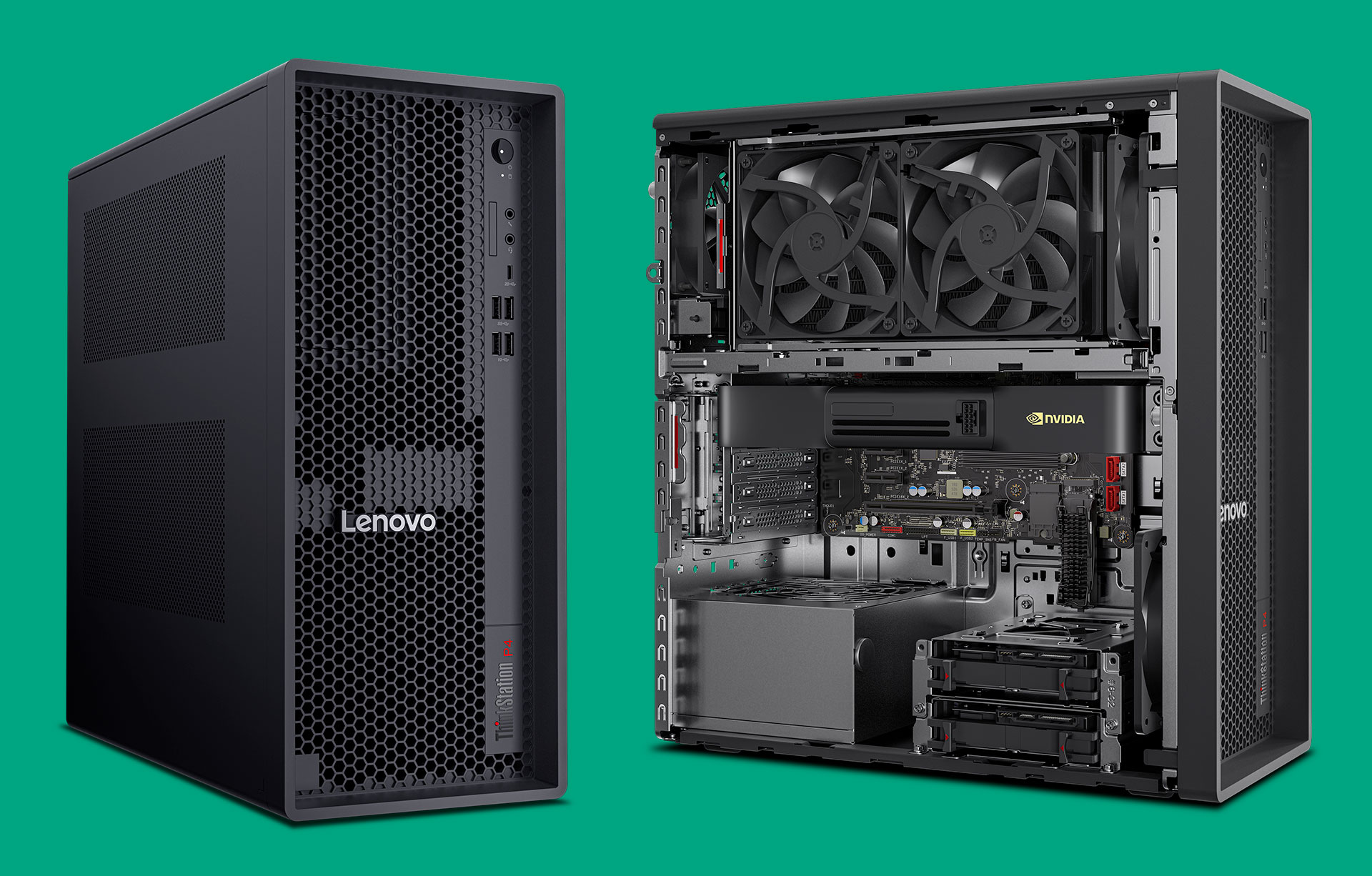
This is the first major desktop Ryzen Pro 9000 workstation platform from a tier-one OEM. Lenovo says it expects to be first to market and may be the only major OEM shipping such a system for some time, even if this is not a formal exclusivity deal in the same sense as its original Threadripper Pro-based ThinkStation P620.
Memory: the quiet headline feature
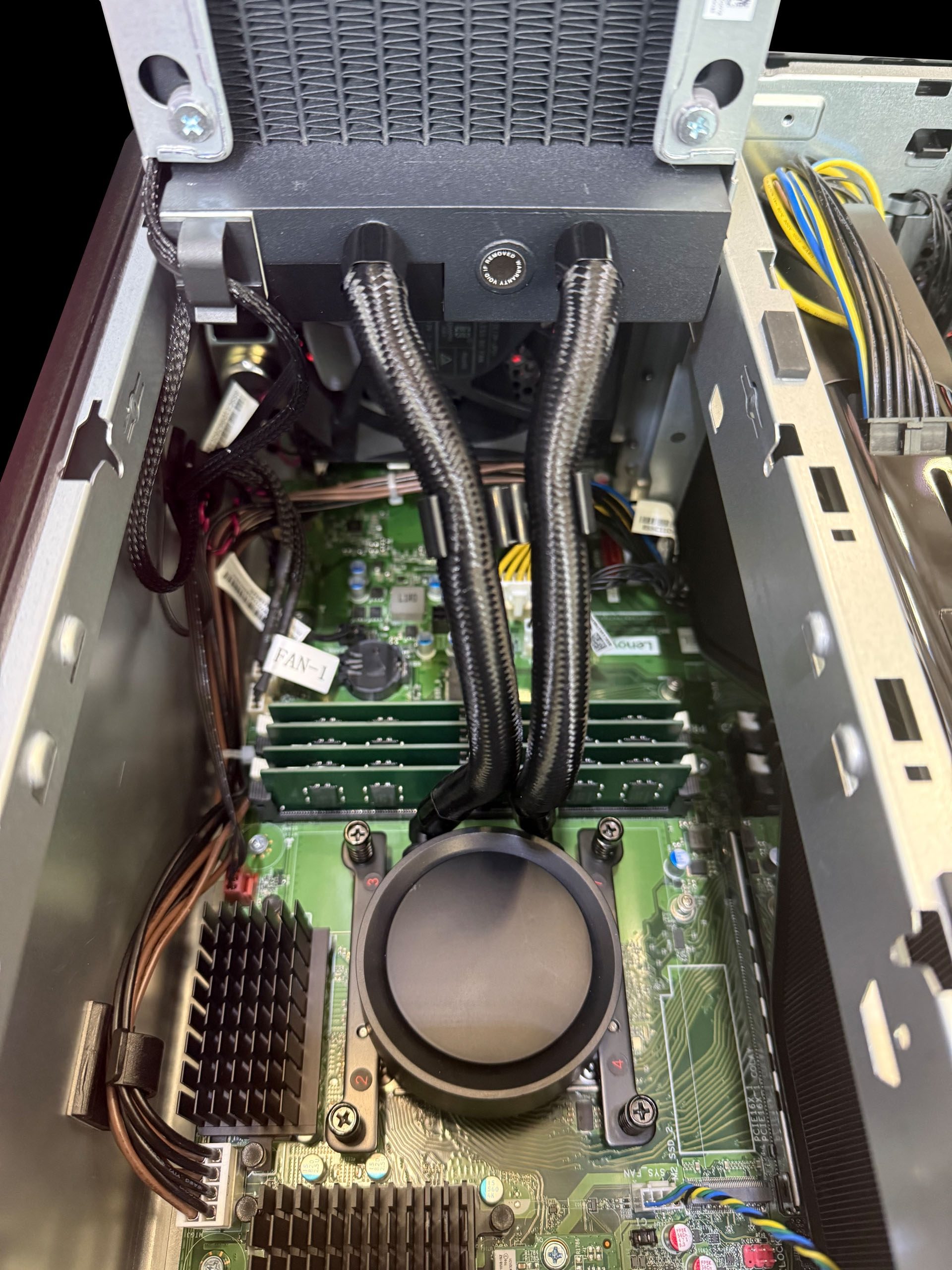
One of the P4’s most important technical differentiators is memory capacity. The Ryzen Pro 9000 platform offers dual-channel memory with two DIMMs per channel, allowing four DIMMs in total and configurations up to 256 GB using 64 GB modules. By contrast, the current Intel-based P3 tops out at 128 GB.
Lenovo says it worked directly with AMD to enable 64 GB DIMMs, citing growing workstation requirements driven by large BIM and reality models, and emerging AI-assisted workflows where memory capacity is becoming critical.
As with comparable Intel designs, peak memory performance comes when there is one DIMM per channel. Fully populating all four slots reduces memory frequency — an architectural behaviour of the platform rather than a Lenovo-specific limitation.

Liquid cooling moves into the mainstream
The P4 also marks a strategic shift by bringing liquid cooling into the ThinkStation line.
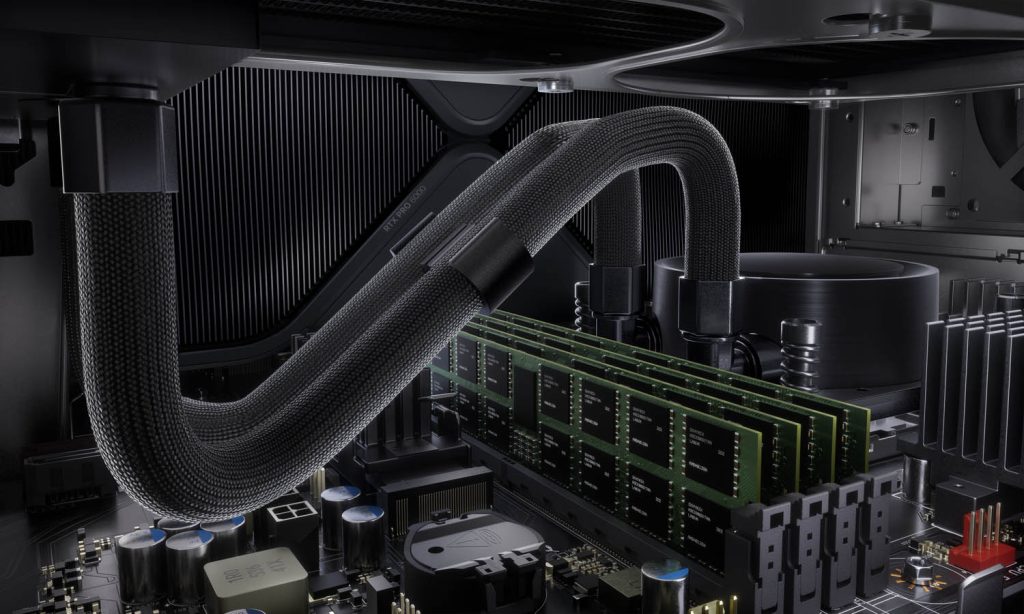
Top-end Ryzen Pro 9000 CPUs in this system can draw up to 170 W. While air cooling will still be offered, Lenovo is introducing a factory-fitted liquid cooling option which is a requirement for the highest-end configurations.
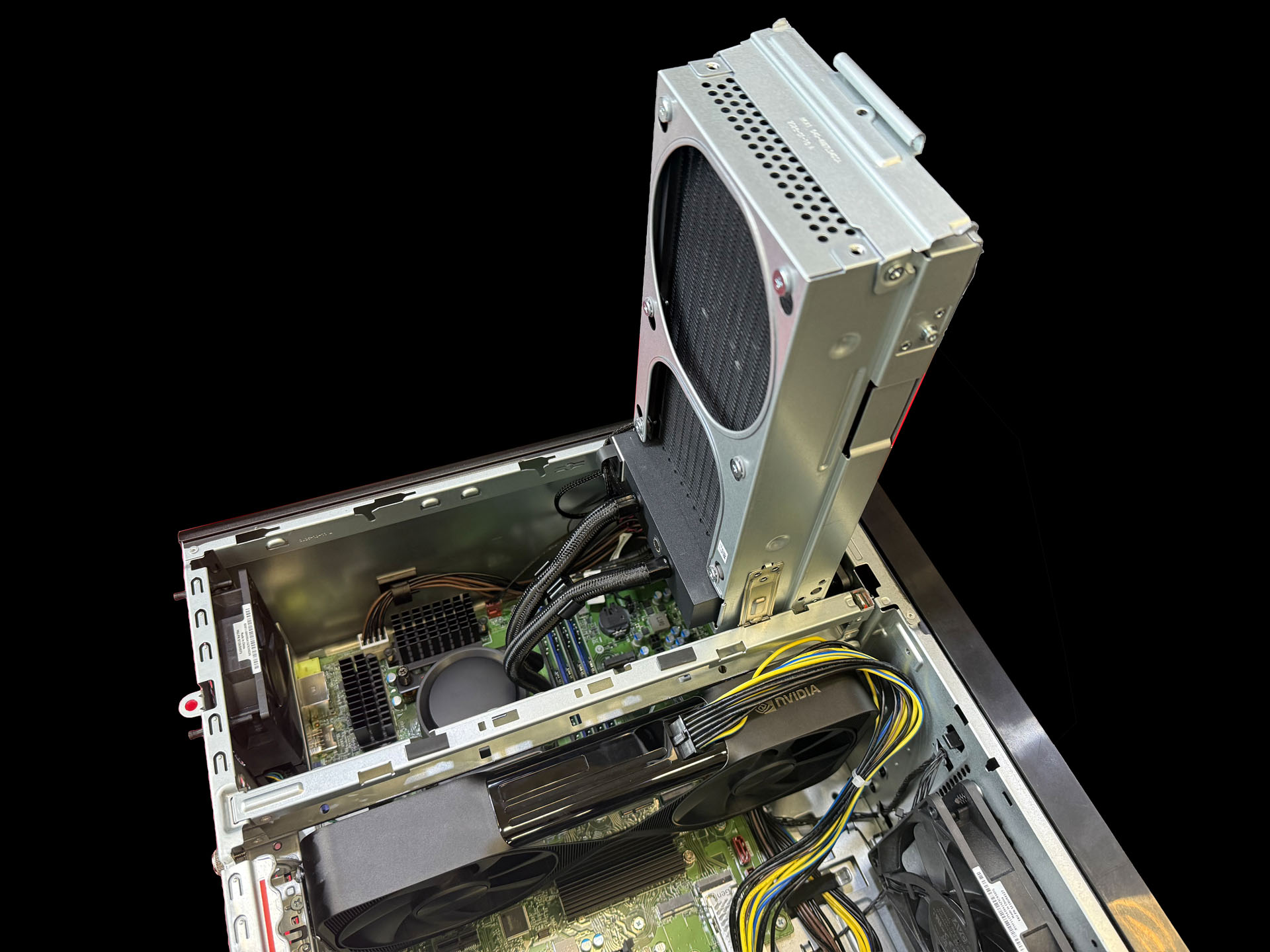
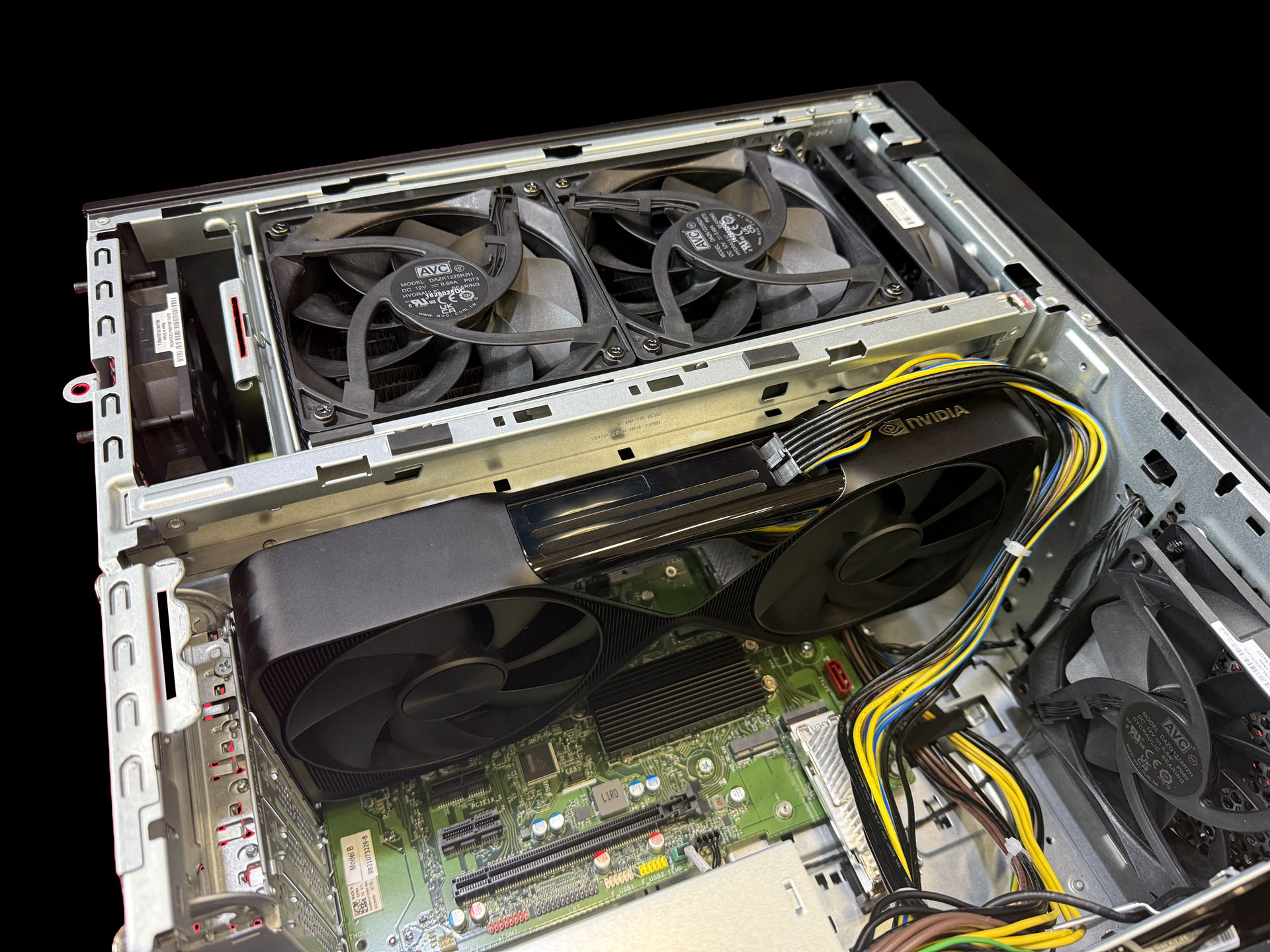
The P4 features an all-in-one closed loop system with a cold plate on the CPU, an internal radiator and two dedicated exhaust fans that push hot air out of the side of the chassis. Lenovo stresses that it is tested to the same standards as the rest of the ThinkStation portfolio and is covered by the standard workstation warranty.
For Lenovo, this is as much about acoustics and long-term reliability as peak performance. In environments such as design studios and engineering offices where many machines sit deskside, controlling noise while extracting performance from increasingly power-hungry processors is becoming a key design constraint. Internally, Lenovo is already treating liquid cooling as an important factor in its 2027–2028 workstation planning.
Chassis, PCIe Gen 5 and next-gen GPUs
The ThinkStation P4 uses an adapted version of the P3’s 30-litre chassis with several important updates. The platform moves to PCIe Gen 5, including Gen 5 M.2 storage, and onboard networking increases from 1 GbE to 2.5 GbE.
It supports up to the 600W RTX Pro 6000 Blackwell Workstation Edition GPUs from Nvidia, and Lenovo has reworked the PCIe slot layout to better accommodate very large GPUs alongside high-speed networking cards — a change driven directly by customer feedback from existing P3 deployments.
Architecturally, the P4 remains a single high-end GPU workstation. For users who need multiple GPUs, extensive PCIe lanes, more memory and more memory channels, Lenovo continues to position its Threadripper Pro-based ThinkStation P8 and P620 systems as the better fit.
What AEC Magazine thinks
From a design and engineering perspective, the arrival of a Ryzen Pro 9000-based, tier-one OEM workstation is significant on several levels.
First, it finally brings Ryzen into a fully managed workstation ecosystem. Until now, Ryzen workstations have typically come from boutique builders such as Armari, Scan, BOXX and Puget Systems, or from self-builds. Many AEC firms, however, prefer ISV certifications, long lifecycle support and enterprise-grade warranty.
Second, based on our experience with consumer Ryzen 3D V-Cache parts, the interest here is less about winning traditional CAD/BIM benchmarks and more about broader workflow performance.
Day-to-day modelling and UI responsiveness in tools such as Solidworks and Autodesk Revit often still favour the fastest Intel Core CPUs. Where Ryzen has shown advantages is in highly multi-threaded rendering, and with the 3D V-Cache variants, in certain simulation and reality modelling workloads where having fast access to larger pools of cache can be a big benefit.
Third, memory is becoming a genuine constraint in modern AEC workflows. Combining large BIM models, reality capture data and AI-driven tools can quickly exceed what a 128 GB workstation can comfortably handle. And it’s not just CPU workloads – lots of system memory is also required to support GPU-accelerated tasks that depend on huge in-memory datasets.
Finally, liquid cooling is arguably Lenovo’s most adventurous move. Historically associated with boutique builders, it has rarely featured in workstations from major OEMs and never as a headline feature. Lenovo is positioning it very differently here, making it a core part of the P4 story rather than a niche option hidden in a configurator.
If this approach proves successful in a compact, Ryzen-based system, it raises interesting questions about how Lenovo — and potentially other OEMs — might address the increasingly significant thermal demands of high-end workstations. As we’ve seen in the past with Armari and Comino, liquid cooling can give Threadripper Pro a significant performance advantage over its air-cooled equivalent.
Taken together, the ThinkStation P4 is unlikely to displace Intel at the top of pure CAD/BIM performance charts. Instead, it offers a broader, more balanced performance envelope for firms whose workflows span CAD, BIM, rendering, simulation, point clouds and emerging AI-assisted tasks — all within a supported, deskside workstation platform.
We look forward to testing the P4 soon.