
There’s no denying that building information modelling (BIM) has transformed how the AEC industry creates, coordinates, and manages project information. However, BIM was never the end point of digitalisation. Rather, it provided the structured data foundation on which the next generation of engineering workflows can be built.
There’s no denying that building information modelling (BIM) has transformed how the AEC industry creates, coordinates, and manages project information. However, BIM was never the end point of digitalisation. Rather, it provided the structured data foundation on which the next generation of engineering workflows can be built.
Today, AEC firms have access to more digital tools and project data than ever before. Yet having more digital information does not automatically make engineering more intelligent. In most cases, project information still becomes fragmented as it moves between disciplines, applications, and project phases. The more interesting question is what becomes possible when that information can not only be connected and exchanged, but also interrogated, analysed, and acted upon more intelligently.
The next step beyond BIM is therefore not simply about generating more data or adding more AI tools. It is about connecting industry knowledge, engineering workflows, and project data, and using AI to turn that information into actionable intelligence across the design-to-build process.
From Isolated AI Tools to Connected Intelligence
Individual AI capabilities can save time, but their greater potential emerges when they form part of a connected digital process.
Consider the information already created during a typical project. BIM models contain geometry, semantic data, attributes and relationships. Structural analysis generates another rich layer of engineering information. That data subsequently informs detailing, documentation, fabrication, and construction. If AI is applied independently at each stage, we simply create another generation of digital silos.
The alternative is to make intelligence available across the workflow while maintaining the connections between the underlying information. Rather than creating isolated AI assistants for individual applications, the opportunity is to bring intelligence to the points in the engineering process where information is created, interpreted, and transferred.
This is also the thinking behind Allplan Max, our new approach to bringing AI-powered capabilities across BIM, structural analysis, detailing, and fabrication.
Connecting Data with Domain Expertise
Structuring and connecting information is only part of the equation. The value of project data ultimately depends on what professionals can do with it.
Engineers, architects, and other AEC professionals bring years of domain knowledge to the decisions they make. The objective should not be to remove engineers from decision-making, but to reduce the friction surrounding it. AI can help locate relevant information, identify results that warrant attention, automate routine activities, or make specialist knowledge easier to apply. The interpretation of that information – and responsibility for the engineering decisions that follow – remains with the professional.
Digital technology should therefore enhance that expertise rather than attempt to replace it. This is why successful digital transformation needs to start with outcomes – reducing rework, accelerating delivery, improving coordination, or making important project information easier to access – rather than with the technology itself.
AI therefore becomes most valuable when it amplifies this expertise: reducing repetitive work, making relevant information easier to find, and allowing established engineering knowledge to be applied more consistently.

This combination of domain expertise, trusted project data, and connected digital workflows is what I describe as general AEC intelligence. It is the ability to turn project information into actionable knowledge across design, analysis, detailing, and fabrication. Rather than treating BIM, AI, digital twins, robotic fabrication, and cloud collaboration as separate technologies, the aim is to create an ecosystem in which each strengthens the others.
In this sense, the evolution of AI in AEC is not simply about making individual tasks faster. It raises more interesting possibilities: for example, can engineering software adapt more closely to the knowledge, processes, and ways of working of individual engineering organisations?

A Glimpse of the Next Generation of Engineering Software
Allplan Max puts this approach into practice, with AI-powered capabilities extending across ALLPLAN, SCIA, FRILO, and SDS2, from BIM and structural analysis through to detailing and fabrication. Rather than having AI as a standalone tool, the aim is to apply intelligence to specific tasks within existing engineering processes and enable organisations to make more effective use of their own expertise.
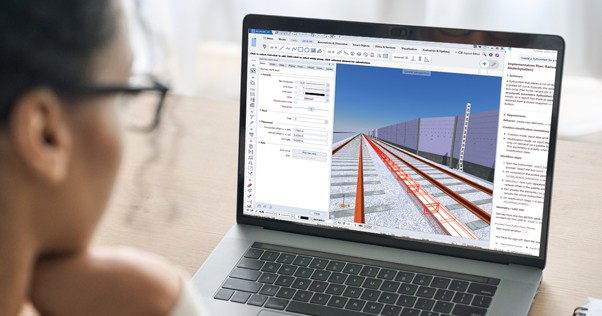
Feature Builder illustrates this particularly well. Engineering organisations often develop highly specialised processes based on their experience, standards, and particular project requirements. Traditionally, translating that knowledge into customised software functionality requires programming expertise and significant investment. Feature Builder enables users to describe the process they want to improve or the capability they need, with AI generating new software that can then be used right away.
In effect, it creates a route for established engineering knowledge and working methods to become reusable digital tools – moving towards software that can incorporate not only engineering knowledge in general, but how an individual organisation engineers.
Workflow Builder takes the same principle beyond ALLPLAN itself. Using an MCP Server, it can connect ALLPLAN with large language models and AI-agent platforms, allowing firms to create agentic automations, retrieve project information, and connect ALLPLAN with other systems using plain-language instructions. Rather than prescribing a single AI ecosystem, the intention is to give organisations greater flexibility to develop automation around the technologies and processes they already use.
Other capabilities demonstrate what happens when AI is applied directly to engineering information. AI BIM Analyst, for example, enables professionals to interrogate BIM data using natural language, filtering information and generating quantities and reports without needing to know precisely where that information is stored or how to construct a complex query.
The same principle extends into structural engineering. In SCIA Engineer 2027 and FRILO 2027, AI Structural Analyzer helps engineers navigate complex calculation results by identifying peaks, sign changes, and critical sections that warrant attention. Importantly, it does not replace the engineering assessment. It helps direct the engineer towards the information that may require their expertise.
These are still individual applications of AI, but collectively they point toward something broader: software that can increasingly help professionals navigate project information, automate established processes and turn organisational knowledge into repeatable digital workflows across the engineering process.
Keeping Engineers in Control
As AI becomes more deeply embedded in engineering software, professional responsibility becomes increasingly important. There is a significant distinction between using AI to surface information and asking it to make an engineering decision. The former can reduce the amount of routine work surrounding professional judgment; the latter raises much more fundamental questions about reliability, accountability, and risk.
This distinction is fundamental to our approach to Allplan Max. With AI Structural Analyzer, for example, the AI can surface results that warrant attention, while the engineer remains responsible for interpreting those results and determining what action is required.
A similar principle applies elsewhere. AI Drafter automatically optimises label placement for drawing readability but leaves the underlying engineering content unchanged. Feature Builder can generate Python code from a user’s requirements, but that code can be reviewed by the organisation’s technical team before it is installed.
This is an important model for engineering AI: automate the work around professional judgment without attempting to automate the judgment itself. Engineering software can become more intelligent, adaptive, and automated while the expertise – and responsibility – of the engineer remains at the centre of the process.
Beyond BIM
BIM has given the AEC industry an enormously valuable digital foundation. The opportunity now is to build upon it.
We have already digitised much of the information used to design and deliver the built environment. The next challenge is to connect that information more effectively and make it easier for professionals to extract knowledge from it across design, analysis, detailing, fabrication, construction, and operation.
AI will undoubtedly be part of that transition. However, its value will not be determined by the number of AI tools available. It will depend on whether those tools can work with trusted project data, fit within established engineering processes, and augment the domain expertise of the professionals responsible for project outcomes.
Allplan Max provides an early glimpse of what that could look like: AI embedded within the engineering environment, helping professionals interrogate information, automate processes, and translate their own knowledge into digital workflows.
The next generation of engineering software will therefore not simply help professionals create more project data. It will help them understand it, act on it, and increasingly encode their own expertise into the workflows they use. That is the shift from BIM towards general AEC intelligence – turning project data and engineering expertise into knowledge that can be applied across the design-to-build process.
Main image: The new Feature Builder in Allplan turns engineering expertise into custom digital tools using AI. Copyright: Allplan