
California startup founded by former Autodesk AI Lab, Google DeepMind and Tesla staff launches an agentic 3D workspace that turns sketches, images and prompts into editable parametric geometry
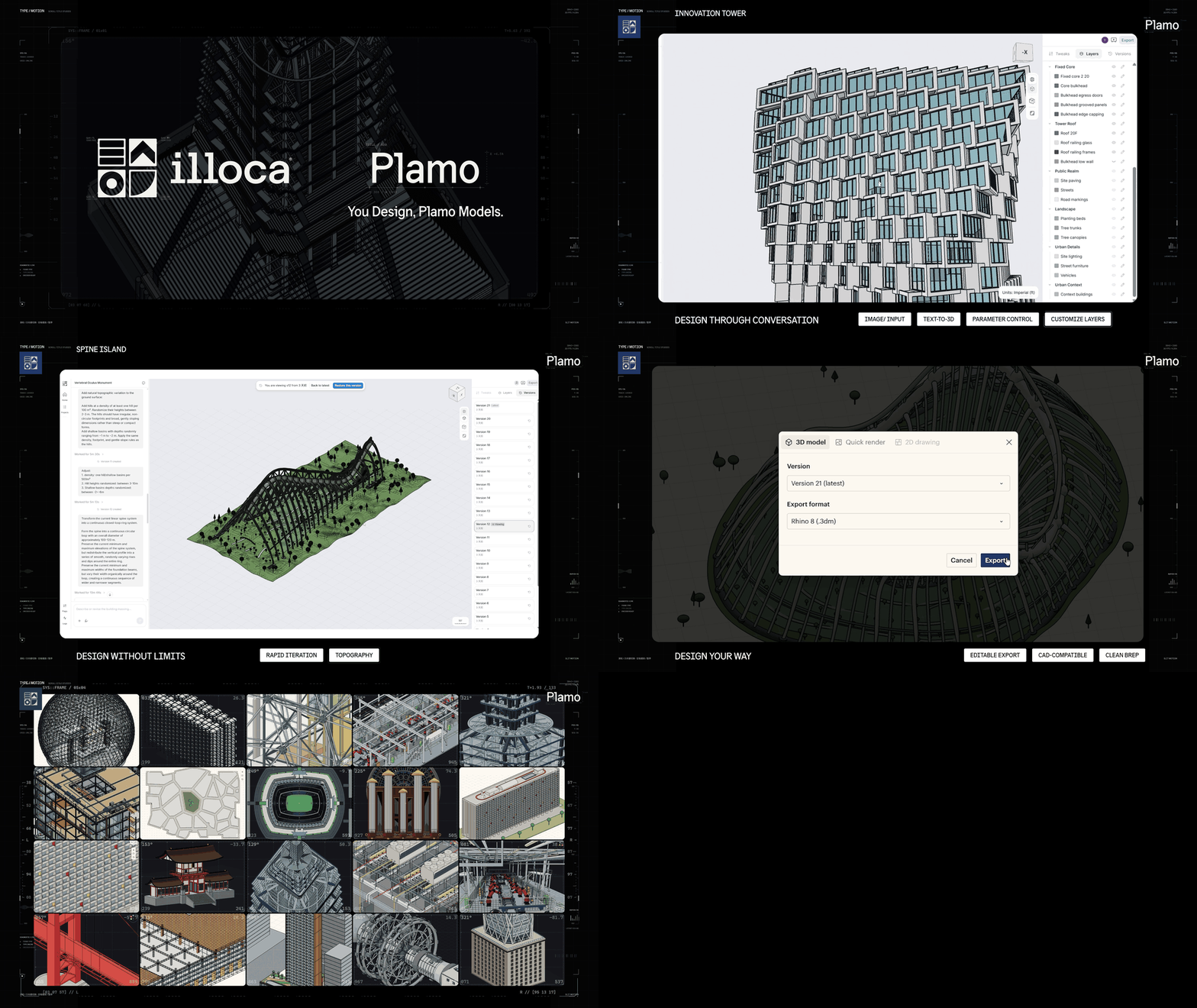
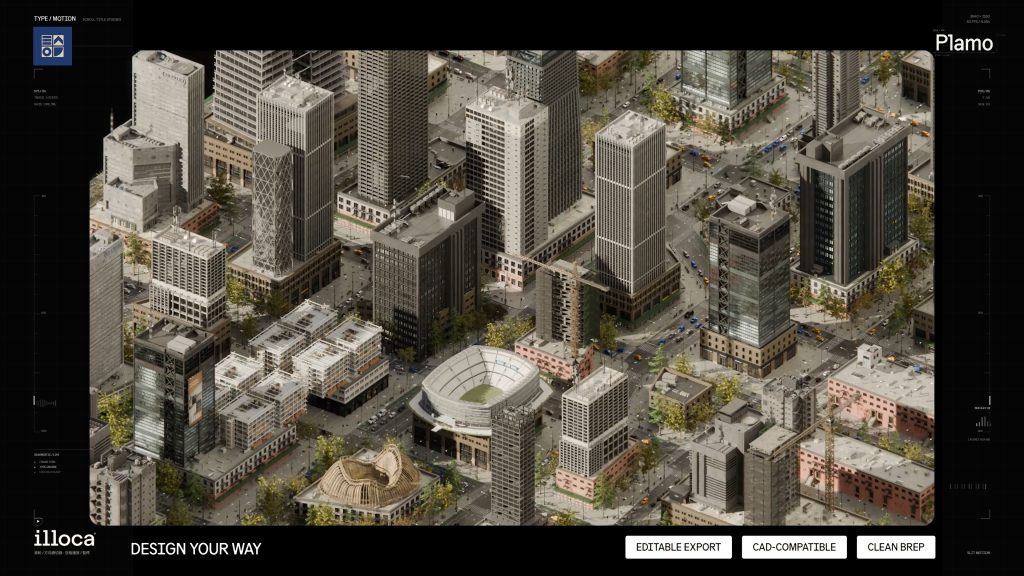
Illoca, an AI startup based in San Ramon, California, has launched the beta of Plamo, a browser-based agentic 3D modelling workspace that turns sketches, reference images, drawings and natural language into editable geometry. Plamo is the company’s second product, following Tracing Paper, an AI-assisted workspace for rapid architectural prototyping that converts sketches, mark-ups and prompts into editable plans, massing studies and design documentation.
The company frames the launch as bringing “vibe modelling” to architecture and engineering — a deliberate echo of vibe coding, where developers direct software at the level of intent rather than writing every line themselves. Illoca argues that designers still spend too much time manually building, rebuilding and coordinating geometry as projects evolve, and that an agent can handle more of that work while the designer directs the design.
“Vibe coding showed us that the biggest shift wasn’t simply making software development faster,” said Chin-Yi Cheng, co-founder and CEO of Illoca. “It changed who could build, how quickly ideas could be tested, and where engineers spent their attention. We think 3D design is heading in the same direction. Plamo lets designers work at the level of intent while keeping the geometry editable and the underlying logic intact, so speed doesn’t come at the expense of control.”
Discover what’s new in technology for architecture, engineering and construction — read the latest edition of AEC Magazine
👉 Subscribe FREE here
Editable, not static
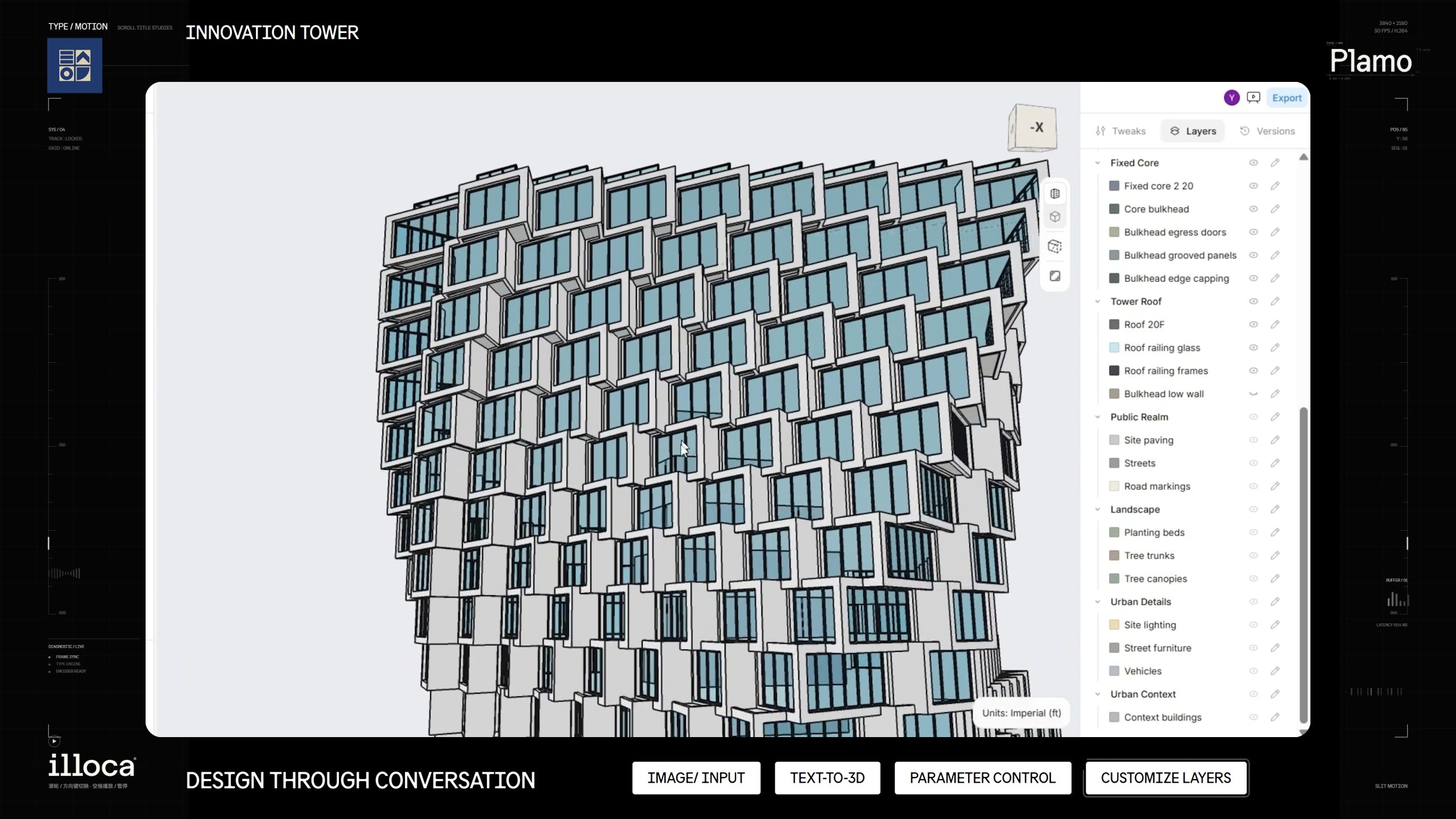
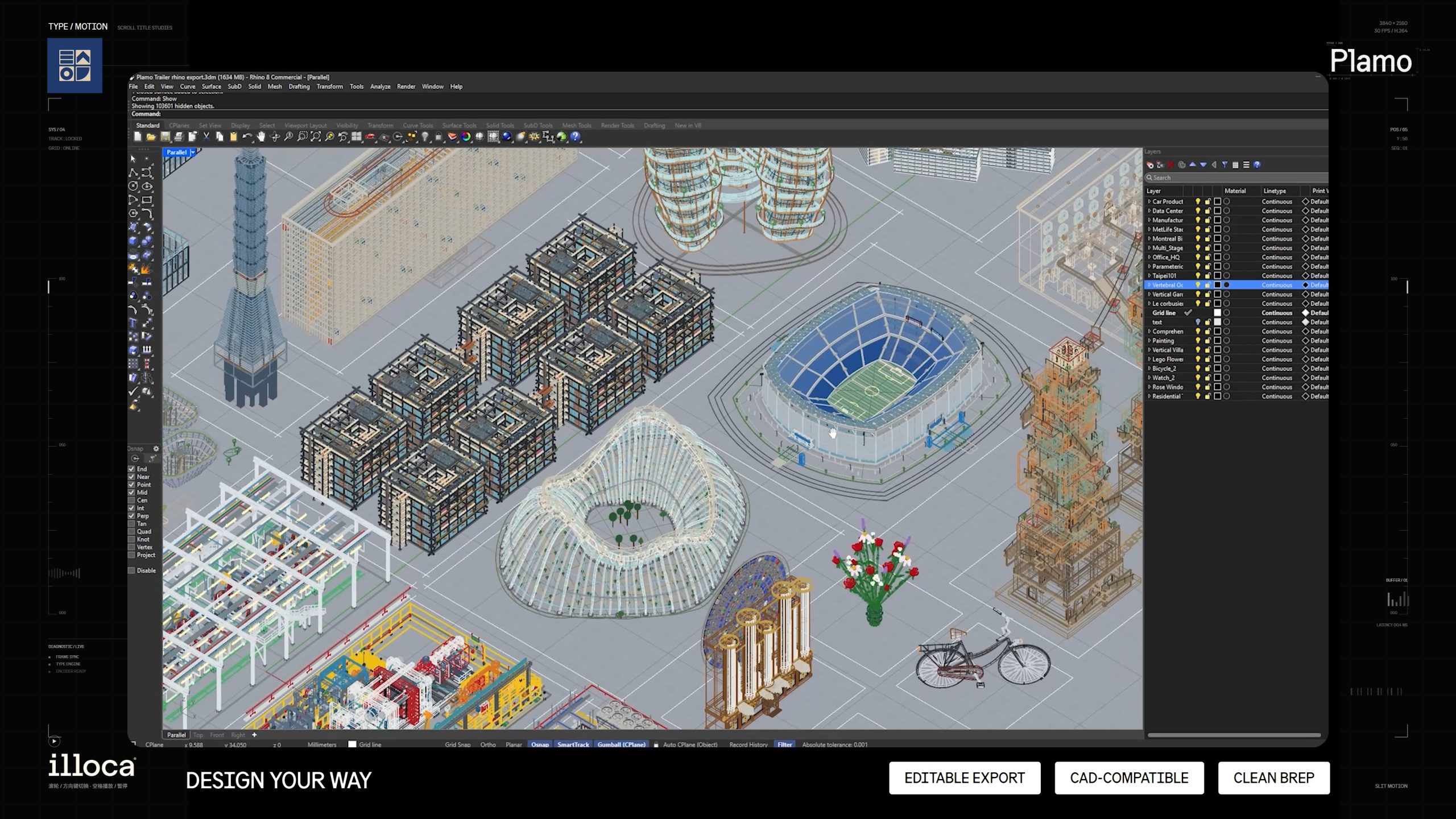
Illoca’s key distinction is what happens after generation. Rather than producing a static mesh or one-off visual, Plamo creates editable boundary representation (BREP) geometry backed by parametric logic, allowing dimensions, systems and relationships to be changed without rebuilding the model from scratch. The company describes the result as an ongoing design environment rather than a generated endpoint.
Plamo’s agent interprets a request before it begins modelling, working from text, images, schematics, annotated drawings or full plan sets. According to Illoca, it can recreate a building, combine multiple references, introduce structural or MEP systems and reorganise geometry to match project conventions.


The company says the agent can research missing information and ask for clarification when the user’s intent is ambiguous, rather than filling gaps silently.
“In practice, the bottleneck is rarely a lack of ideas,” said Chiaowei Yu, co-founder and COO. “It’s the amount of manual work required to translate every change into the model, then coordinate that change across the rest of the project. Plamo gives designers a way to stay closer to the decisions that matter, while the model catches up much faster.”
Who it is aimed at
Illoca is pitching Plamo beyond architecture, targeting anyone whose ideas eventually need to become workable 3D geometry. For architects, the company points to earlier exploration of massing, building systems and design alternatives without manually modelling every iteration. For engineers, it suggests establishing and refining structural and MEP systems inside a coordinated model.
Developers and design-and-build teams could use the software to test project scenarios in 3D earlier in the process, according to Illoca. The company is also targeting product and industrial designers seeking to move from sketches or requirements to editable parametric models for downstream CAD and manufacturing workflows.
Plamo is available in beta here, with 1,000 credits included in its free starting allocation. Illoca has not disclosed pricing beyond the free tier or published a list of supported CAD export formats.
Illoca was founded by Chin-Yi Cheng and Chiaowei Yu. Cheng trained in architecture and computer science at MIT and was among the early researchers applying generative AI to architectural design. He led generative AI research for design at Autodesk AI Lab before developing generative models for design and creative applications at Google DeepMind. His published research includes House-GAN, Building-GAN and CLIP-Forge.
Yu previously led virtual design and construction at Mazzetti before building and leading Tesla’s BIM team, supporting the design and delivery of large-scale manufacturing and research and development facilities. Illoca is backed by a $13 million seed round led by Bessemer Venture Partners.