
AMD does it again, delivering extreme high-end workstation performance for demanding workloads — including rendering, simulation, and reality modelling — with flexible options for cores, memory, and cost, writes Greg Corke
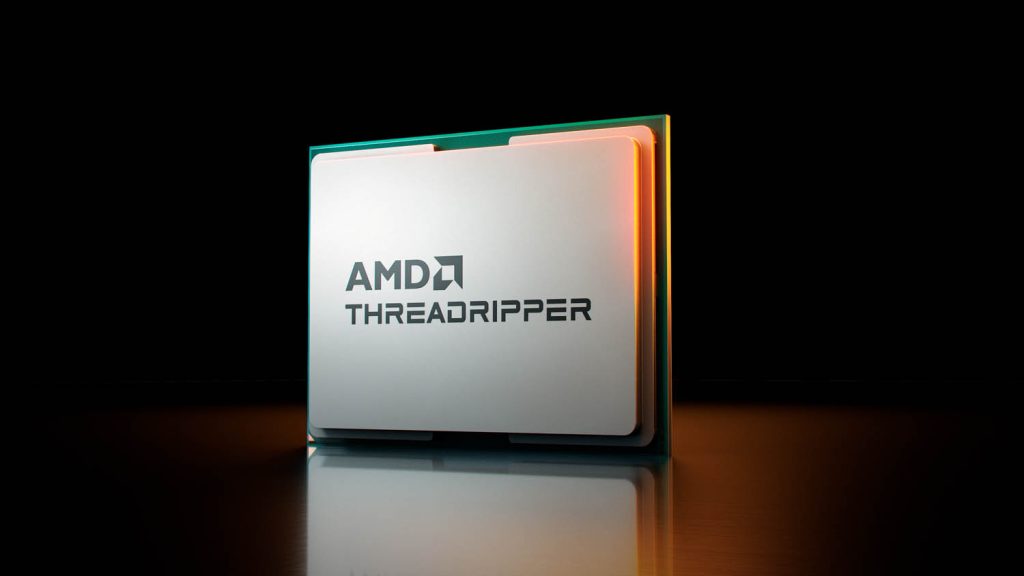
AMD Ryzen Threadripper has become the processor of choice for high-end workstations. Originally a niche product for specialist system builders, Threadripper quickly attracted the attention of major OEMs, including Lenovo, HP, and Dell. Eight years since it first launched, Threadripper now dominates the high end workstation market. Intel currently has nothing shipping that comes close, although that could change soon with the new Intel Xeon 600 processors, which have just been announced.
Threadripper processors are all about scale, combining massive core counts with the ability to push a handful of cores to blistering speeds. While peak frequencies don’t quite match mainstream AMD Ryzen or Intel Core chips, they come remarkably close — and when paired with high-bandwidth DDR5 memory and large caches, the new 9000 Series delivers workstation performance that would have been unthinkable just a few years ago.
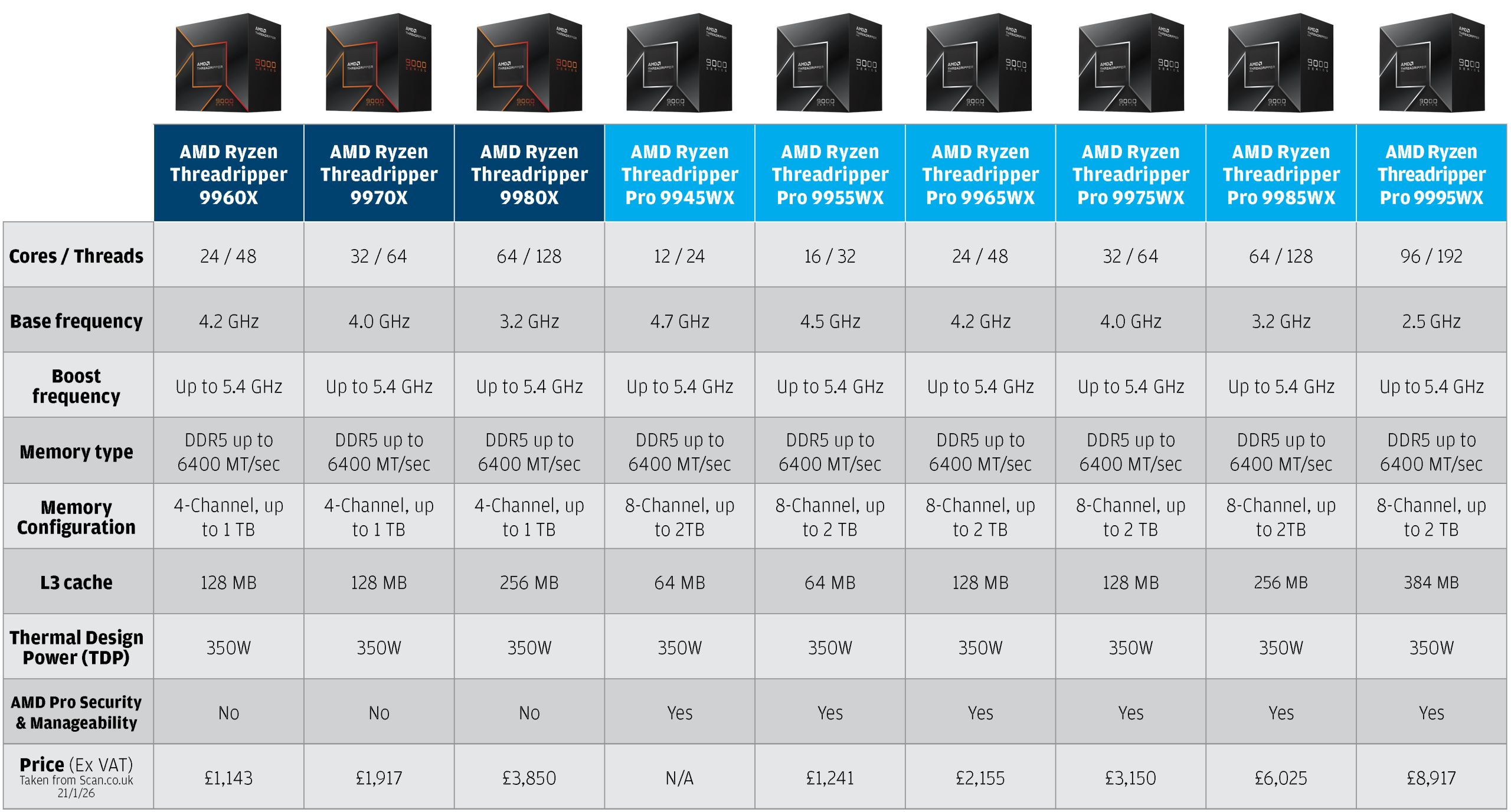
The 9000 Series Threadrippers build on the previous 7000 Series. While core counts, base clocks, and the 350W Thermal Design Power (TDP) remain unchanged, AMD has refined nearly every other aspect. Boost speeds are slightly higher, supported DDR5 memory now runs at 6,400 MT/s, and the new Zen 5 architecture delivers a 16% uplift in Instructions Per Clock (IPC) over Zen 4, along with improved power efficiency.
This article is part of AEC Magazine’s 2026 Workstation Special report
Zen 5 also brings enhanced AVX-512 support, helping ensure performance improvements in professional simulation applications, such as Altair Radioss, Simulia Abaqus, and Ansys Mechanical extend beyond IPC alone.
Simultaneous Multi-Threading (SMT) continues to allow each core to handle two threads simultaneously.
While this can significantly accelerate heavily threaded tasks like ray-traced rendering, in some workflows — including certain simulation and reality modelling tasks — SMT may actually reduce performance.
The 9000 Series is available in two variants: the high-end desktop (HEDT) Ryzen Threadripper 9000 and the enterprise-focused Threadripper Pro 9000 WX-Series. The Pro chips push boundaries with up to 96 cores, eight memory channels, support for up to 2 TB of memory, additional PCIe lanes for multiple GPUs, and enterprise-grade security and manageability. These latter two features are particularly important for OEMs like Dell, Lenovo and HP.
Specialist builders often prefer the standard HEDT processors, which offer up to 64 cores. While they have fewer memory channels (four), and lower memory capacity (up to 1 TB), they still deliver exceptional performance at a lower cost. For many workloads, such as rendering, the extra memory bandwidth and capacity of the Pro variants are rarely required.
The Threadripper 9000 Series is broad enough to accommodate nearly any professional workload. HEDT options range from 24 to 64 cores, while the Pro WX-Series spans 12 to 96 cores, offering visualisers, engineers, and simulation specialists the flexibility to match raw computing power to their workflows and budget. The full lineup is shown in the table below.
On test
To evaluate the new platform, we tested two systems supplied by specialist UK workstation builders, Armari and Scan, each featuring flagship processors from their respective HEDT and Pro lineups. The Armari system was equipped with the AMD Ryzen Threadripper 9980X with 64 cores, while the Scan workstation featured the AMD Ryzen Threadripper Pro 9995WX, with 96 cores.
Threadripper 9000 workstation
Armari Magnetar
• CPU: Threadripper 9980X (64 cores)
• Motherboard: Gigabyte TRX50 Aero D
• Memory: 128GB (4 x 32GB) Gskill T5 Neo DDR5-6400
• Cooling: SilverStone XE360-TR5 All-In-One (AIO) liquid cooler
• Chassis: Antec Flux SE mid Tower
Threadripper Pro 9000 workstation
Scan 3XS GWP-B1-TR192 (see review here)
• CPU: Threadripper Pro 9995WX (96 cores)
• Motherboard: Asus WRX90E-SAGE
• Memory: 256 GB (8 x 32 GB) Micron DDR5 6400 ECC (running at 6,000 MT/sec)
• Cooling: ThermalTake AW360 All-In-One (AIO) liquid cooler
• Chassis: Fractal North XL: Momentum Edition
Putting power in perspective
All AMD Ryzen Threadripper 9000 Series processors share a 350W Thermal Design Power (TDP), representing the maximum power the CPU draws regardless of core count. Consequently, higher-core-count chips operate at lower all-core frequencies to remain within this power envelope.
AMD also allows Threadripper to exceed its standard power limits through Precision Boost Overdrive (PBO). Unlike traditional overclocking, which requires manual adjustments of frequencies and voltages, PBO automates the process, supplying the CPU with additional power while maintaining stability. Enabling PBO is as simple as flipping a switch in the motherboard BIOS, assuming the cooling solution can handle the increased load.
In the past we’ve seen some extraordinary examples of PBO in action. For instance, in 2024 we reviewed a Threadripper Pro 7000 Series workstation from Armari that sustained around 700W under PBO, while in 2025 Comino supplied a fully liquid-cooled system capable of pushing as high as 900W.
The 9000 Series offers plenty of flexibility to balance cores, memory, and cost with your workload — all while delivering top-end performance. It’s no wonder Threadripper still sets the standard for high-end workstations
Pumping more power into the CPU allows all-core frequencies to stay higher for longer, unlocking significantly more performance from the same silicon — all without thermal throttling. However, it’s important to note there are diminishing returns. A Threadripper processor running at 700W is not going to deliver anywhere near twice the performance of the same processor running at 350W.
The greatest gains from PBO occur in heavily threaded workloads, such as rendering, where all cores are engaged simultaneously, with more limited benefits in simulation.
For this review, both of our test machines were evaluated at stock 350W settings. However, as they could both run a very demanding V-Ray render at a cool 60°C, this suggests that their AIO liquid coolers could likely handle more power. However, we didn’t push them beyond stock, and such experimentation may void warranties, so always check with your workstation provider. It’s also worth noting that Tier One OEMs ship workstations with PBO disabled, always relying on the processor’s stock TDP.
Benchmark results
We have loosely divided our testing into two categories: ray-trace rendering and simulation. For comparison, we have included results from a range of desktop workstations, including the previous-generation Threadripper 7000 Series, as well as the fastest current mainstream Intel Core and AMD Ryzen desktop processors. All workstations have different motherboard, memory and Windows configurations, so some variation is to be expected.
Some of the Threadripper 7000 Series workstations were tested with Precision Boost Overdrive (PBO) enabled, so it’s important to understand that when looking at the performance charts, it’s not a like-for-like comparison.

Visualisation – rendering
Rendering is an area where Threadripper has always excelled. Performance scales extremely well with core count, and with the ‘Zen 5’ architecture’s superior IPC, the 9000 Series builds directly on the strengths of the ‘Zen 4’ 7000 Series.
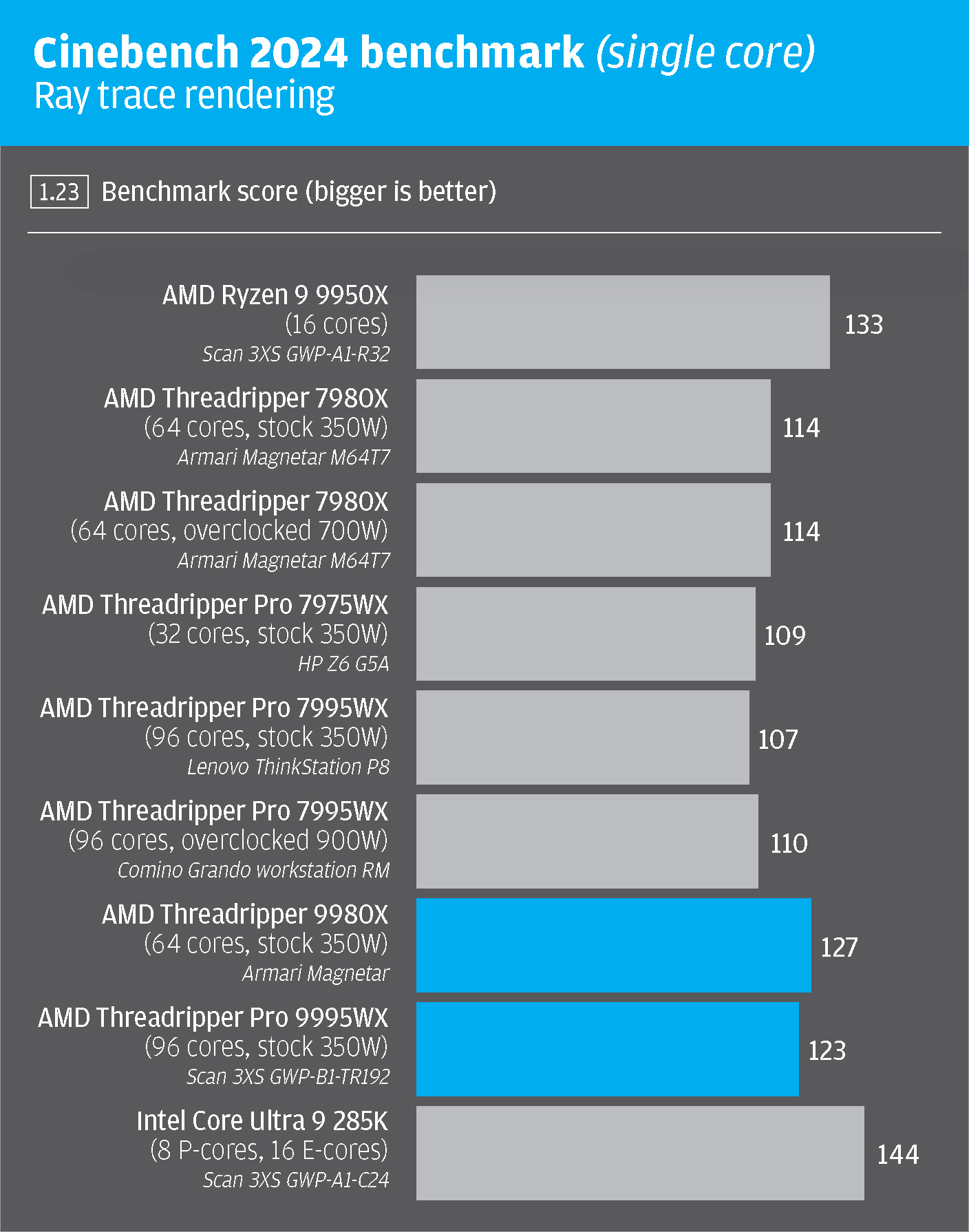
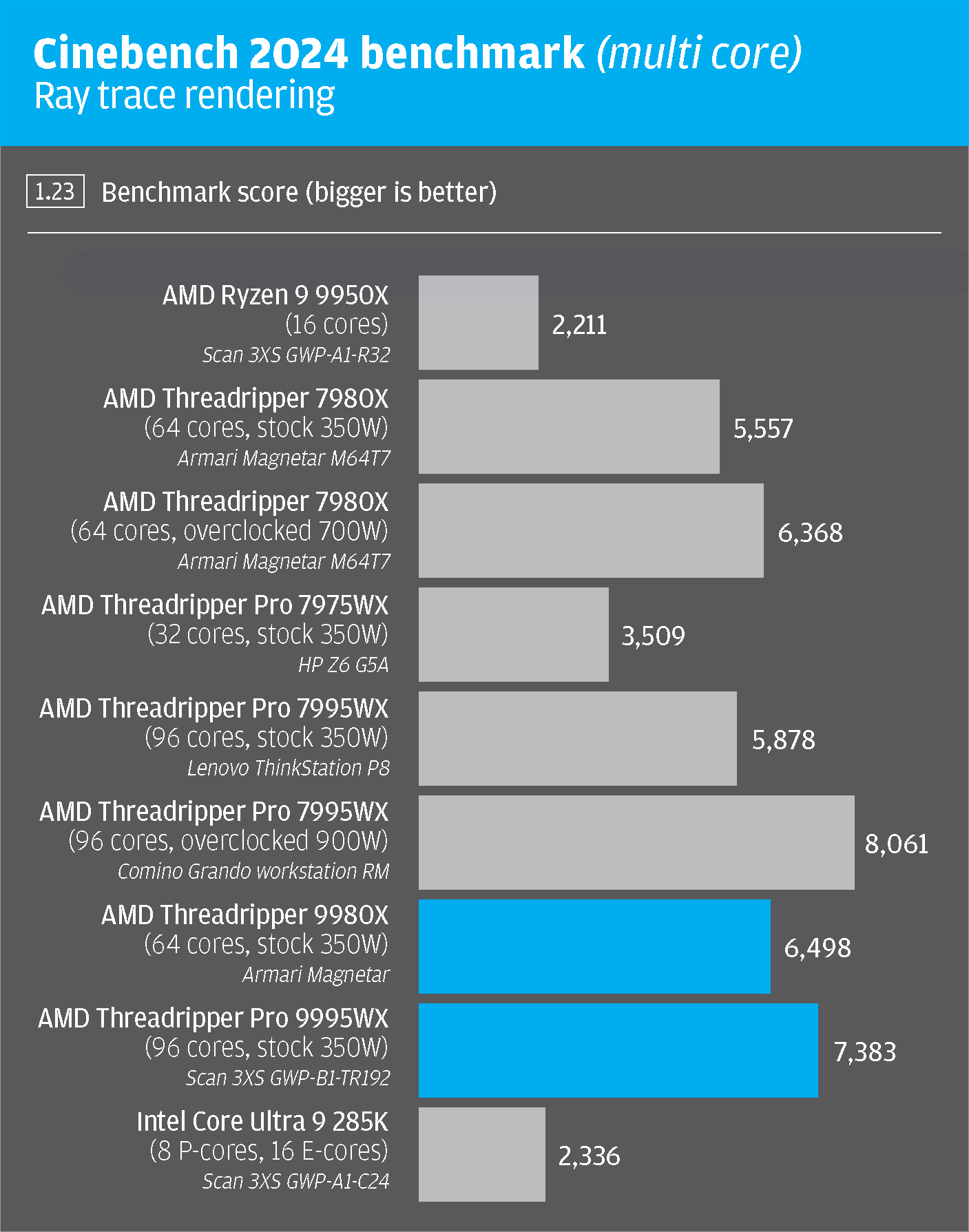
In Cinebench 2024, the 64-core Threadripper 9980X delivers a 17% uplift over its 7000 Series predecessor, the 7780X, while the 96-core Threadripper Pro 9995WX posts a 25% gain over its ‘Zen 4’ equivalent, the Pro 7995WX.
When the Pro 7995WX is pushed to 900W in the Comino Grando workstation, it retains a commanding lead. However, this is hardly surprising, given it sustains much higher frequencies across all 96 cores thanks to a very advanced custom liquid-cooling system.
Interestingly, despite having 50% more cores, the 96-core Pro 9995WX was only 14% faster than the 64-core 9980X. There are two key reasons for this. First, both processors operate within a 350W TDP, allowing the 64-core chip to sustain much higher all core frequencies. Second, Cinebench — like many renderers — is not particularly memory-intensive, so it does not benefit from the higher memory bandwidth offered by Threadripper Pro’s 8-channel memory architecture.
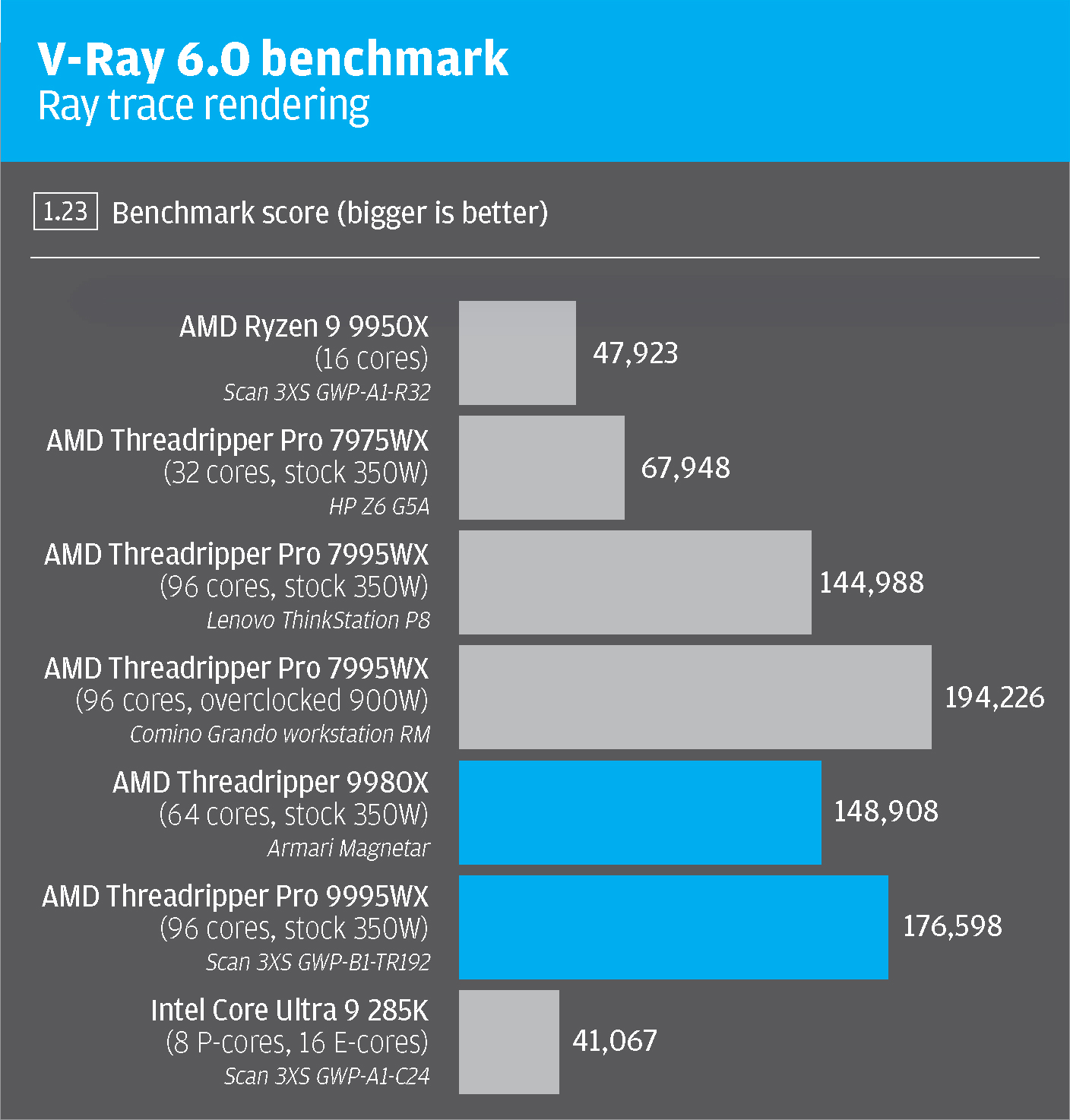
We observed similar behaviour in V-Ray. Here, the Pro 9995WX showed a 22% lead over the Pro 7995WX, yet the overclocked 900W Pro 7995WX still topped the charts, maintaining a 10% advantage over the 350W Pro 9995WX. Meanwhile, the Pro 9995WX, running all 96 cores at 3.1 GHz, was only 19% faster than the 64-core 9980X, which sustained 4.0 GHz across all cores.
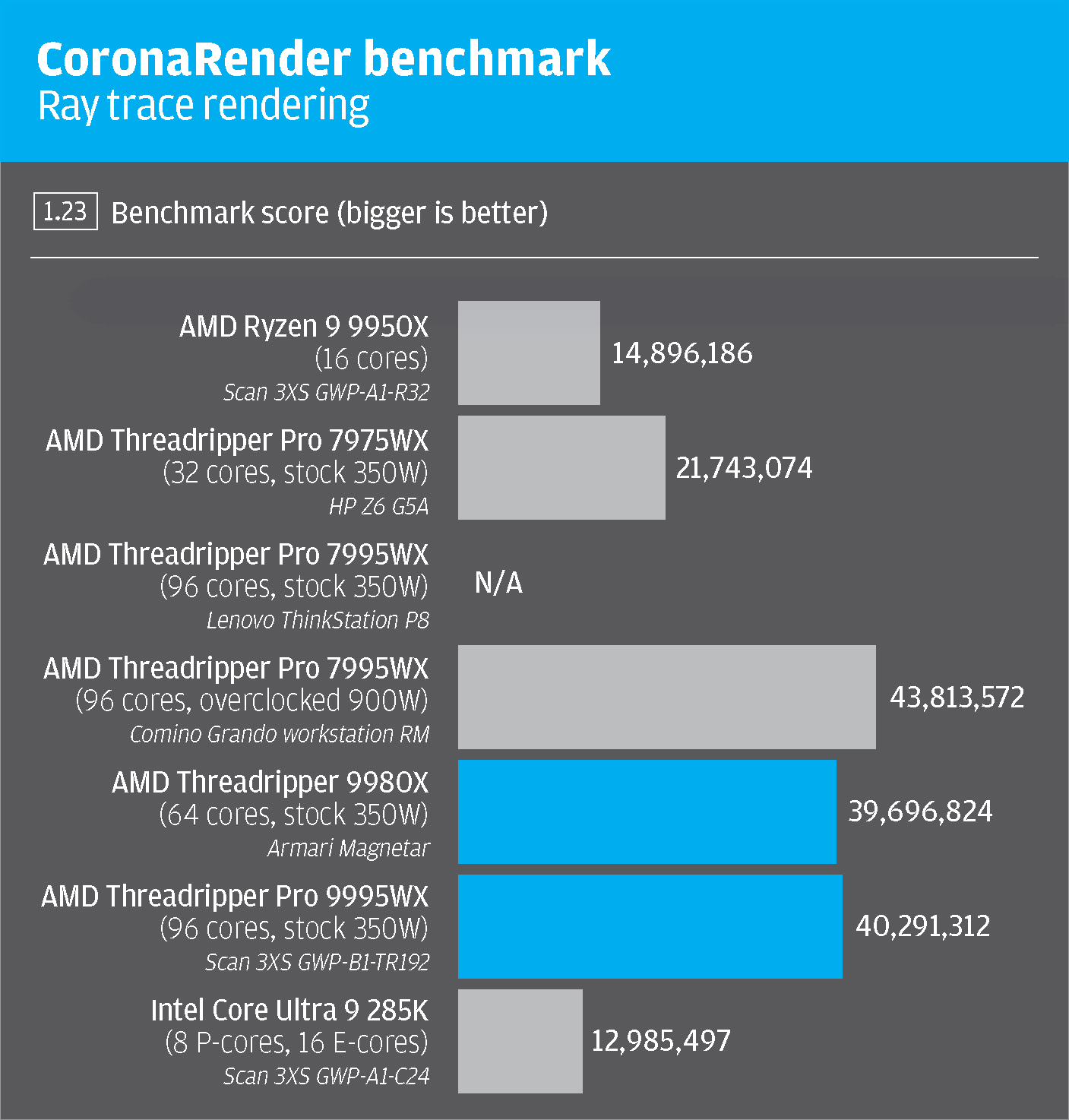
In CoronaRender, the Pro vs HEDT results were more striking: the 96-core Pro 9995WX was just 1.5% faster than the 64-core 9980X. Unfortunately, we don’t have Threadripper 7000 Series data for a gen-on-gen comparison.
Finally, we ran Cinebench 2024 in single-core mode. While this has little relevance to real-world rendering workflows, it provides a useful indication of single-threaded performance. Here, the 9980X was only 12% slower than the fastest current mainstream desktop processor, the Intel Core Ultra 9 285K, and just 4% behind AMD’s Ryzen 9 9950X. The Pro 9995WX was not far behind.
Simulation – CFD and FEA
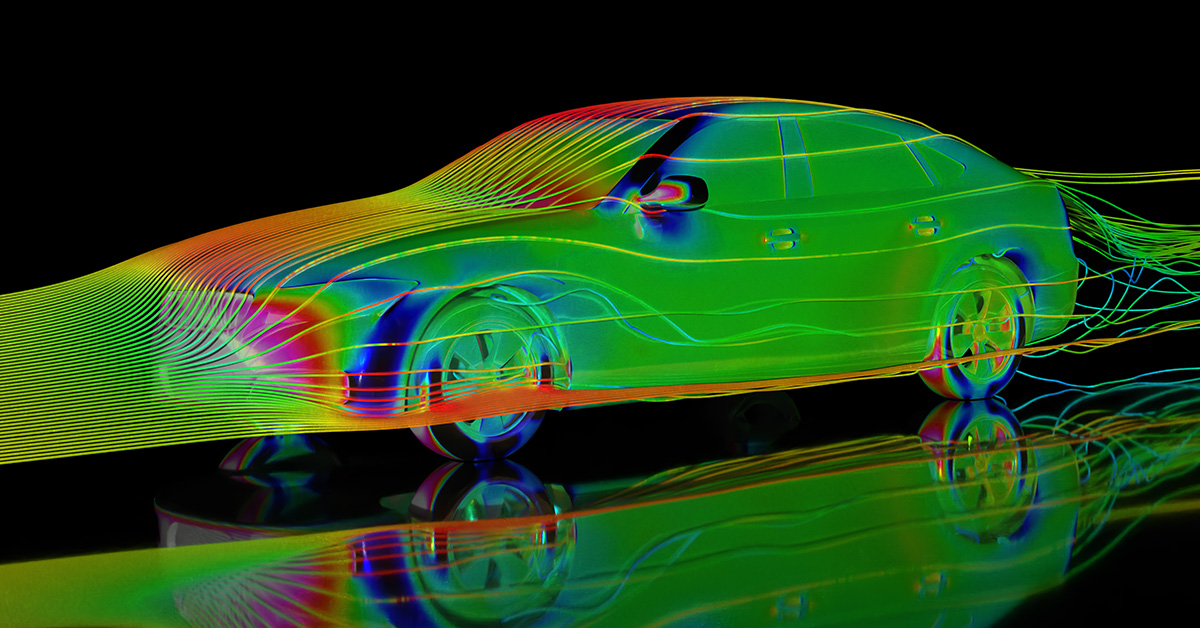
Simulation workloads are far more difficult to evaluate, as both Finite Element Analysis (FEA) and Computational Fluid Dynamics (CFD) rely on a wide range of solvers, each of which can also behave differently depending on the dataset. In general, CFD workloads scale very well with more CPU cores and can also benefit significantly from higher memory bandwidth, as data can be fed to each core more quickly. This is an area where the Threadripper Pro 9000 WX-Series holds a clear advantage over the ‘HEDT’ Threadripper 9000 Series, thanks to support for eight-channel memory versus four-channel.
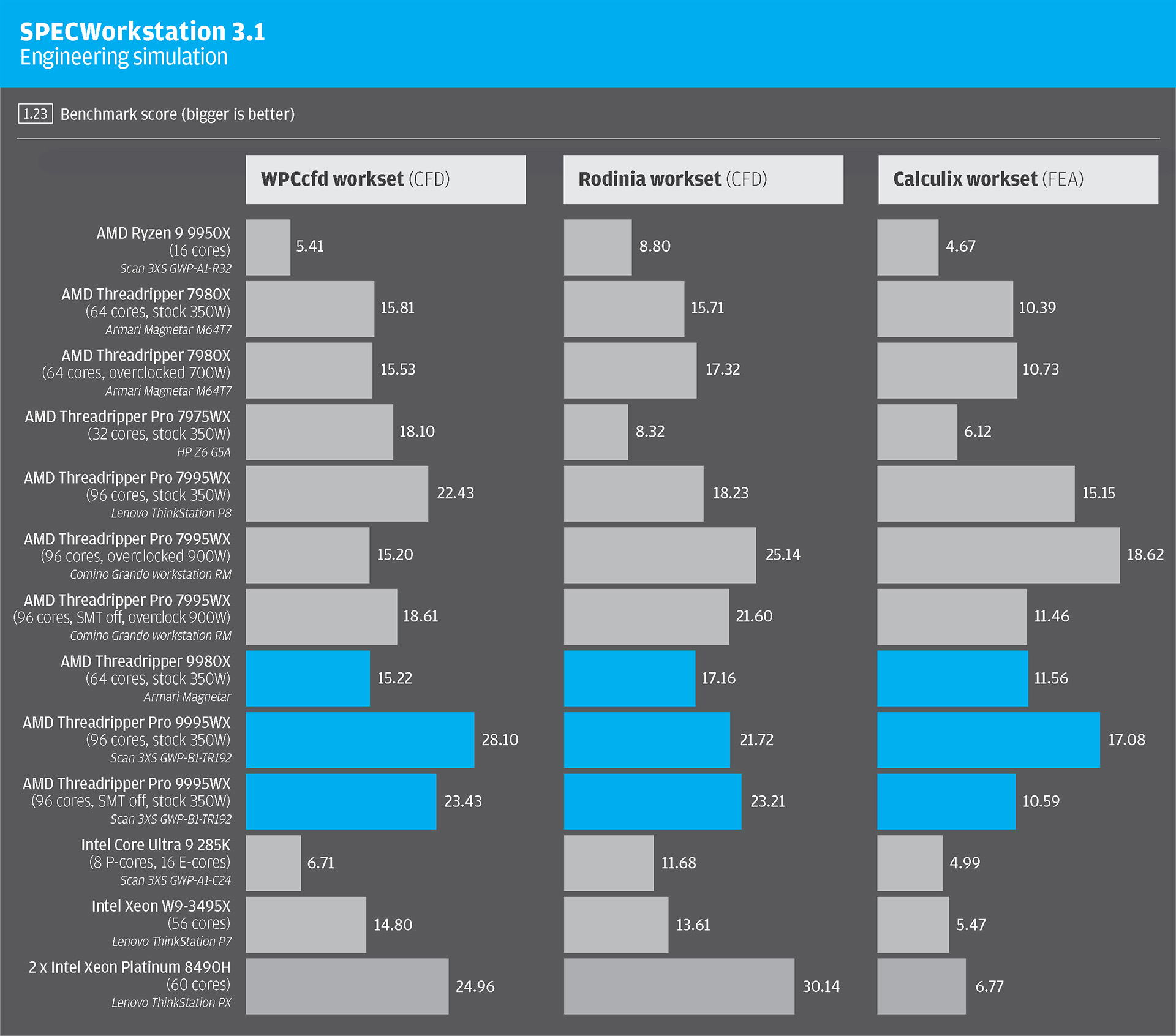
For testing, we selected three simulation workloads from the SPECworkstation 3.1 benchmark: two CFD tests — Rodinia (compressible flow) and WPCcfd (combustion and turbulence) — and one FEA test, CalculiX, which models a jet engine turbine’s internal temperature.
The WPCcfd benchmark is particularly sensitive to memory bandwidth. As a result, the 96-core Pro 9995WX, equipped with eight channels of memory running at 6,000 MT/sec delivered an 85% performance advantage over the 64-core 9980X, which is limited to four channels of 6,400 MT/sec memory. Faster memory also appears to play a role in the advantage the Pro 9995WX has over the Pro 7995WX running at 900 W. While that system also supports eight channels, it was populated with much slower 4,800 MT/sec memory.
It’s also worth highlighting historical data from the 32-core Pro 7975WX. Despite having just one-third the core count of the 96-core Pro 9995WX, and running with eight-channel 5,200 MT/s memory, it was only around 55% slower. With faster 6,400 MT/sec memory, the performance gap between the newer ‘Zen 5’ 32-core Pro 9975WX and the 96-core Pro 9995WX would likely narrow considerably. This could make a compelling case for more cost-effective, lower core-count Threadripper Pro processors in simulation workflows where memory bandwidth has a greater impact on performance than core count.Conversely, memory bandwidth has very little influence on the CalculiX (FEA) benchmark, where performance is driven primarily by core count and IPC. Here, the 96-core Pro 9995WX was 13% faster than its Pro 7995WX predecessor at 350W but was edged out by the same processor running at 900W. That said, PBO has a smaller impact in this workload, as the benchmark does not stress the CPU to anyway near the same extent as ray-trace rendering.
The verdict
The Threadripper 9000 Series is a solid step forward for AMD’s high end workstation processors. Deciding between HEDT and Pro models really comes down to workflows, budget and whether your firm only buys workstations from a major OEM.
For rendering-heavy tasks, the higher core-count HEDT chips usually give the best value. The lower-core-count models come up against mainstream Ryzen 9 9950X chips, which are much cheaper, though with less memory capacity.
For most visualisation workloads, the extra memory bandwidth from the Pro models doesn’t add much, and the jump from a 64-core HEDT to a 96-core Pro is only 14–19% faster, even though it costs more than twice as much.
On the flip side, for workloads like simulation, where memory bandwidth really matters, the Threadripper Pro with its eight memory channels and up to 2 TB of capacity can handle much more complex datasets faster. And in workflows where memory is a bottleneck, even the lower-core-count Pro chips can be an excellent choice.
If you want to squeeze even more performance out of these chips, Precision Boost Overdrive (PBO) is worth considering — especially for heavily threaded workloads like rendering. Just bear in mind, there can be diminishing returns and more power increases running costs and carbon footprint.
In summary, the 9000 Series offers plenty of flexibility to balance cores, memory, and cost with your workload — all while delivering top-end performance. It’s no wonder Threadripper still sets the standard for high-end workstations.
This article is part of AEC Magazine’s 2026 Workstation Special report
Features
- The rise of the 1:1 remote workstation
- Memory – shortages and rising prices: how to navigate the current crisis
- Computle: rethinking remote workstations
- Lenovo Access: simplifying remote workstations
- Creative ITC – a hybrid future
- How does your workstation setup compare? Results from our 2025 survey.
- Best enterprise-class workstation laptops 2026
- Can a small workstation really handle big BIM, CAD and viz?
- Why GPU memory matters for CAD, viz and AI
Reviews
- HP Z2 Mini G1a workstation
- Lenovo ThinkStation P3 Ultra SFF Gen 2 workstation
- CyberPowerPC Intel Core U7WS Workstation
- AMD Ryzen Threadripper 9000 Series processors
- Scan 3XS GWP-B1-TR192 workstation
- Nvidia RTX Pro Blackwell Series GPUs
- Intel Arc Pro B50 GPU